Web Applications Penetretion Testing. Stage 2: Scanning and Vulnerability Assessment

- Category: CTI
- Source article: https://medium.com/@1200km/web-applications-penetretion-testing-stage-2-scanning-and-vulnerability-assessment-15021e81c130
- Published: 2024-11-13
- Preserved media: 3 image(s), including cover images, screenshots, diagrams, and infographics where present.
- Preserved technical blocks: 2 code/configuration block(s).
Ecosystem Fit
This page mirrors the original Medium article into the 1200km.com Docusaurus ecosystem. The original article flow, images, screenshots, infographics, and technical blocks are preserved from the export.
Identifying Weaknesses: Mastering the Art of Scanning and Vulnerability Assessment in Web Application Security
Welcome to the critical world of Scanning and Vulnerability Assessment in web application penetration testing. This stage is pivotal, as it involves deep-diving into applications to uncover potential security threats that could be exploited by attackers. By meticulously scanning the application environment and assessing vulnerabilities, security professionals can better understand the risks and prepare effective defenses. In this guide, we will explore the methodologies, tools, and best practices that ensure thorough security assessments and pave the way for securing web applications against emerging threats. Let’s begin by understanding the foundational steps of reconnaissance and move towards mastering advanced scanning techniques and vulnerability assessments.
Legal Use Disclaimer
This content is provided for educational and informational purposes only. The techniques and tools discussed in this guide are intended to improve security practices and should be used responsibly and ethically. Users are advised to ensure all penetration testing activities are authorized and conducted within legal boundaries.
It is the responsibility of the user to comply with all applicable laws and regulations, including those pertaining to privacy, data protection, and cybersecurity. Unauthorized use of penetration testing tools and techniques may be considered illegal and could result in civil and criminal penalties.
The publisher of this guide disclaims any liability for the misuse of the information provided and the consequences of any such misuse. Always obtain proper authorization before testing a web application and ensure that your activities are covered by appropriate policies and agreements.
Table of Contents
-
Scanning Techniques
-
WebApp Vulnerability scaning
-
Directory Enumeration
-
SQL Injection Scanning
Scanning Techniques
1. Network/ports Scanning
**Purpose:**To identify live hosts, open ports, and services running on servers within the network.
Tools:
- **Nmap:**Used to discover hosts and services on a computer network by sending packets and analyzing the responses.
Basic scan:
nmap juice-shop.
herokuapp
.
com
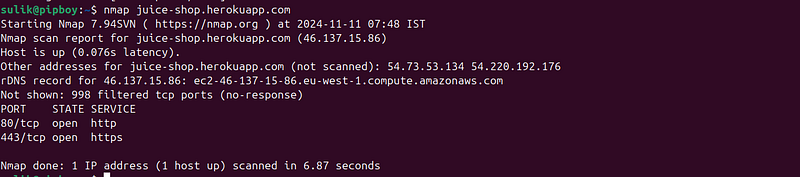
We found two open ports: 80, 443. Now we can run scanning just on this ports with flag**-p**
Aggressive mode:
nmap -
A
 juice-shop
.herokuapp
.com
In this mode you can gain much more information, but this mode is really “noisy”
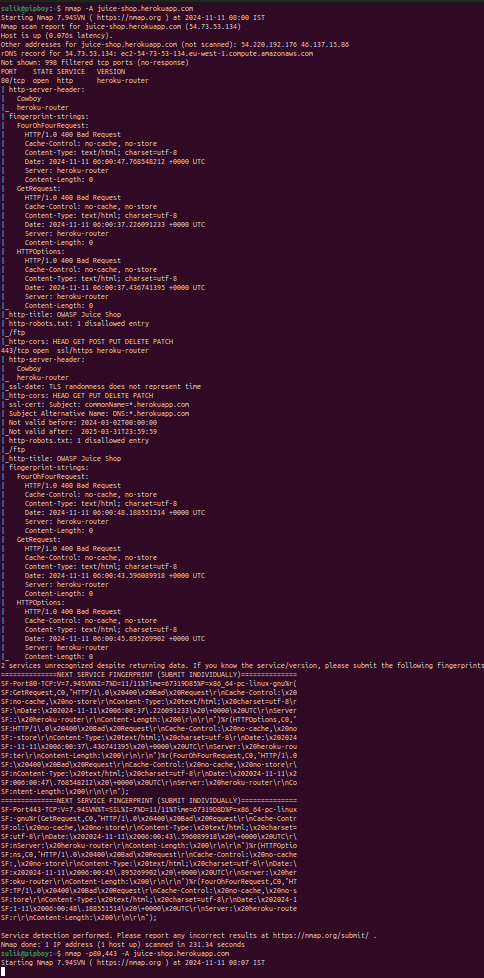
Nmap is powerfull tool with many options to use.I highly recommend getting to know this tool better.Full guide for Nmap here
Web Application Vulnerability Scanning:
Is the process of using automated tools to identify security weaknesses and vulnerabilities within a web application. The scan targets common security flaws like SQL injection, cross-site scripting (XSS), insecure configurations, and weak authentication mechanisms.
These scans typically involve:
-
Crawling the application to discover all available pages, endpoints, and inputs.
-
Testing Inputs and Parameters with various payloads to check for weaknesses.
-
Assessing Security Configurations, such as missing security headers, weak SSL/TLS settings, and exposed directories.
Tools:
- **Burp Suite:**Burp Suite is a comprehensive web application security testing platform developed by PortSwigger. It is designed to provide a variety of tools that allow security professionals to perform extensive testing of web applications.
Full guide to scanning Web App with BurpSuite here:
- **Nikto:**A web server scanner which performs comprehensive tests against web servers for multiple items, including over 6700 potentially dangerous files/programs.
Full guide to scanning Web App with Nikto here:
- **OWASP ZAP:**Provides automated scanners and a set of tools for manual vulnerability testing.
Full guide to scanning Web App with OWASP ZAP here:
3. Directory Enumeration:
**Purpose:**Identifying accessible directories through web server to discover potentially sensitive files or directories.
Tools:
-
Dirbuster: Brute-forces directories and files using wordlists.
Gobuster: Fast directory and file brute-forcer in Go.
SecLists: Repository of wordlists
4. SQL Injection Scanning
**Purpose:**Tests web application inputs for SQL injection vulnerabilities.
Tools:
-
SQLMap: Automates SQL injection testing and even allows exploitation of detected vulnerabilities.
Conclusion
The Scanning and Vulnerability Assessment stage is a critical component of web application penetration testing. By employing a combination of powerful tools and structured techniques, security professionals can systematically identify vulnerabilities that could be exploited by attackers. This stage uncovers weaknesses ranging from misconfigured servers and outdated software to injection flaws and exposed directories, giving a comprehensive view of the application’s security posture.
Effective vulnerability scanning requires not only technical expertise but also a thoughtful approach to interpreting results. False positives need to be verified, high-severity vulnerabilities prioritized, and thorough documentation maintained. With the right processes, this stage enables organizations to address vulnerabilities proactively, reducing the risk of exploitation and enhancing overall security.
In closing, remember that vulnerability assessment is not a one-time task. As web applications evolve and new threats emerge, regular scanning and assessment should be part of an ongoing security strategy. The methodologies, tools, and best practices outlined in this guide lay the foundation for a robust web application security framework that adapts to the ever-changing landscape of cybersecurity threats.