Cracking Telnet: Exploring Weaknesses and Exploitation Techniques

- Category: CTI
- Source article: https://medium.com/@1200km/cracking-telnet-exploring-weaknesses-and-exploitation-techniques-af5d743abb09
- Published: 2024-10-22
- Preserved media: 3 image(s), including cover images, screenshots, diagrams, and infographics where present.
- Preserved technical blocks: 2 code/configuration block(s).
Ecosystem Fit
This page mirrors the original Medium article into the 1200km.com Docusaurus ecosystem. The original article flow, images, screenshots, infographics, and technical blocks are preserved from the export.
In this article, I will walk you through the process of cracking a Telnet service, exploring weaknesses, and leveraging tools for successful exploitation. We’ll dive into methods like brute force attacks and show how to identify and exploit Telnet vulnerabilities.
Disclaimer: Legal and Ethical Use
The techniques and tools discussed in this blog post are intended for educational purposes only. Wi-Fi cracking should only be performed in a legal and ethical manner, specifically within environments and scenarios where explicit permission has been granted by the network or system owners. Unauthorized access to wireless networks is illegal and punishable under cybercrime laws in many countries. The author and publisher of this post disclaim any liability for misuse of the information provided. Always ensure that your actions comply with local laws and regulations.
What is Telnet?
Telnetis one of the earliest protocols used for remote communication over a network. It allows a user to connect to and control a remote device by transmitting text commands. Telnet operates onport 23by default and was widely used for managing servers, network devices, and other systems.
However, Telnet has significant security drawbacks:
-
Lack of Encryption:Telnet sends data, including credentials, in plain text. This makes it highly vulnerable to interception throughman-in-the-middle (MITM) attacks.
-
Obsolete Security:With no built-in encryption, Telnet is considered insecure by today’s standards and has largely been replaced by more secure protocols likeSSH.
Despite its obsolescence, Telnet services are still found in legacy systems and misconfigured environments, making it a prime target for attackers seeking to exploit weak or default credentials.
Understanding how Telnet works is crucial for penetration testers because it often remains in use in older networks, offering a path for exploitation if left unsecured.
Identifying Telnet Services
Before attempting to exploit Telnet vulnerabilities, the first step is to identify whether Telnet is running on a target system. Telnet services typically run onport 23, so you’ll need to scan the target network to check for open ports and services.
Here’s how you can do it:
Using Nmap to Identify Telnet:
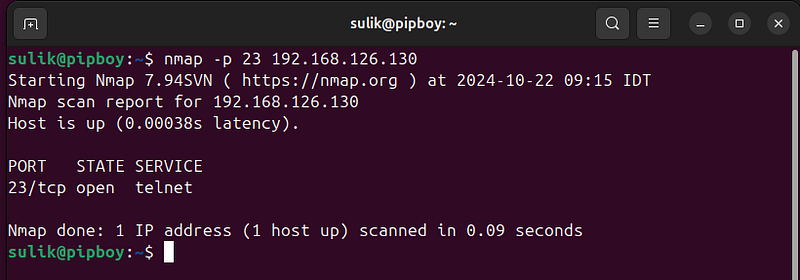
Nmap is a powerful tool for network discovery and service enumeration. To check for Telnet services, you can use the following Nmap command:
nmap -
p

23
 <target-ip>
Common Vulnerabilities in Telnet
Telnet, due to its age and lack of built-in security features, is vulnerable to several significant weaknesses. These vulnerabilities make Telnet an easy target for attackers, particularly in environments where it’s still in use for legacy systems. Below are some of the most common vulnerabilities in Telnet services:
1. Weak or Default Credentials
Many Telnet services are configured with default usernames and passwords, especially in older systems or improperly secured environments. These default credentials are often publicly available, and attackers can easily find lists of them online. Additionally, administrators sometimes set weak passwords, making brute-force attacks more effective.
-
Examples of Common Default Credentials:
-
Username:
admin/ Password:admin -
Username:
root/ Password:toor
2. Plain-Text Transmission
Telnet does not encrypt the data it transmits, meaning everything sent between the client and server, including login credentials, is in plain text. This makes Telnet highly vulnerable to**man-in-the-middle (MITM)**attacks, where an attacker intercepts the traffic between the client and server, capturing sensitive information like usernames and passwords.
-
Example Scenario:
-
An attacker running a packet capture tool (such as Wireshark) on the same network can easily intercept Telnet traffic and extract login credentials in plain text.
3. Outdated Software and Vulnerabilities
Many Telnet servers in use today are running outdated versions, which may have known vulnerabilities. These can be exploited to gain unauthorized access, execute arbitrary code, or escalate privileges on the system.
-
Exploit Example:
-
Vulnerabilities like buffer overflows or backdoors in older Telnet server implementations can be used to crash the system or gain remote control.
4. Misconfigurations
Telnet services are often misconfigured, leaving them open to unauthorized access. Common misconfigurations include:
-
**No login restrictions:**Allowing unlimited login attempts, which makes brute-force attacks easier.
-
**Lack of IP restrictions:**Allowing access from any IP address without proper network segmentation.
Brute Forcing Telnet Credentials
Once you’ve identified a Telnet service running on a target system, the next step is to test for weak or default login credentials. One of the most common techniques to gain unauthorized access isbrute-forcingcredentials. This involves systematically trying different username and password combinations until a valid pair is found.
Using Hydra for Brute Forcing:
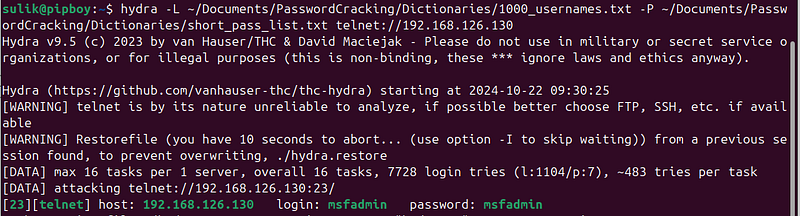
Hydrais a powerful tool for brute-forcing various network services, including Telnet. You can use a list of potential usernames and passwords to attempt login combinations. Here’s how to run a brute-force attack against Telnet using Hydra:
Hydra Command Example:
hydra -L usernames.txt -P passwords.txt telnet:
//<target-ip>
Explanation of the command:
-
**-L usernames.txt**: Specifies the path to a file containing a list of usernames. Hydra will try each username in combination with the passwords. -
**-P passwords.txt**: Specifies the path to a file containing a list of passwords. Hydra will try each password for each username. -
How to gain password listshere
-
**telnet://<target-ip>**: Specifies the target service (Telnet) and the IP address of the target machine.
Output:
If Hydra finds a valid username and password combination, it will display the successful credentials on the screen. Once you have valid login credentials, you can use them to log into the Telnet service and gain access to the target system.
Hydra Command Breakdown:
-
**Efficient Attack:**Hydra systematically tests each combination of usernames and passwords, making it an effective tool for brute-forcing.
-
**Speed:**The speed of the attack depends on network conditions and the size of your username and password lists. Larger lists increase the chances of success but also take longer to process.
-
**Noisiness:**Like many brute-force tools, Hydra generates a significant amount of traffic, which can be detected by security systems. Be mindful that this is a noisy attack and can trigger alarms or account lockouts if rate-limiting is enabled.
Brute Forcing in Action:
Explanation about Brute-Force Attackhere:
-
**Gather Username and Password Lists:**Use commonly available username and password lists or create your own based on known patterns.
-
**Run Hydra:**Execute the command to begin the brute-force attack.
-
**Access Gained:**Once valid credentials are discovered, you can use them to access the Telnet service and interact with the system as an authenticated user.
Risks of Brute Forcing:
-
**Account Lockouts:**Some Telnet servers may have protections like account lockouts after multiple failed login attempts.
-
**Detection:**Security systems like IDS/IPS can easily detect brute-force attempts due to the high volume of login attempts.
Exploiting Telnet Vulnerabilities
Once you’ve successfully gained access to a Telnet service, the next step is to leverage that access to further compromise the system or network. Here’s how you can exploit the Telnet service after obtaining login credentials:
1. Remote System Control
With valid Telnet credentials, you can remotely control the system and execute commands with the privileges of the compromised account. This can allow you to:
-
Navigate the file system
-
Edit, delete, or download files
-
Run system commands
Depending on the privileges of the compromised account, you may have limited or full control of the target system.
2. Post-Exploitation Actions
After gaining access, it’s crucial to look for sensitive files or information that can help escalate privileges or further exploit the system.
-
**Look for Configuration Files:**Search for important system or service configuration files, such as:
-
/etc/passwd: In Linux systems, this file contains user account information.
-
Database Config Files: If the system is hosting a web application or service, look for files like
config.phpthat might contain database credentials. -
Privilege Escalation:If the account you’ve compromised has limited privileges, you can attempt to escalate privileges by exploiting local vulnerabilities. Use tools likeLinEnumorLinux Exploit Suggesterto find privilege escalation paths.
-
**Lateral Movement:**Once inside the system, you may attempt to move laterally through the network to compromise other systems. This can be done by using the compromised system as a pivot point.
3. Maintaining Access
If your goal is to maintain long-term access to the system, you can install backdoors or persistence mechanisms. This ensures you can regain control of the system even if the Telnet service is secured later.
4. Covering Your Tracks
It’s important to clean up any logs or traces of your activities to avoid detection. Many systems log Telnet access, so deleting or tampering with these logs can help maintain stealth.
Conclusion
In this post, we’ve explored the vulnerabilities associated withTelnetand how attackers can exploit them during penetration testing. From identifying Telnet services usingNmapto performing brute-force attacks withHydra, this guide has walked through several crucial steps of attacking Telnet.
Key points covered include:
-
Identifying Telnet servicesusing tools like Nmap
-
Understanding common vulnerabilities, such as weak or default credentials, unencrypted communication, and outdated software
-
Brute-forcing Telnet credentialswith tools like Hydra
-
Exploiting Telnet vulnerabilitiesfor remote access and post-exploitation activities, such as privilege escalation and lateral movement.
Although Telnet is an outdated and insecure protocol, it is still present in many legacy systems, making it an important target for penetration testers. Understanding how to exploit Telnet weaknesses allows security professionals to highlight vulnerabilities and recommend securing or replacing Telnet with more secure alternatives likeSSH.
By following this guide, you can practice responsible penetration testing techniques while improving the security of your network or those of your clients.
Thank you for reading