Censys for Enhanced Cybersecurity Insight

- Category: CTI
- Source article: https://medium.com/@1200km/censys-for-enhanced-cybersecurity-insight-533df14794bd
- Published: 2024-11-10
- Preserved media: 7 image(s), including cover images, screenshots, diagrams, and infographics where present.
- Preserved technical blocks: 0 code/configuration block(s).
Ecosystem Fit
This page mirrors the original Medium article into the 1200km.com Docusaurus ecosystem. The original article flow, images, screenshots, infographics, and technical blocks are preserved from the export.
A professional guide to understanding and utilizing Censys for advanced digital threat intelligence.
Introduction
In the realm of cybersecurity, having access to detailed, accurate, and timely information about the digital environment is crucial. Censys, a comprehensive cybersecurity platform, offers an expansive view of the internet’s infrastructure, providing security professionals with the tools needed to identify, analyze, and respond to vulnerabilities across global networks. As a robust search engine and data platform, Censys scans the internet continuously, capturing a snapshot of every connected device and service, from web servers to IoT devices. This post explores how Censys can be integrated into cybersecurity strategies to enhance visibility, improve asset management, and bolster overall security posture. Whether you are a security analyst, network administrator, or a cybersecurity researcher, understanding the capabilities of Censys is essential for navigating the complex landscape of digital threats.
Key Features of Censys
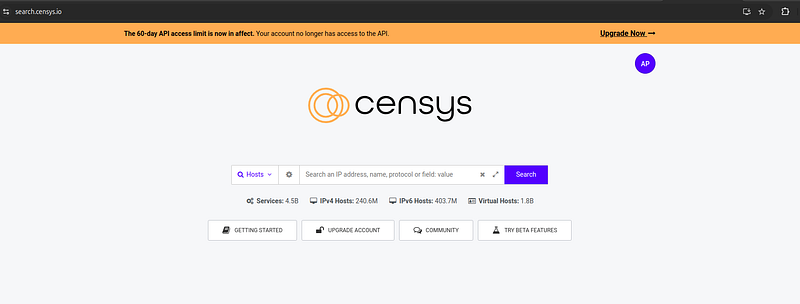
Hosts search
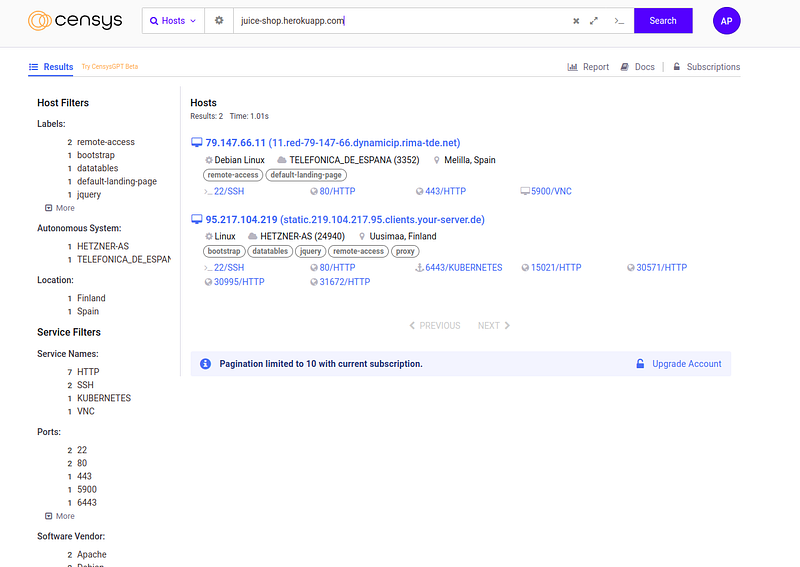
The “Hosts” search feature in Censys is a powerful tool designed to help users investigate and monitor the security configurations of internet-facing devices and services. This functionality allows for granular searches of hosts across the internet based on various attributes such as IP addresses, domain names, services, and geolocations. Here’s a deeper look into how it works and the benefits it offers:
Functionality
Host Search: Censys allows users to perform detailed searches on individual hosts to determine their security configurations, what services they are running, and any potential vulnerabilities. This is achieved by querying the comprehensive database that Censys maintains, which is regularly updated through widespread internet scanning.
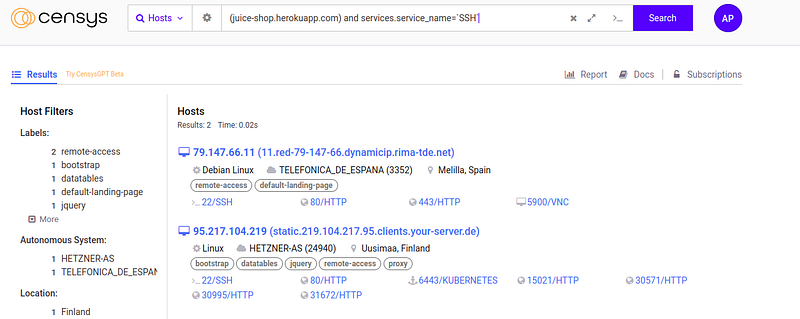
Filtering Capabilities: Users can filter their searches based on specific criteria like ports, protocols (HTTP, SSH, FTP, etc.), SSL/TLS configurations, and even by specific vulnerabilities or banners that are detected during Censys’s scans.
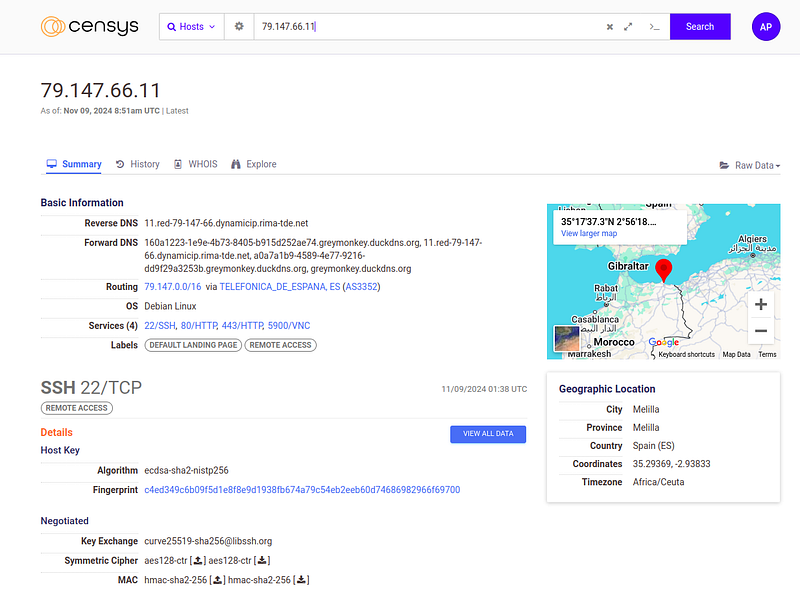
Historical Data: Censys also maintains historical data for hosts, allowing users to see how a host’s configuration and exposed services have changed over time. This can be critical for tracking the effectiveness of security improvements or detecting when a host may have been compromised.
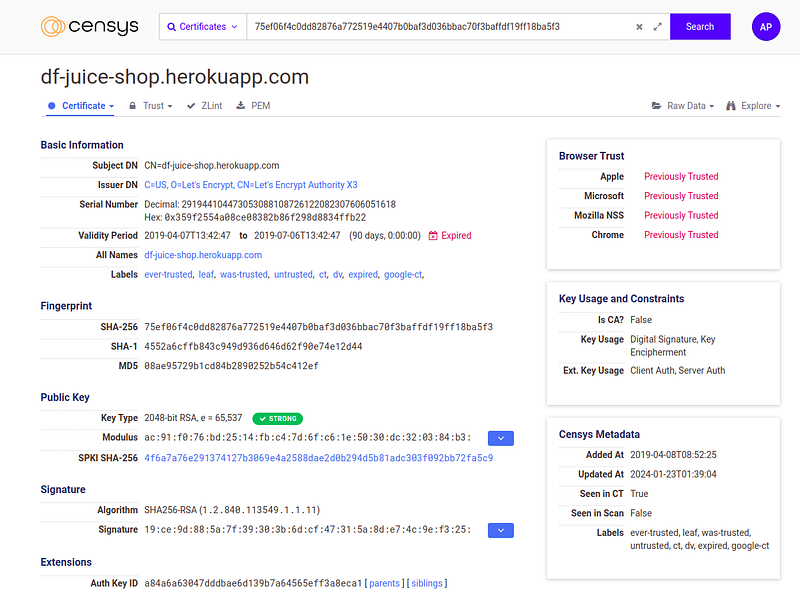
Certificate Search: Censys allows users to search for SSL/TLS certificates using various attributes such as issuer information, the subject name, fingerprint, and expiry dates. This can be particularly useful for tracking certificates issued by a specific authority or certificates issued to a particular organization.
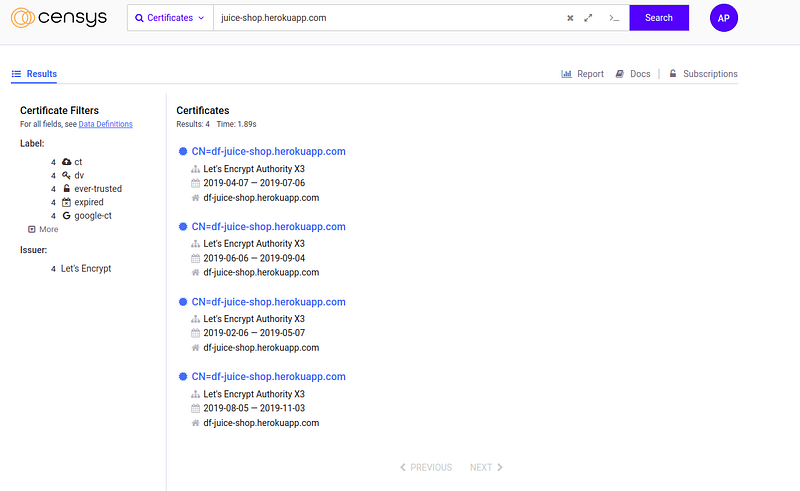
Analyzing Certificate Chains: Censys provides detailed insights into the entire certificate chain, helping users understand the trust hierarchy and verify if the certificates are chained correctly to trusted root certificates. This is crucial for ensuring the integrity and trustworthiness of secure communications.
**IPv4 and IPv6 Mapping **Censys maintains a detailed map of both IPv4 and IPv6 address spaces, providing comprehensive visibility into the internet’s architecture. This helps in understanding how networks are interconnected and how data flows across them.
- Example: A network administrator can use Censys to discover previously unknown IPv6 deployments on their network, which might not have the same level of security controls as their IPv4 counterparts, thereby addressing a significant blind spot in network security.
**API Access for Automated Queries **Censys offers an API that allows developers to automate queries and integrate Censys data with other tools and systems. This is particularly useful for continuous monitoring and integrating security insights into existing workflows.
- Example: An automated system could use the Censys API to periodically query for new devices appearing on an organization’s network, or changes in service configurations, triggering alerts if unauthorized changes are detected.
How to Use Censys for Reconnaissance
-
Using Censys for reconnaissance involves leveraging its comprehensive dataset to gather a wide range of parameters about internet-facing assets. Here’s a list of key parameters that you can gather using Censys:
-
IP Addresses: Collect IP addresses of all devices and services related to a target, providing a clear view of their network’s structure.
-
Domain Names: Identify all associated domain names and subdomains, giving insights into the target’s online presence and operational structure.
-
SSL/TLS Certificates: Gather details on SSL/TLS certificates, including issuer data, expiration dates, and configurations, to assess encryption strength and certificate management practices.
-
Open Ports: Discover open ports on a target’s network, which can indicate active services and potential entry points for security breaches.
-
Service Banners: Retrieve service banners that are exposed during scans, providing information on the types of software and versions running on the target’s servers.
-
Protocols: Analyze which protocols (e.g., HTTP, FTP, SSH) are being used, which can help identify services and potential vulnerabilities.
-
Operating Systems: Identify operating systems of the devices within a target’s network, aiding in vulnerability assessment and patch management strategies.
-
Geographic Location: Determine the geographical location of IP addresses, which can be useful for legal considerations and understanding physical infrastructure distribution.
-
Network Architecture: Uncover details about the target’s network architecture, including routers, firewalls, and other network devices.
-
Cryptographic Algorithms: Analyze cryptographic algorithms and their implementations to spot weak or outdated encryption that could be exploited.
-
Email Servers: Identify email servers and their security configurations, important for understanding communication security and potential vectors for phishing attacks.
-
DNS Records: Access DNS records to get a complete picture of the DNS setup and configurations, which can reveal additional domains, mail servers, and network management details.
-
Web Technologies: Detect web technologies used (e.g., content management systems, web frameworks), which can highlight known vulnerabilities specific to those technologies.
-
Vulnerabilities: Censys often integrates data from known vulnerability databases, allowing users to search for specific vulnerabilities known to affect devices and services identified during scans.
-
API Endpoints: Identify API endpoints that might be publicly exposed and assess their security configurations.