The 20x Employee: A Strategic Framework for Unlocking Hyper-Productivity with Artificial…

- Category: CTI
- Source article: https://medium.com/@1200km/the-20x-employee-a-strategic-framework-for-unlocking-hyper-productivity-with-artificial-8f49cde95a25
- Published: 2025-08-01
- Preserved media: 7 image(s), including cover images, screenshots, diagrams, and infographics where present.
- Preserved technical blocks: 0 code/configuration block(s).
Ecosystem Fit
This page mirrors the original Medium article into the 1200km.com Docusaurus ecosystem. The original article flow, images, screenshots, infographics, and technical blocks are preserved from the export.
The 20x Employee: A Strategic Framework for Unlocking Hyper-Productivity with Artificial Intelligence
A Strategic Blueprint for Augmenting Human Talent with Generative and Agentic AI
Executive Summary
This report substantiates the claim that strategic implementation of Artificial Intelligence can amplify employee effectiveness by a factor of 20 to 30, creating a new class of “hyper-productive” professionals. This transformation is not speculative; it is a measurable reality, most evident today in the domain of cybersecurity. The pressures of an escalating technological arms race, where both corporate defenders and malicious actors are weaponizing AI, have accelerated this evolution, turning workforce augmentation from a competitive advantage into a strategic necessity for survival.
The blueprint for this transformation is the AI-augmented Security Analyst. This report presents the AI-powered Security Operations Center (SOC) as the definitive case study. Here, the fusion of human expertise with AI copilots and autonomous agents has transformed the role of a security analyst from a reactive, alert-driven operator into a proactive, strategic threat hunter. This new breed of professional is capable of managing a workload and level of complexity that would have previously required a team of 20 to 30 individuals operating with traditional, manual-intensive methods.
The key enabler of this productivity multiplier is a new technology stack centered onagentic AI, which automates entire workflows, not just individual tasks. This is supported by generative AI assistants for rapid creation and analysis, and a new core competency inadvanced prompt engineering. The 20x employee is not merely a human with a better tool; they are a human-agent team, where the human acts as a strategic director and the AI agent functions as a tireless, hyper-efficient digital subordinate, executing complex, multi-step processes at machine speed.
The quantifiable impact of this shift is significant. The return on investment (ROI) is demonstrated through documented operational cost reductions of60–80%in security operations and direct breach cost savings of nearly$2.2million per incident. Productivity metrics, adapted from the mature field of software development, provide a clear and balanced framework for measuring these gains across knowledge work, focusing on speed, quality, and employee experience.
This transformation is occurring within the context of a strategic imperative. In the ongoing AI “arms race,” where adversaries are also weaponizing AI to launch attacks at unprecedented speed and scale, augmenting the workforce is no longer an option for competitive advantage but a necessity for survival.The “old-world” un-augmented employee, regardless of their individual skill, has become a liability in the face of machine-speed threats.
This report concludes with an actionable playbook for C-suite leadership aimed at cultivating a 20x workforce. This strategy focuses on three pillars: strategic technology adoption, targeted upskilling based on Gartner’s Deep Productivity Matrix — which resolves the apparent paradox of AI’s varying impact on productivity — and robust governance using established frameworks like the NIST AI Risk Management Framework (AI RMF) and the OWASP Top 10 for Large Language Models. By understanding and implementing this framework, organizations can begin the systematic transformation of their most valuable asset — their people — into a force of unparalleled effectiveness.
Section 1: The Dawn of the Hyper-Productive Employee: A Paradigm Shift in Workforce Effectiveness
1.1 The New Competitive Imperative: The AI Arms Race
The imperative to cultivate a hyper-productive, AI-augmented workforce is not born from a simple desire for incremental efficiency gains. It is a direct and necessary response to a rapidly escalating technological arms race that is fundamentally reshaping the competitive and threat landscapes for every modern enterprise. In this new paradigm, both defenders and attackers are leveraging Artificial Intelligence, making speed, scale, and adaptability the new determinants of success and survival. Understanding the dynamics of this arms race is foundational to appreciating why the 20x employee is not a luxury, but a necessity.
Offensive AI: The Industrialization of Deception
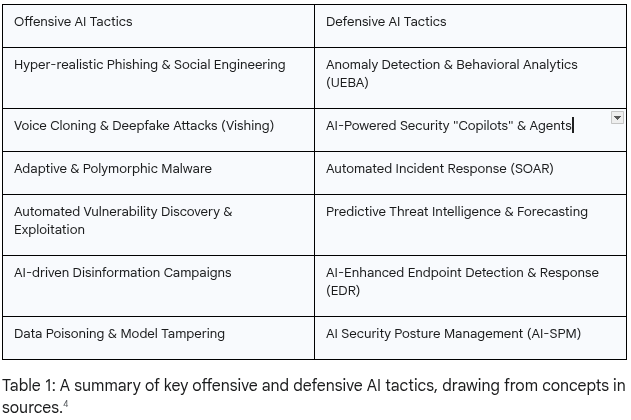
Cyber adversaries have discovered a powerful new weapon in AI and are using it to rewrite the offensive playbook. Attacks are now defined by automated deception, hyper-realistic social engineering, and intelligent malware that adapts in real-time.
Generative AI has industrialized the creation of deceptive content, crafting flawless, hyper-personalized phishing emails, texts (smishing), and voice messages (vishing) that are devastatingly effective. The numbers tell a chilling story: AI-generated phishing emails have been shown to boast a 54% click-through rate, dwarfing the 12% from human-written messages. The time required to craft an effective phishing email can be reduced by up to 99.5%, allowing for attacks at an unprecedented scale. This capability extends beyond text. An estimated 80% of vishing attacks now use AI to clone voices, making them nearly impossible for the untrained ear to detect. The infamous 2024 case, where a Hong Kong finance employee was tricked into transferring $25 million after a deepfake video conference featuring AI-generated likenesses of his colleagues, demonstrates the profound financial risk.Read here
Beyond social engineering, adversaries are deploying polymorphic and metamorphic malware that uses AI to continuously alter its structure and code, evading traditional signature-based defenses. The BlackMatter ransomware, for instance, uses AI to analyze a victim’s security tools in real-time and adapt its encryption strategy to bypass them. This democratization of sophisticated attack tools, once exclusive to nation-states, makes them accessible to common cybercriminals, dramatically increasing the volume and complexity of threats faced by organizations.
Defensive AI: The Strategic Response to Machine-Speed Threats
In the face of AI-powered attacks, the only viable response is to “fight fire with fire”.This strategic counter-revolution involves deploying defensive AI that can match the speed, scale, and intelligence of these new threats. Traditional, human-centric security operations are simply too slow. The breakout time for an attack — the time from initial compromise to lateral movement — is now often under an hour, a timeframe in which human teams are still struggling to triage initial alerts. Defensive AI leverages machine learning and behavioral analytics to process data at a scale no human team can match. Instead of searching for known malicious signatures, these systems create a baseline of normal behavior across a network and then hunt for the subtle deviations that signal a hidden compromise. This allows for the detection of novel, zero-day attacks that have no predefined signature. Advanced systems are moving from mere detection to prediction, analyzing global attack trends, dark web chatter, and new vulnerabilities to forecast future attack waves, enabling organizations to patch vulnerabilities proactively.
This dynamic establishes the core business case for investing in an AI-augmented workforce. The escalating sophistication of offensive AI renders un-augmented human teams a critical liability. The AI arms race creates a powerful feedback loop: as attackers develop more potent AI tools, the value and necessity of defensive AI increase. This, in turn, drives adversaries to innovate further, creating a perpetual cycle of escalation. In this environment, a static, human-only workflow is a guaranteed path to failure. The continuous, strategic investment in human-AI teaming is not a one-time project but a permanent feature of modern enterprise resilience. Therefore, the pursuit of the 20x employee is fundamentally a defensive imperative, a required adaptation to an environment where the nature of threats has irrevocably changed.
1.2 Defining the 20x Employee: Beyond Automation to Augmentation
The concept of the “20x employee” represents a fundamental shift in how we conceptualize productivity. It is not about an individual who works 20 times harder or longer, nor is it a simple story of human replacement by automation. The 20x employee is a professional whose core cognitive capabilities —strategic thinking, creativity, ethical judgment, and complex problem-solving — are profoundly amplified by a symbiotic partnership with AI. This partnership operates across three distinct layers of AI interaction, which, when combined, unlock the claimed productivity multiplier.
**Traditional Automation:**This is the foundational layer, where AI takes over routine, repetitive, and rule-based tasks. In cybersecurity, this includes basic log analysis, alert monitoring, and patch management. While valuable for efficiency, this layer merely frees up human time; it does not, on its own, create a 20x multiplier. It sets the stage by removing the cognitive “noise” that distracts from higher-value work.
**AI Augmentation (Copilots):**This second layer involves a collaborative partnership between the human and the AI. AI copilots act as intelligent assistants, enhancing human analysis, creation, and decision-making. They do not perform tasks independently but work alongside the professional, offering suggestions, summarizing complex data, and accelerating technical processes. A developer using GitHub Copilot to generate boilerplate code or a security analyst using Microsoft Security Copilot to translate a natural language query into a complex search script are examples of augmentation. This layer significantly speeds up individual tasks and can elevate the capabilities of junior staff, but the human remains the primary “doer.”
**AI Autonomy (Agents):**This is the transformational third layer and the primary driver of the 20–30x productivity leap. Here, the AI transitions from a collaborative assistant to an autonomous subordinate. Agentic AI systems are defined as goal-oriented software entities capable of perceiving their environment, reasoning, planning, and executing complex, multi-step workflows with minimal human intervention. The 20x employee achieves their effectiveness by acting as a strategic director, defining the “what” and “why,” while a virtual team of AI agents executes the “how.” A single human can thus direct the output of a virtual team, scaling their strategic intent and impact in a way previously unimaginable. This model redefines the employee’s role from a tactical “doer” of tasks to a strategic “manager of digital labor.”
Section 2: Anatomy of the AI-Augmented Professional: A Cybersecurity Case Study

To move from the conceptual to the concrete, it is essential to examine a real-world environment where the 20x employee is already emerging. The modern Security Operations Center (SOC) provides the ideal proving ground. It is a high-stakes, data-intensive domain of knowledge work where the speed, scale, and accuracy of decision-making have immediate and significant financial and operational consequences. By dissecting the transformation of the SOC analyst, we can construct a clear, layered blueprint for how AI augmentation achieves hyper-productivity.
2.1 The Proving Ground: The Modern Security Operations Center (SOC)
The traditional, pre-AI SOC serves as the critical baseline against which the 20x improvement is measured. Historically, the SOC has been a challenging environment, characterized by a set of persistent, systemic problems that limit human effectiveness and lead to high rates of burnout.
The primary challenge is an overwhelming volume of alerts. Security teams are bombarded with thousands of security events daily, a significant portion of which are false positives. It is not uncommon for over 40% of all alerts to be non-critical or erroneous, forcing analysts to spend the majority of their workday chasing ghosts. This phenomenon, known as “alert fatigue,” leads to desensitization, where critical alerts can be overlooked amidst the noise.
Investigation processes in this environment are slow and manual. Responding to a single alert requires an analyst to pivot between multiple, often disconnected, security tools — SIEMs, Endpoint Detection and Response (EDR) platforms, threat intelligence feeds — to manually collect logs, correlate data, and piece together the story of a potential attack. This manual effort drastically inflates key performance metrics like Mean Time to Detect (MTTD) and Mean Time to Respond (MTTR), often stretching them from minutes to hours or even days. This slow pace is a critical vulnerability, as sophisticated attackers can achieve their objectives and move laterally within a network in well under an hour. The combination of high-stress, repetitive work, and the constant pressure of knowing a single mistake could lead to a catastrophic breach contributes to severe analyst burnout and high turnover rates, exacerbating the global cybersecurity skills gap. This “old world” SOC model, reliant on manual human effort to process machine-scale data, is the foundation of inefficiency that AI is poised to dismantle.
2.2 Layer 1: Automating the Noise with AI-Driven SIEM
The first and most foundational step in creating the AI-augmented security analyst is to address the overwhelming data problem. This is achieved by evolving from traditional, rule-based Security Information and Event Management (SIEM) systems to AI-driven platforms that automate the initial layer of analysis and triage.
Traditional SIEMs function primarily as log aggregators, relying on static correlation rules manually written by security engineers to flag suspicious activity. This approach is brittle; it struggles to detect novel or evolving threats that don’t match a predefined signature and generates a high volume of false positives when normal but unusual activity triggers a rigid rule.
AI-driven SIEMs, in contrast, introduce a layer of intelligence at the data ingestion and correlation stage. They leverage machine learning and, specifically, User and Entity Behavior Analytics (UEBA) to build a dynamic baseline of “normal” activity for every user, device, and server on the network. Instead of relying solely on static rules, these systems hunt for anomalies — subtle deviations from this established baseline. For example, an AI-SIEM can detect that a user is accessing a server they’ve never touched before, at an unusual time of day, from a new geographic location. While each of these events alone might be benign, the combination is highly anomalous and indicative of a potential compromise.
By applying this behavioral analysis, AI-driven SIEMs can automatically correlate disparate data points, filter out the vast majority of false positives, and prioritize a smaller number of high-fidelity alerts for human review. This automated triage is the crucial first step in freeing up human cognition. Case studies of platforms like IBM QRadar demonstrate that this AI-powered risk analysis can accelerate alert investigations and triage by an average of 55%.
The primary value of an AI-SIEM, however, extends beyond simple automation. It fundamentally transforms the quality of the data that subsequent AI tools will use. Copilots and agentic systems require a clean, contextualized data stream to function effectively. Feeding raw, noisy security data into a Large Language Model (LLM) will inevitably result in unreliable or irrelevant outputs — a classic “garbage in, garbage out” scenario. The AI-SIEM acts as an intelligent data refinery, processing the raw ore of security logs into a high-grade fuel of prioritized, contextualized alerts. Therefore, a successful strategy for creating a 20x employee begins not with the deployment of a sophisticated generative AI chatbot, but with the foundational work of implementing an intelligent data pipeline. This ensures that human and AI cognition alike are focused only on the threats that truly matter.
2.3 Layer 2: The Analyst’s Copilot for Investigation and Threat Hunting
Once an AI-driven SIEM has surfaced a high-fidelity alert, the second layer of augmentation comes into play: a collaborative partnership between the analyst and an AI copilot. This human-in-the-loop model leverages generative AI to act as an intelligent assistant, dramatically accelerating investigation and threat hunting tasks and, crucially, bridging the persistent skills gap in cybersecurity.
Leading platforms in this space, such asMicrosoft Security CopilotandSentinelOne’s Purple AI, are designed to function as force multipliers for security teams. Microsoft Security Copilot integrates across the Microsoft security ecosystem (Defender, Sentinel, Intune) to provide a natural language interface for complex security tasks. An analyst can, for instance:
-
**Summarize Incidents:**Instead of manually reading through dozens of related alerts and logs, an analyst can simply ask Copilot to “summarize this incident,” receiving a concise, natural-language report in seconds that outlines the attack timeline, affected assets, and observed tactics.
-
**Translate Natural Language to Query Language:**A junior analyst who lacks expertise in Kusto Query Language (KQL) can ask, “Show me all failed sign-in attempts for this user from outside the US in the last 24 hours.” Copilot translates this into a perfectly formed KQL query, allowing the analyst to perform advanced threat hunting that would have previously been beyond their skill set.
-
**Reverse-Engineer Malicious Scripts:**Analyzing obfuscated PowerShell or other scripts is a highly specialized skill. Copilot can analyze a malicious script and explain its functionality step-by-step in plain English, revealing the attacker’s intent to any analyst, regardless of their reverse-engineering experience.30
Similarly,SentinelOne’s Purple AIis designed to accelerate proactive threat hunting. It allows analysts to use natural language to query massive datasets stored in its data lake, asking complex questions about historical activity without needing to master a proprietary query language. It provides AI-enriched alert summaries and guided investigations, suggesting next steps and potential avenues for exploration based on the initial findings.
These security copilots function as a “knowledge externalization” engine. They are trained on vast datasets encompassing millions of security incidents, trillions of security signals, and the collective expertise of thousands of elite security professionals from around the globe. When a junior analyst uses a copilot to analyze a script, they are not just using a clever tool; they are effectively accessing the embedded knowledge of the entire security industry. This interaction compresses years of on-the-job training and experience into a single, guided workflow. The analyst is not just completing a task faster; they are performing a task that was previously beyond their capabilities. This powerful upskilling mechanism is a key driver of the productivity multiplier and a direct solution to the chronic shortage of senior cybersecurity talent.
2.4 Layer 3: The Autonomous Teammate — Agentic AI in Action
The apex of AI augmentation — and the primary engine of the 20x productivity leap — is the transition of AI from a collaborative assistant to an autonomous actor. Agentic AI represents a paradigm shift where the system is no longer a tool wielded by a human, but a digital teammate capable of perceiving its environment, reasoning through complex problems, and executing entire workflows to achieve a stated goal with minimal human supervision. In the SOC, this manifests as anAI agent that functions as a tireless, 24/7 junior analyst.
The workflow of an agentic AI in response to a critical alert is a stark contrast to the manual process. Upon ingestion of a high-fidelity alert from the AI-SIEM, the agent initiates an autonomous investigation:
-
**Triage and Enrichment:**The agent begins by automatically triaging the alert, deduplicating it against ongoing investigations, and enriching it with critical context. It queries external threat intelligence feeds for information on malicious IP addresses or file hashes, pulls user identity and role information from identity systems, and gathers configuration data for the affected machine.
-
**Autonomous Investigation:**The agent then decomposes the alert into a series of investigative hypotheses. It accesses various systems — SIEMs, EDR platforms, cloud logs — to gather evidence, tracing the attacker’s steps. It can identify the initial access vector, map lateral movement across the network, and pinpoint the root cause of the compromise.
-
**Correlation and Narrative Generation:**The agent correlates all the collected signals into a unified incident narrative. It doesn’t just present raw logs; it interprets the data, building a complete picture of the attacker’s behavior and mapping it to established frameworks like MITRE ATT&CK.
-
**Automated Response:**Based on pre-approved playbooks and organizational policies, the agent can initiate containment actions. This could involve isolating an infected endpoint from the network, disabling a compromised user account, or blocking a malicious IP address at the firewall.15 These actions are executed in seconds, dramatically shrinking the attacker’s window of opportunity.
This capability extends beyond reactive incident response. AI agents can engage inproactive threat hunting, continuously analyzing baseline behaviors across the enterprise to search for subtle anomalies that might indicate a stealthy attack, even in the absence of a formal alert. They can generate and test hypotheses, query logs for faint signals of compromise, and only escalate to a human analyst when a credible threat is found.
The introduction of agentic AI fundamentally transforms the operational model of a SOC from an “incident response” center to a “continuous response” environment. In the traditional model, work is transactional and triggered by discrete alerts. In the agentic model, security operations become a persistent, autonomous process of hunting, validation, and hardening. The AI agent handles the vast majority of the tactical, end-to-end workflow, presenting the human analyst with a summarized investigation and a set of recommended strategic actions. The human’s role thus shifts from being the starting point of every investigation to being the critical decision-making and validation checkpoint for the most complex and high-impact incidents. This proactive posture, which aims to prevent incidents or contain them in their infancy rather than just responding after the fact, represents the ultimate form of productivity enhancement and is the core mechanism enabling a single analyst to achieve the impact of a much larger team.
Section 3: The Technology Arsenal: Tools and Platforms Enabling Hyper-Productivity

The transformation of the employee into a hyper-productive, AI-augmented professional is powered by a new generation of tools and platforms. While the cybersecurity analyst provides a vivid case study, the underlying technologies are being applied across all domains of knowledge work. This section examines the key components of this technology arsenal, from generative AI tools that accelerate creation and prototyping to platforms that automate governance and risk management, all unified by the emerging core competency of advanced prompt engineering.
3.1 Generative AI for Creation and Prototyping: From Code to Security Tools
The most visible and widely adopted form of AI augmentation is in the realm of creation, driven by AI coding assistants like GitHub Copilot. These tools, integrated directly into the developer’s Integrated Development Environment (IDE), function as an “AI pair programmer,” dramatically accelerating the software development lifecycle.
Their capabilities extend far beyond simple code completion. An AI-augmented developer can leverage these assistants for a wide range of complex tasks :
-
**Boilerplate and Scaffolding:**Generating repetitive code patterns for tasks like setting up REST API routes, database queries, data transfer objects (DTOs), or configuration files in seconds.
-
**Test Case Generation:**Automatically creating unit test stubs based on function names and suggesting edge cases that a human developer might overlook, significantly improving code quality and test coverage.
-
**Language and Framework Translation:**Facilitating the migration of code between programming languages (e.g., converting a JavaScript function to its Python equivalent) or adapting code from one framework to another (e.g., Express.js to FastAPI).
-
**DevOps and Infrastructure as Code:**Assisting in the creation of DevOps files, such as GitHub Actions workflows, Dockerfiles, or basic Kubernetes configurations, based on natural language comments.
This accelerated coding capability has a profound impact on security resilience. The ability to rapidly prototype allows security teams to move at the speed of their adversaries. For example, a red teamer or penetration tester can conceive of a new attack vector or a vulnerability hypothesis and, using an AI coding assistant, generate a functional proof-of-concept exploit or scanning tool in a matter of hours, a process that might have taken days or weeks of manual coding.
This creates a powerful internal capability for rapid “hypothesis testing” in security. Instead of waiting for annual penetration tests, security teams can engage in a continuous cycle of offensive tool development and defensive testing. An engineer can hypothesize that a particular combination of misconfigurations in their cloud environment could be exploitable. Using an AI assistant, they can quickly generate a script to scan for that specific condition across their entire infrastructure. This dramatically shortens the feedback loop for identifying and remediating vulnerabilities, allowing the organization to find and fix its own weaknesses before an attacker does. This agility in creating both productive and offensive tools is a key characteristic of the hyper-productive enterprise.
3.2 AI for Automation, Governance, Risk, and Compliance (GRC)
While generative AI accelerates the creation of new assets, another class of AI tools is essential for managing the operational backbone of the enterprise: Governance, Risk, and Compliance (GRC). These functions are traditionally manual, time-consuming, and document-heavy, making them prime candidates for AI-driven automation. A hyper-productive organization cannot afford to be slowed down by inefficient compliance processes.
AI-powered GRC platforms are designed to automate the tedious but critical tasks required to maintain a secure and compliant posture. Their key capabilities include:
-
**Automated Evidence Collection:**These platforms integrate with an organization’s existing IT and security tools (e.g., cloud providers, EDR systems, vulnerability scanners) to automatically collect and update evidence required for audits. This eliminates the manual process of taking screenshots and gathering logs.
-
**Multi-Framework Control Mapping:**A single security control (e.g., “enforce multi-factor authentication”) can satisfy requirements across multiple compliance frameworks (e.g., ISO 27001, SOC 2, GDPR, NIS2). AI can automatically map these overlapping requirements, allowing teams to “test once, comply many,” saving enormous amounts of redundant effort.
-
**AI-Driven Risk Prioritization:**By analyzing operational data in real-time, AI can identify and prioritize critical risks, providing tailored recommendations and guided remediation steps to help teams focus on what matters most.
-
**Security Questionnaire Automation:**Responding to vendor and customer security questionnaires is a significant drain on security teams. AI tools can analyze an organization’s existing policies and control evidence to suggest and pre-fill answers, reducing the response time by hours per submission.
-
**Policy Creation and Management:**AI can generate security and compliance policies using pre-built templates that are customized to an organization’s specific context and aligned with relevant regulatory requirements.
Platforms such asDataGuardandScrutare at the forefront of this space, with some vendors claiming their AI-powered automation can save up to 40% of the internal time and resources typically spent on security and compliance-related processes. By automating these foundational GRC tasks, organizations free up their security and IT teams to focus on more strategic initiatives, contributing to the overall productivity multiplier.
3.3 The New Core Competency: Advanced Prompt Engineering
The primary interface to the new world of generative AI is not code, but natural language. This seemingly simple fact masks a profound shift in required skills. The ability to effectively communicate with and guide Large Language Models (LLMs) through well-crafted inputs — a discipline known asprompt engineering— has become a new core competency for every knowledge worker. The quality of the prompt directly and dramatically impacts the quality of the AI’s output.
Prompt engineering is the process of structuring queries to guide generative AI models to produce precise, relevant, and high-quality responses. It is a way to “program” these models without writing traditional code. While a simple, direct question might suffice for a basic query, unlocking the full potential of AI for complex analytical tasks requires more sophisticated techniques.
In the context of cybersecurity, professionals are moving beyond simple prompts to leverage advanced, structured prompting frameworks:
-
**Chain-of-Thought (CoT) Prompting:**This technique encourages the LLM to “think step-by-step.” Instead of asking for a final answer, the prompt instructs the model to break down the problem and explain its reasoning process. This leads to more accurate and reliable outputs for complex analytical tasks.
-
**Tree-of-Thought (ToT) Prompting:**An evolution of CoT, ToT allows the model to explore multiple reasoning paths simultaneously, evaluating the progress of each “branch” and pruning ineffective ones. This is particularly useful for problems that require exploration and strategic foresight.
-
**Retrieval-Augmented Generation (RAG):**This is one of the most powerful techniques for enterprise use. RAG connects the LLM to external, real-time data sources (e.g., a threat intelligence database, internal system logs, the MITRE ATT&CK framework). The prompt instructs the model to first retrieve relevant, up-to-date information from these sources and then use that information to generate its answer. This grounds the LLM’s response in factual, current data, significantly reducing the risk of “hallucinations” or outdated information.
-
**ReAct (Reason and Act):**This framework enables the LLM to interact with external tools. The model reasons about what action it needs to take, executes that action (e.g., runs a query against a security tool), observes the result, and then uses that new information to continue its reasoning process. This creates a powerful loop for autonomous problem-solving.
Mastery of these techniques is the primary differentiator between a novice and an expert user of generative AI. An employee who can effectively “program” an LLM through structured prompts can extract exponentially more value than one who treats it like a simple search engine. Consider the difference between two prompts given to a security copilot:
-
Novice Prompt:“What is this PowerShell script?”
-
Expert Prompt (using a structured, role-playing approach):“Act as a Tier 3 SOC analyst with expertise in malware reverse-engineering. Analyze the following PowerShell script:
*[script content]*. First, provide a step-by-step explanation of its functionality. Second, use the MITRE ATT&CK framework to identify all relevant Tactics, Techniques, and Procedures (TTPs). Third, based on the TTPs, correlate this activity with known threat actor groups that target the financial services industry. Finally, provide a concise summary of the threat and recommend three immediate containment actions."
The second prompt will yield a vastly more valuable, actionable, and context-aware output. This demonstrates that the human’s skill in prompt engineering acts as a direct multiplier on the AI’s utility, and is therefore a critical component in achieving the 20x productivity gain.
Section 4: Measuring the Multiplier: Quantifying the ROI and Productivity Gains of AI Integration

To justify the significant investment in technology and training required to cultivate a hyper-productive workforce, leaders need a robust framework for quantifying the return on investment (ROI) and measuring productivity gains. This section provides a multi-faceted approach, adapting traditional financial models for the unique context of AI in cybersecurity and leveraging mature metrics from software development as a blueprint for measuring knowledge work in the AI era. Finally, it introduces a strategic model for applying these tools to maximize value across the organization.
4.1 Frameworks for Calculating AI ROI in High-Stakes Environments
Calculating the ROI of cybersecurity investments has always been challenging because security is primarily a cost center focused on risk reduction rather than revenue generation. The traditional model, known as Return on Security Investment (ROSI), focuses on cost avoidance.
The basic ROSI formula is:
ROSI=Cost of Solution(Annualized Loss Expectancy×Risk Mitigated)−Cost of Solution
Where Annualized Loss Expectancy (ALE) is a key metric calculated as:
ALE=Single Loss Expectancy (SLE)×Annual Rate of Occurrence (ARO)
When adapting this framework for AI-specific investments, several factors amplify the potential return:
-
**Cost Avoided:**The “Annualized Loss Expectancy” is significantly higher in the age of AI-powered attacks. The speed and scale of these threats mean the potential damage from a single breach is greater. Therefore, the value of an AI defense that can prevent such an attack is correspondingly higher. IBM’s 2024 Cost of a Data Breach report found that organizations with extensive use of security AI and automation saw cost savings of nearly $2.2 million per breach compared to those without.1
-
**Cost of Investment:**This includes not only the direct software licensing fees for AI tools but also the costs of building a robust data infrastructure, training employees in new skills like prompt engineering, and the operational costs of managing and governing AI systems.
A concrete example of AI ROI in a security context comes from Simbian.ai, which modeled the impact of implementing an AI SOC for a typical enterprise with 10,000 employees. Their analysis projects a**$2.8 million annual savings**, broken down as follows 2:
-
**Personnel Optimization ($600,000):**Maintaining smaller, more focused teams by automating Tier-1 tasks, rather than hiring additional analysts to handle growing alert volumes.
-
**Operational Efficiency ($800,000):**Tripling SOC capacity without additional headcount, as AI agents process alerts and conduct investigations 300% faster than human analysts.
-
**Incident Prevention ($1.2 million):**Reducing the average cost per incident by enabling faster detection and containment, which limits the blast radius of attacks.
-
**Compliance and Audit ($200,000):**Reducing costs through automated documentation and consistent, auditable response procedures.
While financial ROI is critical, a more holistic view is necessary to capture the full value of AI. TheISACA AI ROI Modelprovides a nuanced framework that expands beyond direct financial returns to include two other categories:
-
**Strategic ROI:**Measures how AI contributes to long-term business goals, such as accelerating digital transformation or gaining a competitive advantage through a more resilient security posture.
-
**Capability ROI:**Assesses how AI projects improve the organization’s overall AI maturity, including the upskilling of the workforce and the development of an innovation-oriented culture.
This comprehensive model aligns with the understanding that investing in a 20x workforce is not just about cutting costs, but about building a more agile, intelligent, and resilient organization for the future.
4.2 Developer Productivity Metrics: A Blueprint for Measuring Knowledge Work
The challenge of measuring the productivity of knowledge workers is not new. However, the widespread adoption of AI coding assistants in software development has forced the creation of sophisticated, multi-dimensional metrics that serve as an excellent blueprint for measuring the impact of AI on any knowledge-based role. The key is to move beyond simplistic output metrics (like “lines of code written” or “reports completed”) and adopt a balanced scorecard that measures speed, quality, and employee experience.
A comprehensive framework for measuring AI’s impact on productivity includes the following:
Metric Category Metric Name Definition Impact of AI Tools Source SnippetsSpeed & ThroughputCycle Time Time from the start of work on a task to its completion and delivery.Significantly reduced. AI can accelerate coding, analysis, and report generation.Speed & ThroughputLead Time for ChangesTime from a request being made to it being fulfilled in production. Studies show reductions of up to 55% with tools like GitHub Copilot.**Quality & Maintainability:**Change Failure Rate. The percentage of changes or deployments that result in a failure or require remediation. Results are mixed. While speed may increase, quality can suffer without proper oversight.Quality & MaintainabilityRework Rate / Churn: The percentage of recently completed work that needs to be rewritten, deleted, or fixed.Can increase significantly. One analysis found that AI-generated code has a 41% higher churn rate.**Employee Experience,**Job Satisfaction, Qualitative feedback from surveys on fulfillment, frustration, and burnout. Significantly improved. AI automates tedious tasks, reducing cognitive load and frustration.Employee ExperienceTime in “Flow State”: The amount of time employees can spend in deep, focused work without interruption. Increased. 73% of developers report that AI helps them stay in a flow state.
This balanced scorecard reveals a crucial tension: AI tools can dramatically increase the speed and volume of output, but this can come at the cost of quality if not managed properly. The finding that AI-generated code has a 41% higher churn rate suggests that while the first draft is produced faster, it may require more review and rework by human experts. This highlights the importance of human oversight and validation in any AI-augmented workflow.
Ultimately, this framework provides leaders with a practical, multi-dimensional tool to measure the true impact of AI. It helps avoid vanity metrics (like “number of prompts used”) and focuses on what truly drives business value: delivering high-quality work faster, while improving the satisfaction and retention of top talent.
4.3 Strategic Application: Gartner’s Deep Productivity Matrix
The quantitative data on AI’s productivity impact reveals an apparent paradox: some studies report massive gains, while others show a surprising decrease in productivity for certain users. This is not a contradiction but a reflection of a more complex reality, which is best explained by
Gartner’s Deep Productivity Matrix. This strategic framework provides a crucial lens for applying AI tools effectively, ensuring that investments lead to real gains rather than unintended slowdowns.
The core finding of the matrix is that the impact of generative AI on productivity is not uniform; it varies significantly based on two key factors: the user’s level of career experience and the complexity of the task they are performing.
-
**For Low-Complexity, Routine Roles (e.g., Tier 1 call center agent, junior data entry clerk):**In these roles,less experienced employees see the biggest productivity gainfrom GenAI. The AI acts as a guide and an experience accelerator, providing them with scripts, standard operating procedures, and correct answers to routine questions. They are less adept at performing these tasks, so the AI’s augmentation has a high impact. Conversely, highly experienced employees in these roles gain little benefit because they have already mastered the job and automated many of the processes in their own minds.
-
**For High-Complexity, Nuanced Roles (e.g., senior software engineer, corporate lawyer, advanced threat hunter):**In these roles, the dynamic is reversed.More experienced employees gain the most productivityfrom GenAI. This is because they possess the deep domain expertise required to effectively guide the AI and, most importantly, to validate its outputs. They “know what good looks like” and can quickly discern a useful AI suggestion from a plausible-sounding but incorrect one. A less experienced employee, when faced with a complex task and an AI-generated solution, may lack the judgment to spot subtle flaws, leading them to spend more time debugging or correcting the AI’s work than it would have taken to do the task themselves. This explains the findings of the METR study, where experienced open-source developers working on complex, real-world codebases with high quality standards were slowed down by 19% when using AI tools. The overhead of validating, debugging, and integrating the AI’s suggestions into a nuanced environment outweighed the benefits of generation speed.
This matrix provides a clear strategic roadmap for deploying AI tools across an organization to maximize ROI. Instead of a blanket rollout, a targeted approach is required:
-
**For Junior Staff:**Deploy AI copilots focused on low-complexity, high-volume tasks. Use the AI as a training and onboarding tool to accelerate their time-to-proficiency.
-
**For Senior Experts:**Deploy advanced, agentic AI tools to help them manage complexity, scale their strategic work, and automate sophisticated workflows. Empower them to use AI for exploration and hypothesis testing in their domain.
By applying this targeted strategy, organizations can harness the power of AI where it delivers the most value, mitigate the risks of negative productivity, and build a truly hyper-productive, multi-layered workforce.
Section 5: Strategic Imperatives for C-Suite Leadership: Cultivating a 20x Workforce
Achieving the 20x employee paradigm is not merely a technological challenge; it is a strategic one that requires decisive leadership from the C-suite. The transformation hinges on a deliberate redesign of roles and skills, the implementation of robust governance frameworks to manage new risks, and the cultivation of a corporate culture that embraces human-AI collaboration. Technology is the enabler, but strategy, governance, and culture are the determinants of success.
5.1 Redefining Roles and Bridging the AI Skills Gap
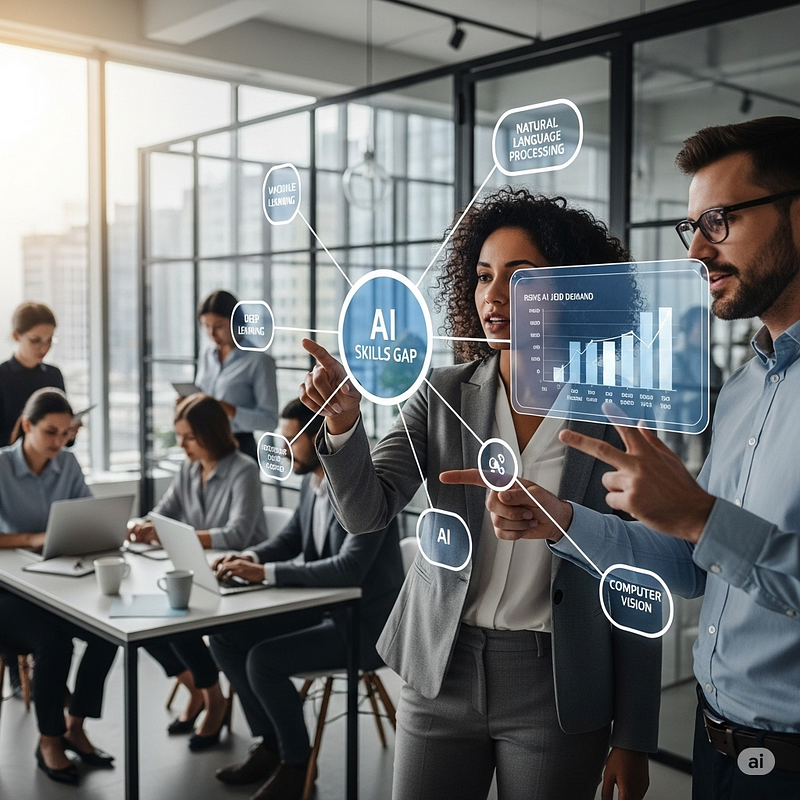
The integration of AI into daily workflows is fundamentally transforming the nature of knowledge work. This shift necessitates a proactive approach to workforce management, focusing on redefining roles, upskilling existing talent, and creating pathways for new hybrid expertise.
**The Transformation of Roles:**AI’s primary impact is the automation of repetitive, entry-level tasks. In cybersecurity, this includes initial alert triage, routine log analysis, and the generation of standard reports. This automation does not eliminate jobs but rather elevates them. Human professionals are freed from the “cognitive drudgery” of low-level tasks and can now focus on more strategic, high-value activities that require uniquely human skills: complex investigation, creative threat hunting, strategic planning, and managing the AI systems themselves. The role of an analyst shifts from being an “alert janitor” to a “cyber investigator” or an “AI-systems manager.”
**Empowering Junior Analysts:**One of the most significant benefits of this transformation is its ability to address the chronic cybersecurity skills gap. AI copilots function as on-demand mentors for junior staff. By providing guided response playbooks, translating complex concepts into natural language, and demonstrating expert-level processes, these tools dramatically accelerate the learning curve. A junior analyst, guided by an AI copilot, can now confidently handle mid-level tasks that previously required years of experience. This in-workflow training compresses the time-to-proficiency from years to months, making the entire security team more capable and resilient.36
**Creating New Hybrid Roles:**This new paradigm creates demand for a new class of professional who possesses a blend of deep domain expertise and AI proficiency. These emerging hybrid roles are critical for managing and optimizing the human-AI ecosystem:
-
**AI Security Architect:**Designs secure systems for AI applications and develops defenses against AI-specific threats.
-
**AI Governance Specialist:**Develops and enforces policies for the ethical and compliant use of AI, auditing systems for bias and ensuring transparency.
-
**AI Red Teamer:**Specializes in testing the security of the organization’s own AI models, using adversarial techniques to identify vulnerabilities before they can be exploited.
-
**AI Trainer/Curator:**Works with AI models to fine-tune their performance, provide feedback on their outputs, and manage the data used for their training to reduce bias and improve accuracy.
Organizations that succeed will be those that actively manage this transition by investing in continuous training, redesigning career paths, and recruiting for these new hybrid skill sets.
5.2 Governing the AI-Powered Enterprise: Frameworks for Security and Risk
The widespread deployment of powerful AI systems, particularly generative AI and LLMs, introduces a new and complex attack surface. Securing the very AI that drives productivity is a paramount concern for leadership. A failure to govern these systems effectively can turn a powerful asset into a catastrophic liability. Fortunately, mature frameworks exist to guide this effort, providing a structured approach to managing AI-specific risks.
**The NIST AI Risk Management Framework (AI RMF):**This is the foundational strategic framework for CISOs and executive leadership. Developed by the U.S. National Institute of Standards and Technology, the AI RMF is a voluntary guide that provides a structured, flexible approach to managing risks throughout the entire AI lifecycle. It is organized around four core functions:
-
**Govern:**Establishing a culture of risk management and clear lines of responsibility for AI systems.
-
**Map:**Identifying the context, intended uses, and potential risks of each AI system.
-
**Measure:**Using quantitative and qualitative tools to analyze, assess, and monitor AI risks.
-
**Manage:**Allocating resources to mitigate identified risks and continuously improving risk management practices.
Adopting the NIST AI RMF provides a globally recognized, defensible standard for responsible AI development and deployment, helping organizations build trustworthy systems.
**The OWASP Top 10 for Large Language Models:**While the NIST framework provides the strategic “what,” the OWASP Top 10 for LLMs provides the tactical “how.” Maintained by the Open Web Application Security Project, this list identifies the ten most critical security vulnerabilities specific to applications built with LLMs. It serves as a practical checklist for technical and security teams to secure their AI implementations.
OWASP IDVulnerabilityBusiness Impact ExampleMitigation StrategySource Snippets
-
**LLM01 Prompt Injection:**An attacker crafts a malicious input that tricks a customer service chatbot into ignoring its safety instructions and executing an unauthorized bank transfer or revealing another user’s private data.Implement strict privilege controls for the LLM, segregate user-provided data from system instructions, and require human-in-the-loop approval for all critical or sensitive actions.
-
**LLM02 Insecure Output Handling:**An LLM generates output containing malicious JavaScript code. When this output is rendered in an internal administrative dashboard, the script executes and steals the administrator’s session cookies, leading to a full account takeover. Treat all output from an LLM as untrusted user input. Apply rigorous server-side validation, sanitization, and encoding to the output before it is processed by any downstream systems or rendered in a browser.
-
**LLM03 Training Data Poisoning:**A malicious actor subtly inserts biased or backdoored data into a public dataset that an organization uses to fine-tune its financial forecasting model. The poisoned model then begins making poor strategic recommendations, leading to significant financial losses. Verify the entire data supply chain. Use only trusted and vetted data sources for model training. Implement anomaly detection during the training process to identify and remove poisoned data points before they can corrupt the model.
-
**81LLM04 Model Denial of Service:**An attacker repeatedly sends complex, resource-intensive queries to an AI-powered service, causing its operational costs to skyrocket and degrading performance for legitimate users, effectively making the service unavailable.Implement strict API rate limiting per user or IP address. Validate and sanitize all inputs to reject overly complex or recursive queries. Continuously monitor resource consumption to detect and block suspicious spikes in usage.
By combining the strategic oversight of the NIST AI RMF with the tactical guidance of the OWASP Top 10 for LLMs, organizations can build a comprehensive governance program that enables them to innovate confidently while managing the unique risks of the AI-powered enterprise.
5.3 Investing in a Culture of Human-AI Collaboration
Ultimately, the successful creation of a 20x workforce is not just a matter of deploying the right technology or establishing the right governance. It is a cultural transformation that requires a deliberate investment in building trust and fostering a dynamic, collaborative relationship between humans and AI.
**Building Trust and Managing Automation Bias:**Technology alone is insufficient. A significant challenge is overcoming the natural human skepticism or, conversely, the over-reliance on AI systems. Current data shows that only 29% of cybersecurity teams fully trust AI to act independently without human oversight. This trust deficit can hinder adoption and limit the potential of agentic AI. On the other hand, “automation bias” — the tendency to uncritically accept the output of an automated system — can lead to catastrophic errors if the AI is wrong.
The solution is to build systems that are transparent and explainable (a field known as XAI or Explainable AI). When an AI agent makes a decision or recommends an action, it must be able to show its work, presenting the evidence and reasoning that led to its conclusion. This transparency allows human experts to quickly validate the AI’s process, build confidence in its capabilities, and know when to override it. Establishing clear protocols for human validation and feedback loops where analysts can correct the AI’s mistakes is essential for building a reliable and trustworthy human-AI team.
**Fostering a Culture of Continuous Learning:**The AI landscape is evolving at an unprecedented pace. The models, tools, and attack techniques of today will be obsolete tomorrow. In this environment, the most critical organizational capability is the ability to learn and adapt continuously. Leadership must foster a culture that encourages experimentation, rewards upskilling, and embraces change.
This involves creating formal training programs to build AI literacy and prompt engineering skills across the workforce. It also means establishing informal communities of practice, where employees can share best practices, showcase successful AI-driven projects, and learn from one another’s experiments. Empowering departmental champions to mentor their peers and drive adoption from the ground up is often more effective than top-down mandates.
The 20x employee is the product of a true symbiosis between human ingenuity and machine intelligence. The role of leadership is to cultivate the conditions for this relationship to flourish. By making strategic investments in technology, committing to the targeted upskilling of their people, and implementing robust governance frameworks, leaders can navigate the complexities of the AI era and unlock a new frontier of organizational effectiveness.