ThreatMapper
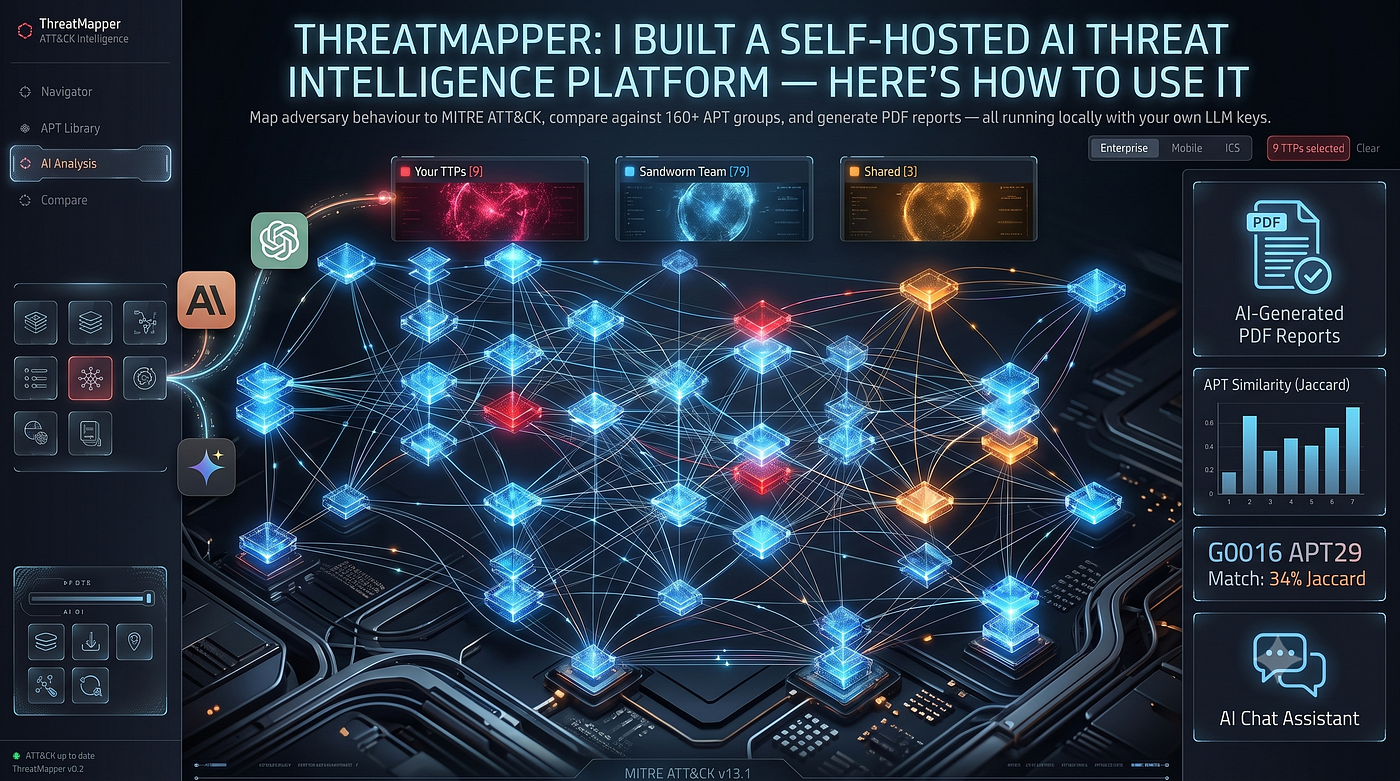
Map adversary behaviour to MITRE ATT&CK in seconds, compare against 174+ APT groups, and generate PDF reports — all running locally with your own LLM keys.
The Problem
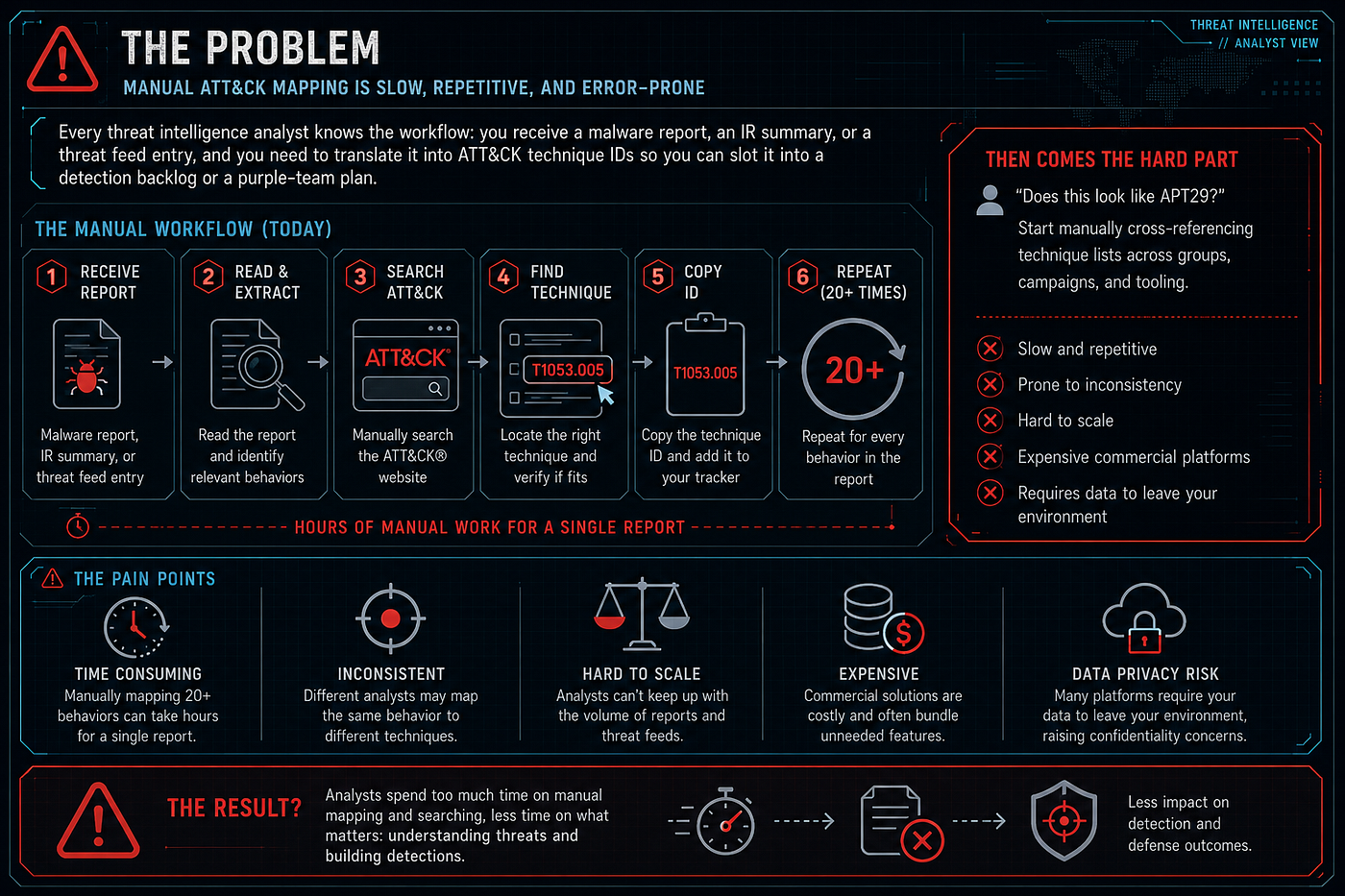
Every threat intelligence analyst knows the workflow: you receive a malware report, an IR summary, or a threat feed entry, and you need to translate it into ATT&CK technique IDs so you can slot it into a detection backlog or a purple-team plan.
Doing this manually is slow. You read the report, recognise a behaviour ("the implant used scheduled tasks for persistence"), pull up the ATT&CK website, search for the technique, copy the ID. Repeat 20 times for a single report. Then someone asks: "Does this look like APT29?" — and you start manually cross-referencing technique lists.
There are commercial platforms that do this — but they are expensive, require data to leave your environment, and often treat ATT&CK as a secondary feature behind proprietary kill-chains.
ThreatMapper is a self-hosted, privacy-first, open-source option that uses the LLM API keys you already have.
What It Does
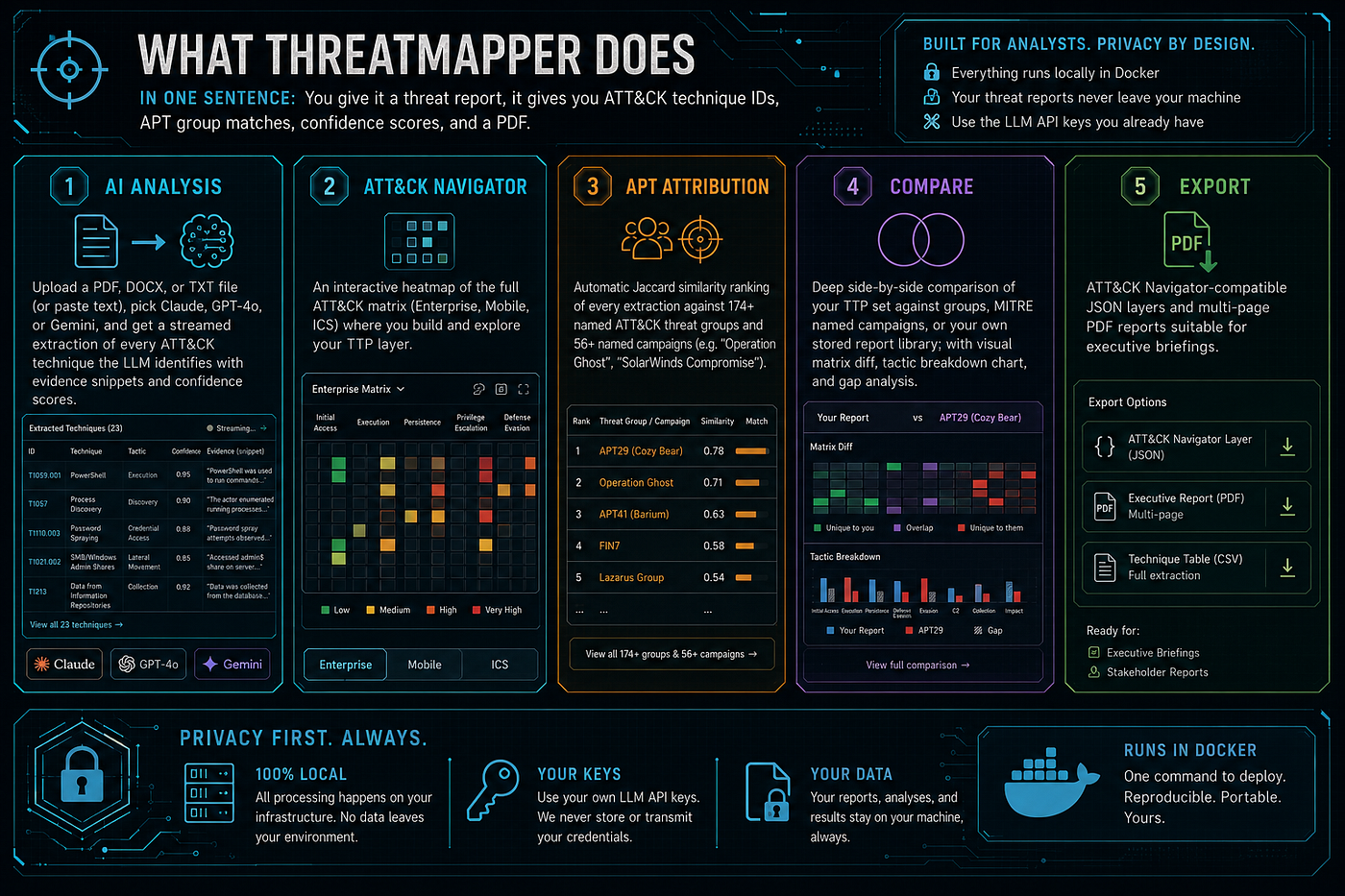
In one sentence: you give it a threat report, it gives you ATT&CK technique IDs, APT group matches, confidence scores, and a PDF.
Concretely:
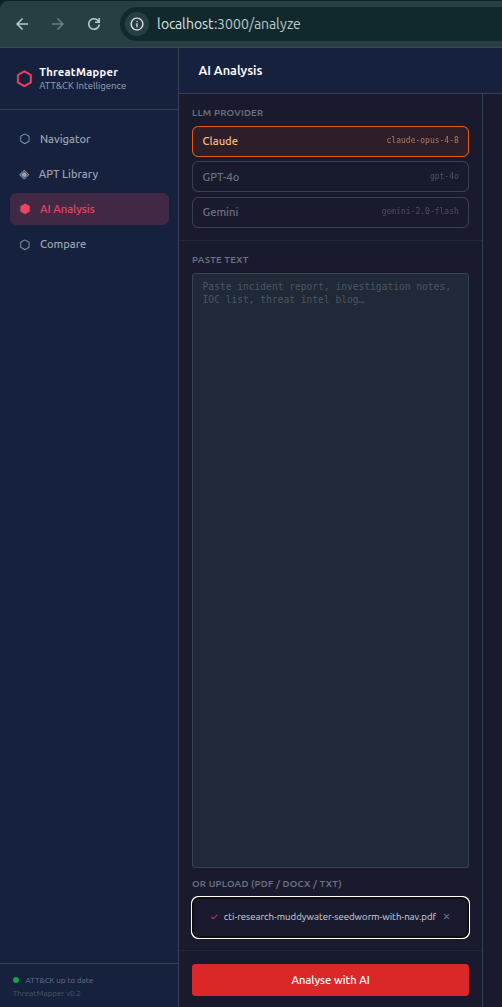
AI Analysis — upload a PDF, DOCX, or TXT file (or paste text), pick Claude, GPT-4o, or Gemini, and get a streamed extraction of every ATT&CK technique the LLM identifies with evidence snippets and confidence scores.
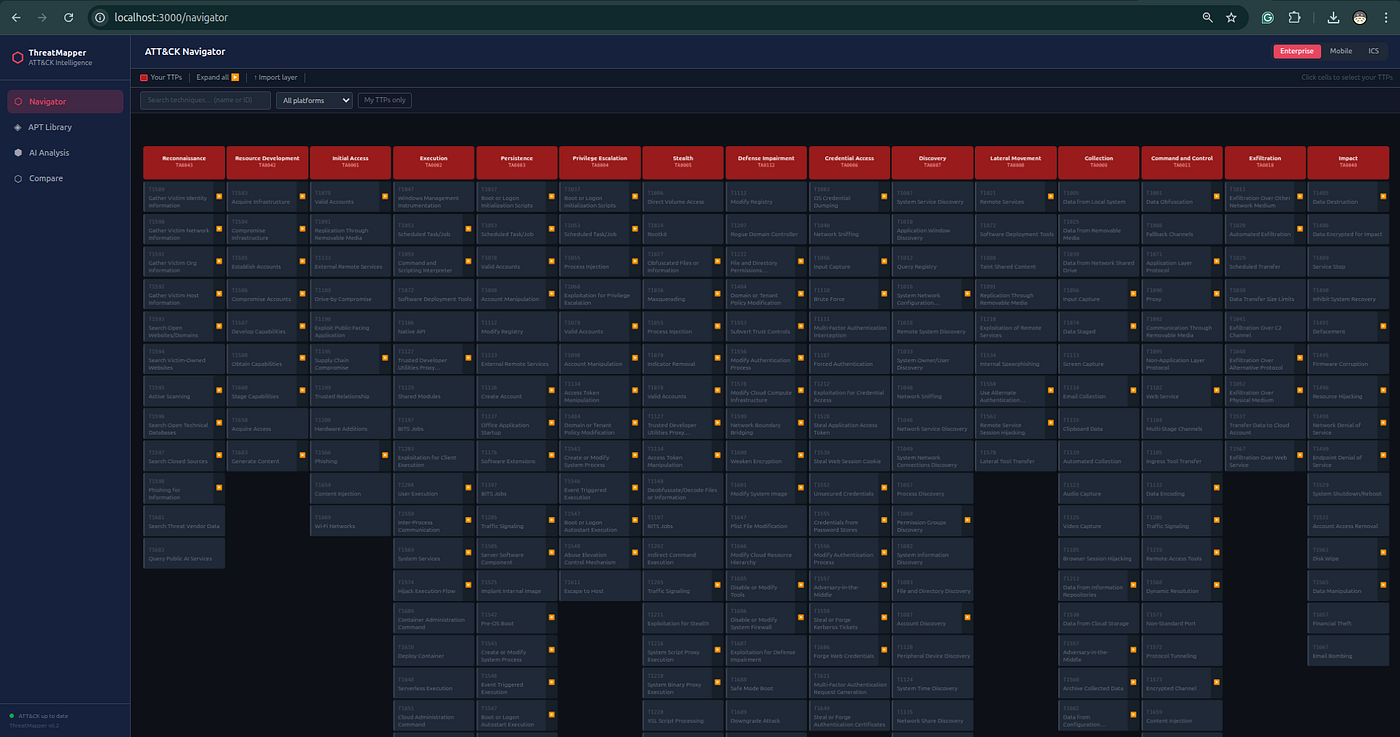
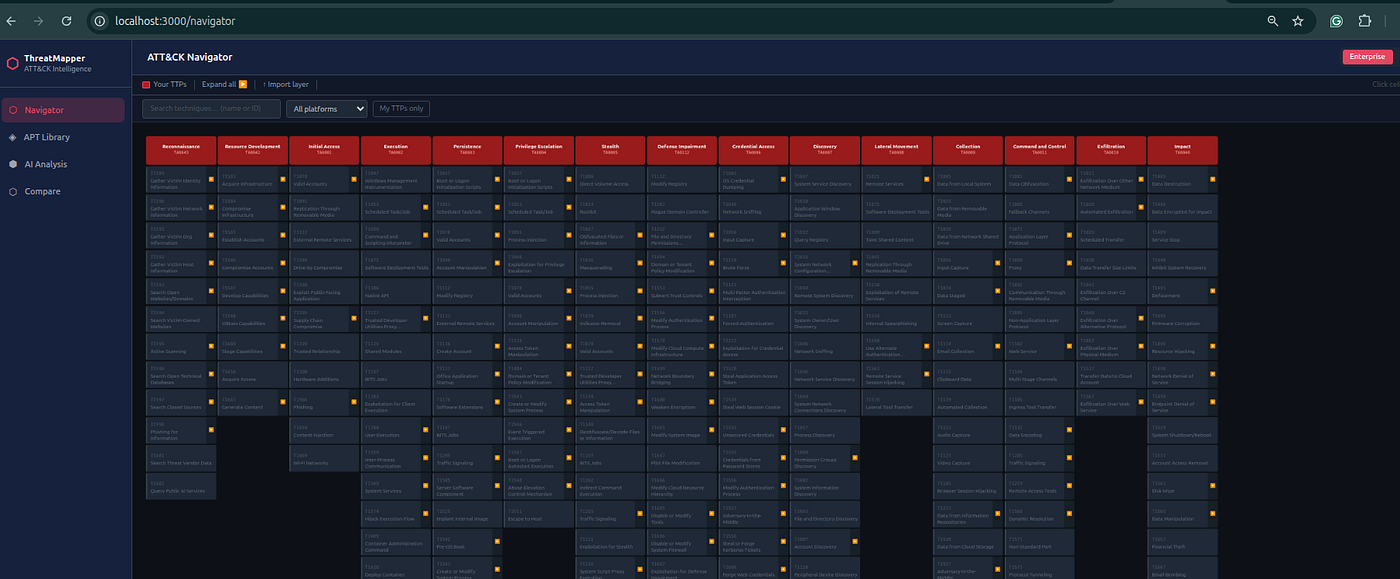
ATT&CK Navigator — an interactive heatmap of the full ATT&CK matrix (Enterprise, Mobile, ICS) where you build and explore your TTP layer.
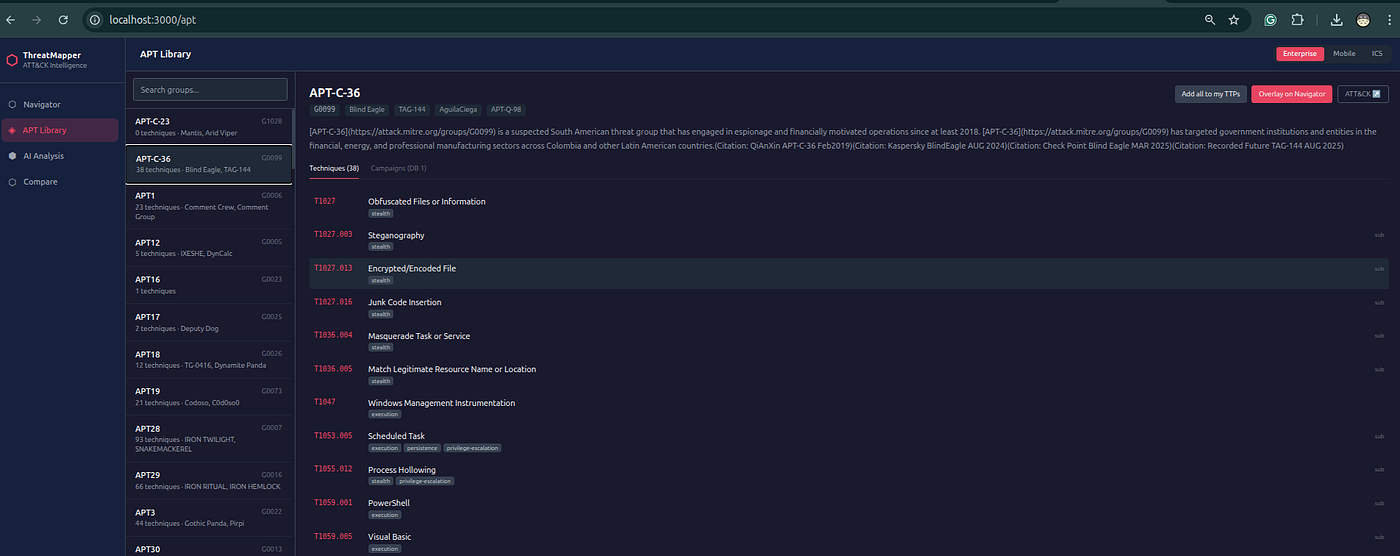
APT Attribution — automatic Jaccard similarity ranking of every extraction against 174+ named ATT&CK threat groups and 56+ named campaigns (e.g. "Operation Ghost", "SolarWinds Compromise").
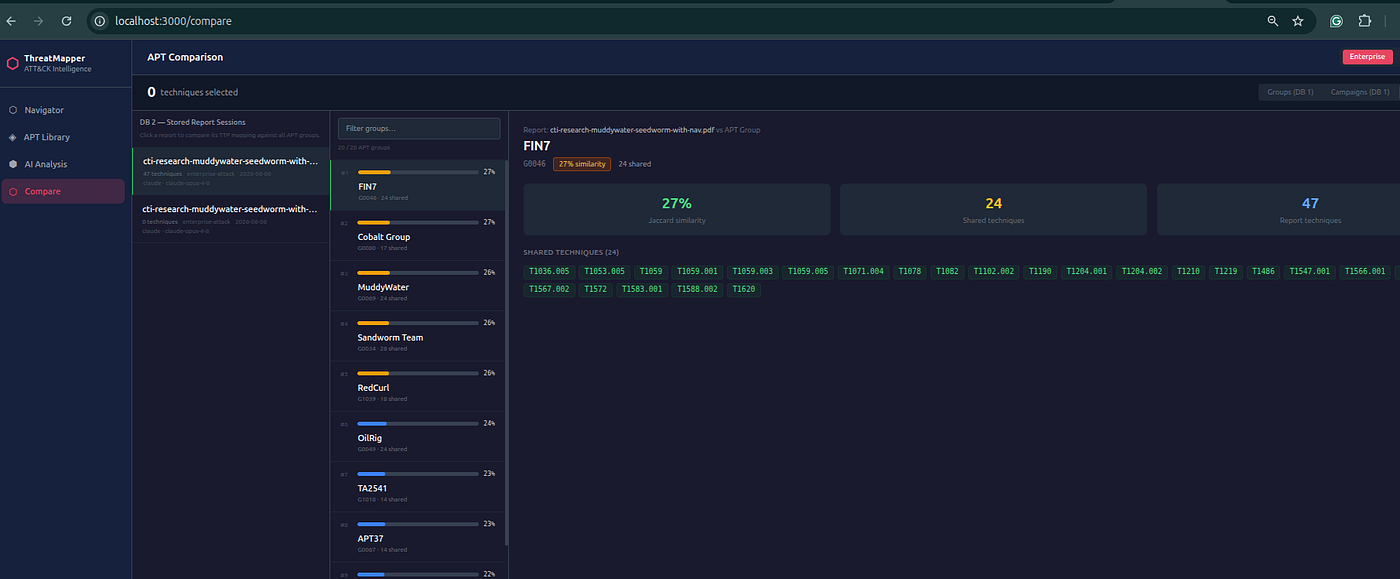
Compare Modes — deep side-by-side comparison of your TTP set against groups, MITRE named campaigns, or your own stored report library; with visual matrix diff, tactic breakdown chart, and gap analysis.
PDF Reports — ATT&CK Navigator-compatible JSON layers and multi-page PDF reports suitable for executive briefings.
Everything runs locally in Docker. Your threat reports never leave your machine.

REST API — full headless access for CI integration and batch workflows.
Architecture in Brief
ThreatMapper is four containers:
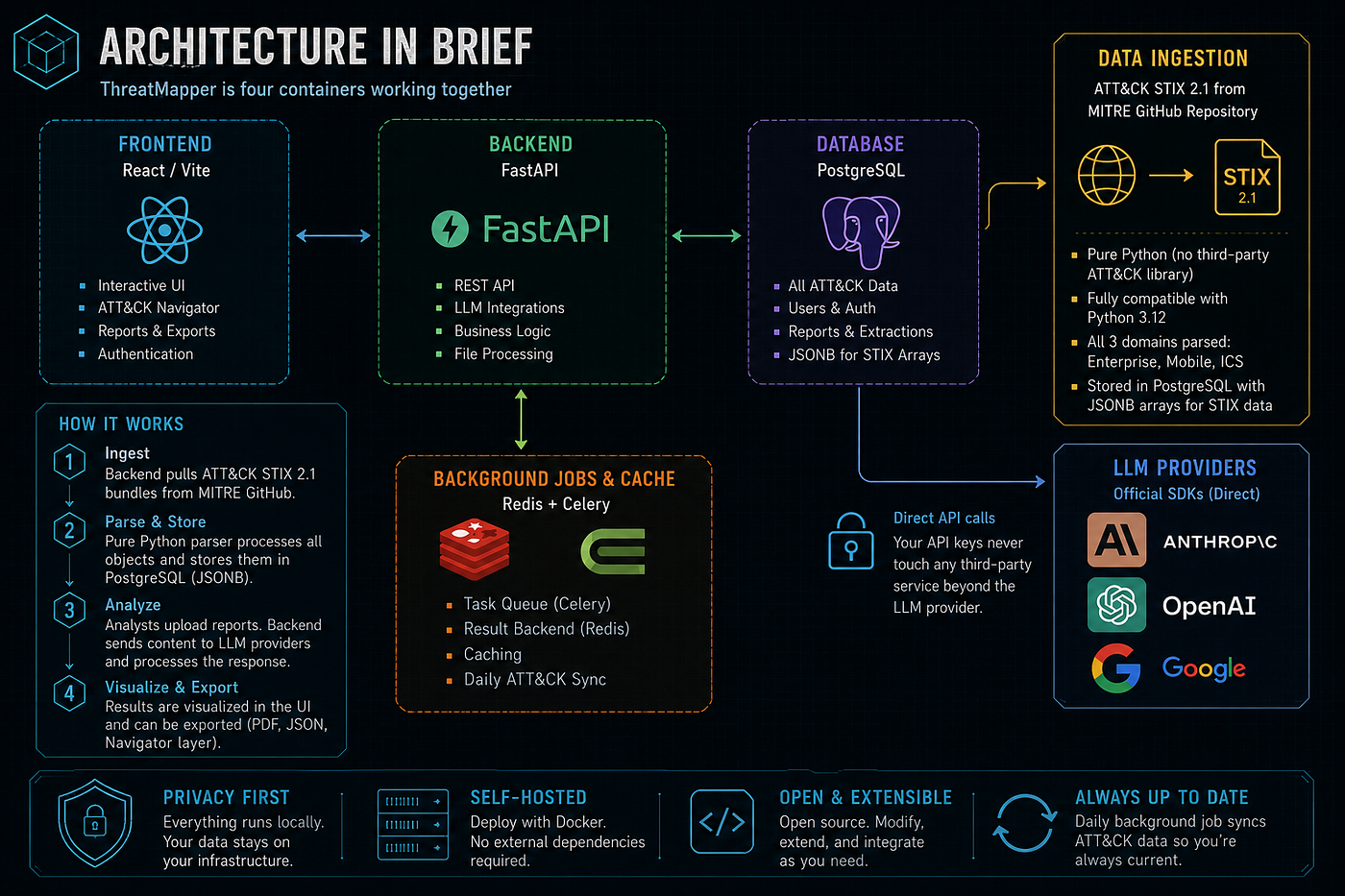
React / Vite frontend  ←→  FastAPI backend  ←→  PostgreSQL
                                  ↕
                           Redis + Celery
                        (background jobs, daily ATT&CK sync)
The backend ingests ATT&CK STIX 2.1 bundles directly from MITRE's GitHub repository using pure Python — no third-party ATT&CK library, fully compatible with Python 3.12. All three domains (Enterprise, Mobile, ICS) are parsed and stored in PostgreSQL.
LLM calls go directly from the FastAPI backend to Anthropic / OpenAI / Google using their official SDKs. Your API keys never touch a third-party service beyond the LLM provider itself.