- AN0559 · Analytic 0559 — Execution of built-in tools (e.g., ipconfig, route, netsh) or PowerShell/WMI queries to enumerate IP, MAC, interface status, or routing configuration.
- AN0560 · Analytic 0560 — Execution of `ifconfig`, `ip a`, or access to `/proc/net/` indicating collection of local interface and route configuration.
- AN0561 · Analytic 0561 — Execution of `ifconfig`, `networksetup`, or `system_profiler` to query IP/MAC/interface configuration and status.
- AN0562 · Analytic 0562 — Use of `esxcli network` commands (e.g., `esxcli network nic list`, `esxcli network ip interface ipv4 get`) via SSH or hostd to enumerate adapter and IP information.
- AN0563 · Analytic 0563 — CLI-based execution of interface and routing discovery commands (e.g., `show ip interface`, `show arp`, `show route`) over Telnet, SSH, or console.
AdversaryGraph public intelligence page
This page is part of Threat Matrix, the public browser workspace for the main AdversaryGraph platform. Use it for ATT&CK pivots, actor and technique context, similarity leads, detection coverage review, and analyst-ready investigation paths.
Validation disclaimer: TTP overlap, actor similarity, generated summaries, and coverage findings are investigation leads, not attribution proof or operational validation without analyst review.
Main AdversaryGraph project Documentation Malware Analysis GitHub
System Network Configuration Discovery
Adversaries may look for details about the network configuration and settings, such as IP and/or MAC addresses, of systems they access or through information discovery of remote systems. Several operating system administration utilities exist that can be used to gather this information. Examples include [Arp](https://attack.mitre.org/software/S0099), [ipconfig](https://attack.mitre.org/software/S0100)/[ifconfig](https://attack.mitre.org/software/S0101), [nbtstat](https://attack.mitre.org/software/S0102), and [route](https://attack.mitre.org/software/S0103). Adversaries may also leverage a [Network Device CLI](https://attack.mitre.org/techniques/T1059/008) on network devices to gather information about configurations and settings, such as IP addresses of configured interfaces and static/dynamic routes (e.g. <code>show ip route</code>, <code>show ip interface</code>).(Citation: US-CERT-TA18-106A)(Citation: Mandiant APT41 Global Intrusion ) On ESXi, adversaries may leverage esxcli to gather network configuration information. For example, the command `esxcli network nic list` will retrieve the MAC address, while `esxcli network ip interface ipv4 get` will retrieve the local IPv4 address.(Citation: Trellix Rnasomhouse 2024) Adversaries may use the information from [System Network Configuration Discovery](https://attack.mitre.org/techniques/T1016) during automated discovery to shape follow-on behaviors, including determining certain access within the target network and what actions to do next.
Open detection, hunting, mitigation, and evidence workspace
Detection logic
System and network discovery techniques normally occur throughout an operation as an adversary learns the environment. Data and events should not be viewed in isolation, but as part of a chain of behavior that could lead to other activities, such as Lateral Movement, based on the information obtained. Monitor processes and command-line arguments for actions that could be taken to gather system and network information. Remote access tools with built-in features may interact directly with the Windows API to gather information. Further, {{LinkById|T1059.008} commands may also be used to gather system and network information with built-in features native to the network device platform. Monitor CLI activity for unexpected or unauthorized use commands being run by non-standard users from non-standard locations. Information may also be acquired through Windows system management tools such as Windows Management Instrumentation and PowerShell.
Observed actors
Ke3chang
G0004APT1
G0006Turla
G0010Darkhotel
G0012admin@338
G0018Naikon
G0019APT3
G0022Threat Group-3390
G0027Lotus Blossom
G0030Lazarus Group
G0032Dragonfly
G0035Stealth Falcon
G0038menuPass
G0045OilRig
G0049APT32
G0050Magic Hound
G0059MuddyWater
G0069APT19
G0073Tropic Trooper
G0081GALLIUM
G0093Kimsuky
G0094APT41
G0096Wizard Spider
G0102Chimera
G0114Sidewinder
G0121HAFNIUM
G0125Higaisa
G0126ZIRCONIUM
G0128Mustang Panda
G0129TeamTNT
G0139HEXANE
G1001Earth Lusca
G1006SideCopy
G1008Moses Staff
G1009Scattered Spider
G1015FIN13
G1016Volt Typhoon
G1017Moonstone Sleet
G1036Play
G1040BlackByte
G1043APT42
G1044Salt Typhoon
G1045Medusa Group
G1051MirrorFace
G1054ShinyHunters
G1057
G0004APT1
G0006Turla
G0010Darkhotel
G0012admin@338
G0018Naikon
G0019APT3
G0022Threat Group-3390
G0027Lotus Blossom
G0030Lazarus Group
G0032Dragonfly
G0035Stealth Falcon
G0038menuPass
G0045OilRig
G0049APT32
G0050Magic Hound
G0059MuddyWater
G0069APT19
G0073Tropic Trooper
G0081GALLIUM
G0093Kimsuky
G0094APT41
G0096Wizard Spider
G0102Chimera
G0114Sidewinder
G0121HAFNIUM
G0125Higaisa
G0126ZIRCONIUM
G0128Mustang Panda
G0129TeamTNT
G0139HEXANE
G1001Earth Lusca
G1006SideCopy
G1008Moses Staff
G1009Scattered Spider
G1015FIN13
G1016Volt Typhoon
G1017Moonstone Sleet
G1036Play
G1040BlackByte
G1043APT42
G1044Salt Typhoon
G1045Medusa Group
G1051MirrorFace
G1054ShinyHunters
G1057
Correlated CTI and IR reports
ATT&CK as a Working Tool: Theory and Hands-On Practical Usage
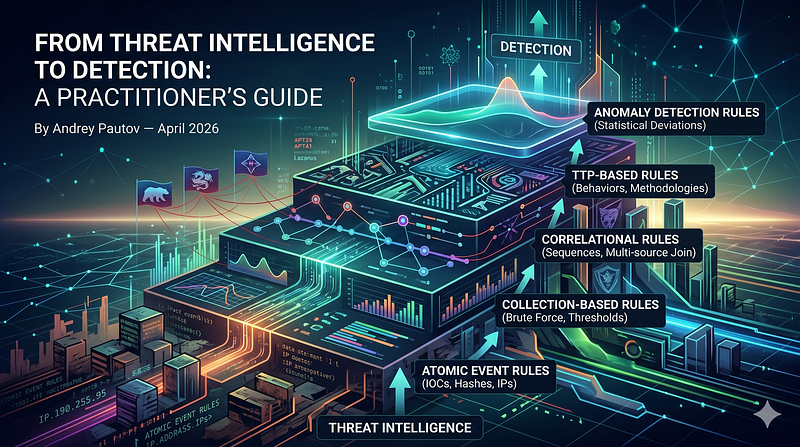
1200km CTI repository · explicit report mentionFrom Threat Intelligence to Detection: A Practitioner's Guide
1200km CTI repository · explicit report mentionATT CK as a Working Tool Theory and Hands On Practical Usage
1200km Medium · authored report mentionFrom Threat Intelligence to Detection A Practitioner s Guide
1200km Medium · authored report mention
1200km CTI repository · explicit report mentionFrom Threat Intelligence to Detection: A Practitioner's Guide
1200km CTI repository · explicit report mentionATT CK as a Working Tool Theory and Hands On Practical Usage
1200km Medium · authored report mentionFrom Threat Intelligence to Detection A Practitioner s Guide
1200km Medium · authored report mention
Cyber Knowledge context
Use these routes to move from the ATT&CK behavior into explanation, implementation, evidence handling, validation, and defensive operations. Relevance is generated from explicit identifiers/names and governed topic mappings; it is not attribution evidence.
Module 10 — Cloud, containers, Kubernetes, and SaaS defense
Blue Team & Defensive Security · Governed topic match · 66/100Module 2 — Asset, service, identity, and exposure context
Blue Team & Defensive Security · Governed topic match · 54/100Module 7 — Endpoint defense and EDR
Blue Team & Defensive Security · Governed topic match · 54/100Evidence integrity, order of volatility, and chain of custody
Digital Forensics & Incident Response (DFIR) · Governed topic match · 54/100Windows endpoint and identity forensics
Digital Forensics & Incident Response (DFIR) · Governed topic match · 54/100Linux and macOS endpoint forensics
Digital Forensics & Incident Response (DFIR) · Governed topic match · 54/100Container image, registry, runtime, and host security
Cloud Security · Governed topic match · 54/100Secure AI development lifecycle and production release gate
AI Security · Governed topic match · 54/100Network behavior, protocols, and configuration recovery
Malware Analysis & Reverse Engineering · Governed topic match · 45/100Module 6 — Alert triage, investigation, and escalation
Blue Team & Defensive Security · Governed topic match · 42/100Readiness, mandate, governance, and communications
Digital Forensics & Incident Response (DFIR) · Governed topic match · 42/100Endpoint live response and volatile acquisition
Digital Forensics & Incident Response (DFIR) · Governed topic match · 42/100
Blue Team & Defensive Security · Governed topic match · 66/100Module 2 — Asset, service, identity, and exposure context
Blue Team & Defensive Security · Governed topic match · 54/100Module 7 — Endpoint defense and EDR
Blue Team & Defensive Security · Governed topic match · 54/100Evidence integrity, order of volatility, and chain of custody
Digital Forensics & Incident Response (DFIR) · Governed topic match · 54/100Windows endpoint and identity forensics
Digital Forensics & Incident Response (DFIR) · Governed topic match · 54/100Linux and macOS endpoint forensics
Digital Forensics & Incident Response (DFIR) · Governed topic match · 54/100Container image, registry, runtime, and host security
Cloud Security · Governed topic match · 54/100Secure AI development lifecycle and production release gate
AI Security · Governed topic match · 54/100Network behavior, protocols, and configuration recovery
Malware Analysis & Reverse Engineering · Governed topic match · 45/100Module 6 — Alert triage, investigation, and escalation
Blue Team & Defensive Security · Governed topic match · 42/100Readiness, mandate, governance, and communications
Digital Forensics & Incident Response (DFIR) · Governed topic match · 42/100Endpoint live response and volatile acquisition
Digital Forensics & Incident Response (DFIR) · Governed topic match · 42/100
MITRE mitigations
No ATT&CK mitigation relationship is published for this technique. Apply risk-based controls and verify scope.
MITRE detection strategies and analytics
Continue the investigation
Attack tools, simulations and detection rules
Follow explicit source relationships into the reference modules. Linked procedures and detectors are not claims of live validation or actor attribution.
- T1016 System Network Configuration Discovery simulation — Exact active technique ID
- T1016 detection rules — Exact active technique ID; not actor-specific detector coverage