Restricting web-based content involves enforcing policies and technologies that limit access to potentially malicious websites, unsafe downloads, and unauthorized browser behaviors. This can include URL filtering, download restrictions, script blocking, and extension control to protect against exploitation, phishing, and malware delivery. This mitigation can be implemented through the following measures: Deploy Web Proxy Filtering: - Use solutions to filter web traffic based on categories, reputation, and content types. - Enforce policies that block unsafe websites or file types at the gateway level. Enable DNS-Based Filtering: - Implement tools to restrict access to domains associated with malware or phishing campaigns. - Use public DNS filtering services to enhance protection. Enforce Content Security Policies (CSP): - Configure CSP headers on internal and external web applications to…
MITRE mitigation sourceAdversaryGraph public intelligence page
This page is part of Threat Matrix, the public browser workspace for the main AdversaryGraph platform. Use it for ATT&CK pivots, actor and technique context, similarity leads, detection coverage review, and analyst-ready investigation paths.
Validation disclaimer: TTP overlap, actor similarity, generated summaries, and coverage findings are investigation leads, not attribution proof or operational validation without analyst review.
Main AdversaryGraph project Documentation Malware Analysis GitHub
External Remote Services
Adversaries may leverage external-facing remote services to initially access and/or persist within a network. Remote services such as VPNs, Citrix, and other access mechanisms allow users to connect to internal enterprise network resources from external locations. There are often remote service gateways that manage connections and credential authentication for these services. Services such as [Windows Remote Management](https://attack.mitre.org/techniques/T1021/006) and [VNC](https://attack.mitre.org/techniques/T1021/005) can also be used externally.(Citation: MacOS VNC software for Remote Desktop) Access to [Valid Accounts](https://attack.mitre.org/techniques/T1078) to use the service is often a requirement, which could be obtained through credential pharming or by obtaining the credentials from users after compromising the enterprise network.(Citation: Volexity Virtual Private Keylogging) Access to remote services may be used as a redundant or persistent access mechanism during an operation. Access may also be gained through an exposed service that doesn’t require authentication. In containerized environments, this may include an exposed Docker API, Kubernetes API server, kubelet, or web application such as the Kubernetes dashboard.(Citation: Trend Micro Exposed Docker Server)(Citation: Unit 42 Hildegard Malware) Adversaries may also establish persistence on network by configuring a Tor hidden service on a compromised system. Adversaries may utilize the tool `ShadowLink` to facilitate the installation and configuration of the Tor hidden service. Tor hidden service is the…
Open detection, hunting, mitigation, and evidence workspace
Detection logic
Follow best practices for detecting adversary use of Valid Accounts for authenticating to remote services. Collect authentication logs and analyze for unusual access patterns, windows of activity, and access outside of normal business hours. When authentication is not required to access an exposed remote service, monitor for follow-on activities such as anomalous external use of the exposed API or application.
Observed actors
G0004APT28
G0007APT29
G0016APT18
G0026Threat Group-3390
G0027Sandworm Team
G0034Dragonfly
G0035OilRig
G0049FIN5
G0053Leviathan
G0065GALLIUM
G0093Kimsuky
G0094APT41
G0096APT-C-36
G0099Wizard Spider
G0102Chimera
G0114GOLD SOUTHFIELD
G0115TeamTNT
G0139Ember Bear
G1003LAPSUS$
G1004Scattered Spider
G1015FIN13
G1016Volt Typhoon
G1017Akira
G1024Play
G1040Sea Turtle
G1041Velvet Ant
G1047VOID MANTICORE
G1055
Correlated CTI and IR reports
1200km CTI repository · explicit report mentionCTI Research: Sandworm / APT44
1200km CTI repository · explicit report mentionPioneer Kitten (Fox Kitten, Lemon Sandstorm, UNC757) – Actor Deep Research
Israel Threat Actors CTI · explicit report mentionCTI Research Sandworm APT44
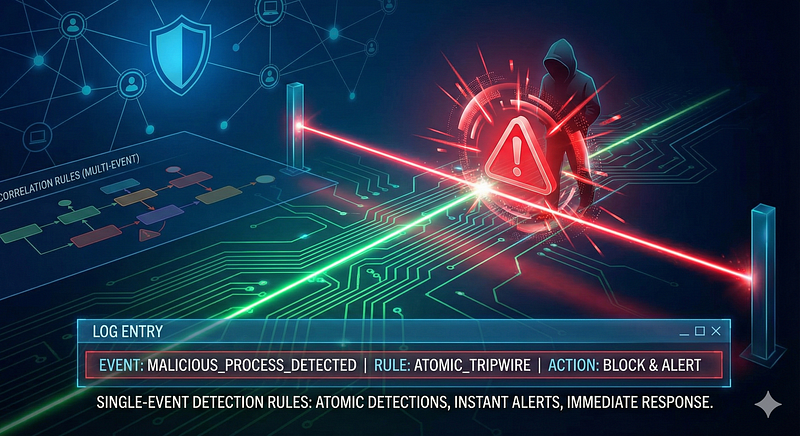
1200km Medium · authored report mentionSingle Event Detection Rules in Cybersecurity
1200km Medium · authored report mention
Cyber Knowledge context
Use these routes to move from the ATT&CK behavior into explanation, implementation, evidence handling, validation, and defensive operations. Relevance is generated from explicit identifiers/names and governed topic mappings; it is not attribution evidence.
Red Team & Offensive Security · Governed topic match · 63/100Embedded, firmware, hardware, and update-chain research
Vulnerability Research & Exploit Development · Governed topic match · 60/100Requirements, ownership, inventory, and data flow
Secure Code & Application Security · Governed topic match · 57/100Dynamic testing, fuzzing, abuse simulation, and security regression
Secure Code & Application Security · Governed topic match · 48/100Module 14 — Program governance and maturity
Red Team & Offensive Security · Governed topic match · 42/100Files, parsers, serialization, URL fetching, and isolation
Secure Code & Application Security · Governed topic match · 42/100Governance, organizational context, and accountable authority
Governance, Risk & Compliance (GRC) · Governed topic match · 42/100Evidence engineering, control testing, audit, and assurance
Governance, Risk & Compliance (GRC) · Governed topic match · 30/100Module 5 — Cloud, containers, and Kubernetes
Red Team & Offensive Security · Tactic learning route · 24/100Module 4 — Detection engineering and detection as code
Blue Team & Defensive Security · Tactic learning route · 24/100Disk, file-system, and persistence forensics
Digital Forensics & Incident Response (DFIR) · Tactic learning route · 24/100Module 4 — Web applications and APIs
Red Team & Offensive Security · Tactic learning route · 24/100
MITRE mitigations
Network segmentation involves dividing a network into smaller, isolated segments to control and limit the flow of traffic between devices, systems, and applications. By segmenting networks, organizations can reduce the attack surface, restrict lateral movement by adversaries, and protect critical assets from compromise. Effective network segmentation leverages a combination of physical boundaries, logical separation through VLANs, and access control policies enforced by network appliances like firewalls, routers, and cloud-based configurations. This mitigation can be implemented through the following measures: Segment Critical Systems: - Identify and group systems based on their function, sensitivity, and risk. Examples include payment systems, HR databases, production systems, and internet-facing servers. - Use VLANs, firewalls, or routers to enforce logical separation. Implement DMZ f…
MITRE mitigation sourceDisable or remove unnecessary and potentially vulnerable software, features, or services to reduce the attack surface and prevent abuse by adversaries. This involves identifying software or features that are no longer needed or that could be exploited and ensuring they are either removed or properly disabled. This mitigation can be implemented through the following measures: Remove Legacy Software: - Use Case: Disable or remove older versions of software that no longer receive updates or security patches (e.g., legacy Java, Adobe Flash). - Implementation: A company removes Flash Player from all employee systems after it has reached its end-of-life date. Disable Unused Features: - Use Case: Turn off unnecessary operating system features like SMBv1, Telnet, or RDP if they are not required. - Implementation: Disable SMBv1 in a Windows environment to mitigate vulnerabilities like EternalBlu…
MITRE mitigation sourceRestrict access to network resources, such as file shares, remote systems, and services, to only those users, accounts, or systems with a legitimate business requirement. This can include employing technologies like network concentrators, RDP gateways, and zero-trust network access (ZTNA) models, alongside hardening services and protocols. This mitigation can be implemented through the following measures: Audit and Restrict Access: - Regularly audit permissions for file shares, network services, and remote access tools. - Remove unnecessary access and enforce least privilege principles for users and services. - Use Active Directory and IAM tools to restrict access based on roles and attributes. Deploy Secure Remote Access Solutions: - Use RDP gateways, VPN concentrators, and ZTNA solutions to aggregate and secure remote access connections. - Configure access controls to restrict connect…
MITRE mitigation sourceMulti-Factor Authentication (MFA) enhances security by requiring users to provide at least two forms of verification to prove their identity before granting access. These factors typically include: - *Something you know*: Passwords, PINs. - *Something you have*: Physical tokens, smartphone authenticator apps. - *Something you are*: Biometric data such as fingerprints, facial recognition, or retinal scans. Implementing MFA across all critical systems and services ensures robust protection against account takeover and unauthorized access. This mitigation can be implemented through the following measures: Identity and Access Management (IAM): - Use IAM solutions like Azure Active Directory, Okta, or AWS IAM to enforce MFA policies for all user logins, especially for privileged roles. - Enable conditional access policies to enforce MFA for risky sign-ins (e.g., unfamiliar devices, geolocati…
MITRE mitigation sourceMITRE detection strategies and analytics
- AN1004 · Analytic 1004 — Unusual or unauthorized external remote access attempts (e.g., RDP, VPN, Citrix) → repeated failed logins followed by a successful session from uncommon geolocations or outside business hours → subsequent internal lateral movement or data exfiltration activities.
- AN1005 · Analytic 1005 — Repeated SSH, VPN, or RDP gateway authentication attempts from external IPs → subsequent successful logon → remote shell or lateral movement activity (e.g., scp/sftp).
- AN1006 · Analytic 1006 — Unexpected inbound or outbound VNC/SSH/Screen Sharing connections from external sources → repeated failed logins followed by success → remote interactive sessions or abnormal file transfers.
- AN1007 · Analytic 1007 — Connections to exposed container services (e.g., Docker API, Kubernetes API server) from unauthorized external IPs → abnormal container creation/start → lateral activity within cluster nodes.
Related sector research
Editorial reading routes, not additional MITRE relationships or proof of an actor's involvement in a particular incident.
- Cyberattacks on Big Pharma and Its Ecosystem — Change Healthcare: victim-described Citrix remote access without MFA. Evidence cutoff: 2026-09-25.
Continue the investigation
Attack tools, simulations and detection rules
Follow explicit source relationships into the reference modules. Linked procedures and detectors are not claims of live validation or actor attribution.
- T1133 External Remote Services simulation — Exact active technique ID
- T1133 detection rules — Exact active technique ID; not actor-specific detector coverage