

Set and enforce secure password policies for accounts to reduce the likelihood of unauthorized access. Strong password policies include enforcing password complexity, requiring regular password changes, and preventing password reuse. This mitigation can be implemented through the following measures: Windows Systems: - Use Group Policy Management Console (GPMC) to configure: - Minimum password length (e.g., 12+ characters). - Password complexity requirements. - Password history (e.g., disallow last 24 passwords). - Account lockout duration and thresholds. Linux Systems: - Configure Pluggable Authentication Modules (PAM): - Use `pam_pwquality` to enforce complexity and length requirements. - Implement `pam_tally2` or `pam_faillock` for account lockouts. - Use `pwunconv` to disable password reuse. Password Managers: - Enforce usage of enterprise password managers (e.g., Bitwarden, 1Passwor…
MITRE mitigation sourceAdversaryGraph public intelligence page
This page is part of Threat Matrix, the public browser workspace for the main AdversaryGraph platform. Use it for ATT&CK pivots, actor and technique context, similarity leads, detection coverage review, and analyst-ready investigation paths.
Validation disclaimer: TTP overlap, actor similarity, generated summaries, and coverage findings are investigation leads, not attribution proof or operational validation without analyst review.
Main AdversaryGraph project Documentation Malware Analysis GitHub
Valid Accounts
Adversaries may obtain and abuse credentials of existing accounts as a means of gaining Initial Access, Persistence, Privilege Escalation, or Defense Evasion. Compromised credentials may be used to bypass access controls placed on various resources on systems within the network and may even be used for persistent access to remote systems and externally available services, such as VPNs, Outlook Web Access, network devices, and remote desktop.(Citation: volexity_0day_sophos_FW) Compromised credentials may also grant an adversary increased privilege to specific systems or access to restricted areas of the network. Adversaries may choose not to use malware or tools in conjunction with the legitimate access those credentials provide to make it harder to detect their presence. In some cases, adversaries may abuse inactive accounts: for example, those belonging to individuals who are no longer part of an organization. Using these accounts may allow the adversary to evade detection, as the original account user will not be present to identify any anomalous activity taking place on their account.(Citation: CISA MFA PrintNightmare) The overlap of permissions for local, domain, and cloud accounts across a network of systems is of concern because the adversary may be able to pivot across accounts and systems to reach a high level of access (i.e., domain or enterprise administrator) to bypass access controls set within the enterprise.(Citation: TechNet Credential Theft)
Open detection, hunting, mitigation, and evidence workspace
Detection logic
Configure robust, consistent account activity audit policies across the enterprise and with externally accessible services. Look for suspicious account behavior across systems that share accounts, either user, admin, or service accounts. Examples: one account logged into multiple systems simultaneously; multiple accounts logged into the same machine simultaneously; accounts logged in at odd times or outside of business hours. Activity may be from interactive login sessions or process ownership from accounts being used to execute binaries on a remote system as a particular account. Correlate other security systems with login information (e.g., a user has an active login session but has not entered the building or does not have VPN access). Perform regular audits of domain and local system accounts to detect accounts that may have been created by an adversary for persistence. Checks on these accounts could also include whether default accounts such as Guest have been activated. These audits should also include checks on any appliances and applications for default credentials or SSH keys, and if any are discovered, they should be updated immediately.
Observed actors
G0001Ke3chang
G0004APT28
G0007Carbanak
G0008PittyTiger
G0011APT29
G0016APT18
G0026Threat Group-3390
G0027Lazarus Group
G0032Sandworm Team
G0034Dragonfly
G0035FIN6
G0037Suckfly
G0039menuPass
G0045FIN7
G0046OilRig
G0049FIN10
G0051FIN5
G0053FIN8
G0061APT33
G0064Leviathan
G0065FIN4
G0085APT39
G0087Silence
G0091GALLIUM
G0093APT41
G0096Wizard Spider
G0102Chimera
G0114Fox Kitten
G0117Indrik Spider
G0119Silent Librarian
G0122LAPSUS$
G1004POLONIUM
G1005Scattered Spider
G1015Volt Typhoon
G1017Cinnamon Tempest
G1021Akira
G1024INC Ransom
G1032Star Blizzard
G1033Play
G1040Sea Turtle
G1041BlackByte
G1043Salt Typhoon
G1045UNC3886
G1048Medusa Group
G1051VOID MANTICORE
G1055TeamPCP
G1056ShinyHunters
G1057The Gentlemen
G1058
Correlated CTI and IR reports
Google Cloud / Mandiant · direct source mappingIRGC-Affiliated Actors Exploit Vulnerabilities for Data Extortion and Disk Encryption
CISA · curated primary-source mappingIranian Government-Sponsored APT Actors Exploiting Microsoft Exchange and Fortinet Vulnerabilities
CISA · curated primary-source mappingAPT39 (Chafer / Remix Kitten)
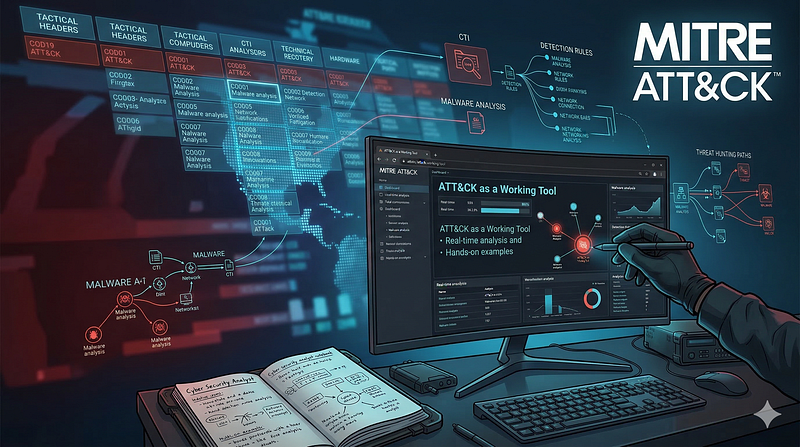
Israel Threat Actors CTI · explicit report mentionATT&CK as a Working Tool: Theory and Hands-On Practical Usage
1200km CTI repository · explicit report mentionCTI Research: Handala Hack Group (aka Handala Hack Team)
1200km CTI repository · explicit report mentionCTI Research: Handala Hack Group (aka Handala Hack Team)
1200km CTI repository · explicit report mentionCTI Research: LLM/AI/MCP Usage in the Cyber Kill Chain
1200km CTI repository · explicit report mentionCTI Research: LLM/AI/MCP Usage in the Cyber Kill Chain
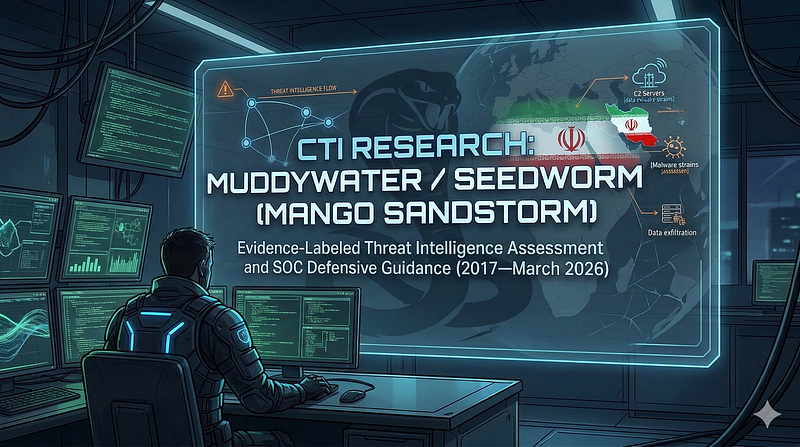
1200km CTI repository · explicit report mentionCTI Research: MuddyWater / Seedworm (Mango Sandstorm)
1200km CTI repository · explicit report mentionCTI Research: MuddyWater / Seedworm (Mango Sandstorm)
1200km CTI repository · explicit report mentionDefensive CTI Research on Threats to Israeli Government and Public-Sector Environments
Israel Threat Actors CTI · explicit report mentionExecutive Summary
Israel Threat Actors CTI · explicit report mentionPioneer Kitten (Fox Kitten, Lemon Sandstorm, UNC757) – Actor Deep Research
Israel Threat Actors CTI · explicit report mentionATT CK as a Working Tool Theory and Hands On Practical Usage
1200km Medium · authored report mentionCTI Research Handala Hack Group aka Handala Hack Team
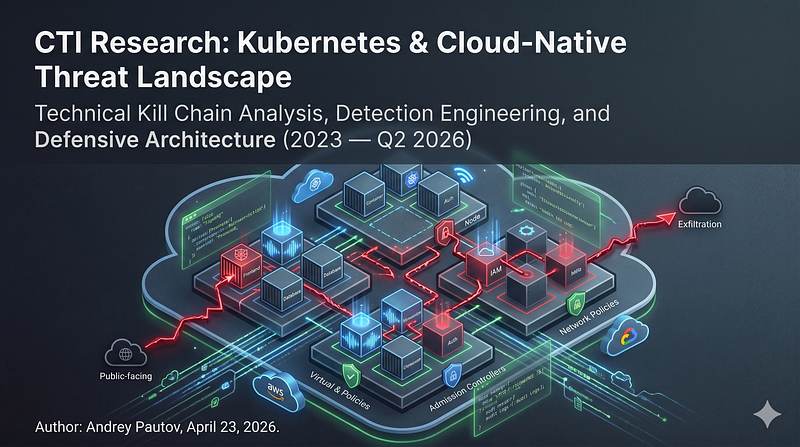
1200km Medium · authored report mentionCTI Research Kubernetes Cloud Native Threat Landscape
1200km Medium · authored report mentionCTI Research MuddyWater Seedworm Mango Sandstorm
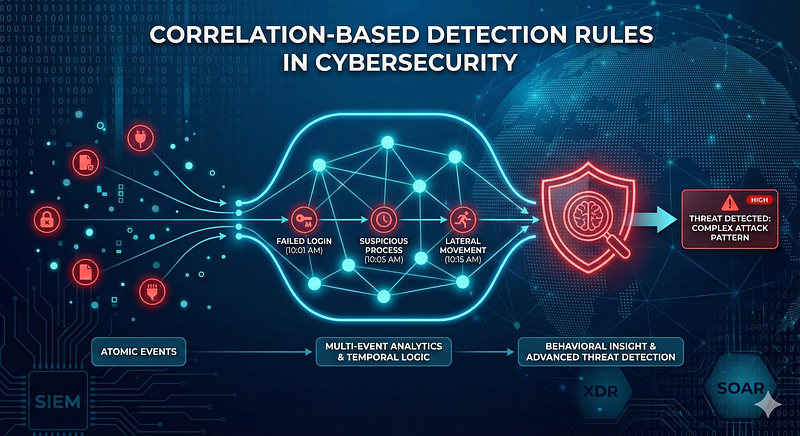
1200km Medium · authored report mentionCorrelation Based Detection Rules in Cybersecurity From Atomic Events to Behavioral Insight
1200km Medium · authored report mentionCyberattacks on 4G LTE Telecom Networks Threat Mapping and Defense
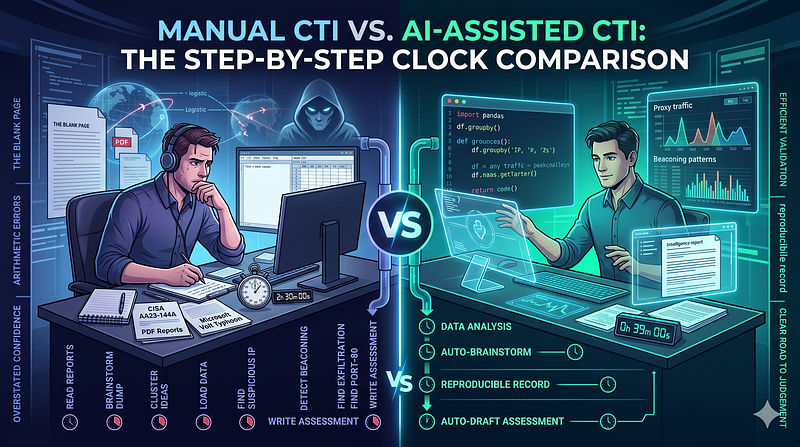
1200km Medium · authored report mentionManual CTI vs AI Assisted CTI A Step by Step Clock Comparison
1200km Medium · authored report mention
Cyber Knowledge context
Use these routes to move from the ATT&CK behavior into explanation, implementation, evidence handling, validation, and defensive operations. Relevance is generated from explicit identifiers/names and governed topic mappings; it is not attribution evidence.
Malware Analysis & Reverse Engineering · Tactic learning route · 24/100Module 4 — Detection engineering and detection as code
Blue Team & Defensive Security · Tactic learning route · 24/100Disk, file-system, and persistence forensics
Digital Forensics & Incident Response (DFIR) · Tactic learning route · 24/100Module 5 — Cloud, containers, and Kubernetes
Red Team & Offensive Security · Tactic learning route · 24/100Binary formats, ABI, loaders, and mitigations
Vulnerability Research & Exploit Development · Tactic learning route · 24/100Network, edge, service communication, hybrid access, and zero trust
Cloud Security · Tactic learning route · 24/100Module 4 — Web applications and APIs
Red Team & Offensive Security · Tactic learning route · 24/100Module 3 — Telemetry and logging architecture
Blue Team & Defensive Security · Tactic learning route · 24/100Threat modeling and secure architecture
Secure Code & Application Security · Tactic learning route · 24/100
MITRE mitigations
User Account Management involves implementing and enforcing policies for the lifecycle of user accounts, including creation, modification, and deactivation. Proper account management reduces the attack surface by limiting unauthorized access, managing account privileges, and ensuring accounts are used according to organizational policies. This mitigation can be implemented through the following measures: Enforcing the Principle of Least Privilege - Implementation: Assign users only the minimum permissions required to perform their job functions. Regularly audit accounts to ensure no excess permissions are granted. - Use Case: Reduces the risk of privilege escalation by ensuring accounts cannot perform unauthorized actions. Implementing Strong Password Policies - Implementation: Enforce password complexity requirements (e.g., length, character types). Require password expiration every 90…
MITRE mitigation sourcePrivileged Account Management focuses on implementing policies, controls, and tools to securely manage privileged accounts (e.g., SYSTEM, root, or administrative accounts). This includes restricting access, limiting the scope of permissions, monitoring privileged account usage, and ensuring accountability through logging and auditing.This mitigation can be implemented through the following measures: Account Permissions and Roles: - Implement RBAC and least privilege principles to allocate permissions securely. - Use tools like Active Directory Group Policies to enforce access restrictions. Credential Security: - Deploy password vaulting tools like CyberArk, HashiCorp Vault, or KeePass for secure storage and rotation of credentials. - Enforce password policies for complexity, uniqueness, and expiration using tools like Microsoft Group Policy Objects (GPO). Multi-Factor Authentication (MF…
MITRE mitigation sourceMulti-Factor Authentication (MFA) enhances security by requiring users to provide at least two forms of verification to prove their identity before granting access. These factors typically include: - *Something you know*: Passwords, PINs. - *Something you have*: Physical tokens, smartphone authenticator apps. - *Something you are*: Biometric data such as fingerprints, facial recognition, or retinal scans. Implementing MFA across all critical systems and services ensures robust protection against account takeover and unauthorized access. This mitigation can be implemented through the following measures: Identity and Access Management (IAM): - Use IAM solutions like Azure Active Directory, Okta, or AWS IAM to enforce MFA policies for all user logins, especially for privileged roles. - Enable conditional access policies to enforce MFA for risky sign-ins (e.g., unfamiliar devices, geolocati…
MITRE mitigation sourceApplication Developer Guidance focuses on providing developers with the knowledge, tools, and best practices needed to write secure code, reduce vulnerabilities, and implement secure design principles. By integrating security throughout the software development lifecycle (SDLC), this mitigation aims to prevent the introduction of exploitable weaknesses in applications, systems, and APIs. This mitigation can be implemented through the following measures: Preventing SQL Injection (Secure Coding Practice): - Implementation: Train developers to use parameterized queries or prepared statements instead of directly embedding user input into SQL queries. - Use Case: A web application accepts user input to search a database. By sanitizing and validating user inputs, developers can prevent attackers from injecting malicious SQL commands. Cross-Site Scripting (XSS) Mitigation: - Implementation: Re…
MITRE mitigation sourceUser Training involves educating employees and contractors on recognizing, reporting, and preventing cyber threats that rely on human interaction, such as phishing, social engineering, and other manipulative techniques. Comprehensive training programs create a human firewall by empowering users to be an active component of the organization's cybersecurity defenses. This mitigation can be implemented through the following measures: Create Comprehensive Training Programs: - Design training modules tailored to the organization's risk profile, covering topics such as phishing, password management, and incident reporting. - Provide role-specific training for high-risk employees, such as helpdesk staff or executives. Use Simulated Exercises: - Conduct phishing simulations to measure user susceptibility and provide targeted follow-up training. - Run social engineering drills to evaluate employ…
MITRE mitigation sourceImplement robust Active Directory (AD) configurations using group policies to secure user accounts, control access, and minimize the attack surface. AD configurations enable centralized control over account settings, logon policies, and permissions, reducing the risk of unauthorized access and lateral movement within the network. This mitigation can be implemented through the following measures: Account Configuration: - Implementation: Use domain accounts instead of local accounts to leverage AD’s centralized management, including group policies, auditing, and access control. - Use Case: For IT staff managing shared resources, provision domain accounts that allow IT teams to log in centrally, reducing the risk of unmanaged, rogue local accounts on individual machines. Interactive Logon Restrictions: - Implementation: Configure group policies to restrict interactive logons (e.g., direct…
MITRE mitigation sourceAccount Use Policies help mitigate unauthorized access by configuring and enforcing rules that govern how and when accounts can be used. These policies include enforcing account lockout mechanisms, restricting login times, and setting inactivity timeouts. Proper configuration of these policies reduces the risk of brute-force attacks, credential theft, and unauthorized access by limiting the opportunities for malicious actors to exploit accounts. This mitigation can be implemented through the following measures: Account Lockout Policies: - Implementation: Configure account lockout settings so that after a defined number of failed login attempts (e.g., 3-5 attempts), the account is locked for a specific time period (e.g., 15 minutes) or requires an administrator to unlock it. - Use Case: This prevents brute-force attacks by limiting how many incorrect password attempts can be made before…
MITRE mitigation sourceMITRE detection strategies and analytics
- AN1543 · Analytic 1543 — Detection of compromised or misused valid accounts via anomalous logon patterns, abnormal logon types, and inconsistent geographic or time-based activity across Windows endpoints.
- AN1544 · Analytic 1544 — Detection of valid account misuse through SSH logins, sudo/su abuse, and service account anomalies outside expected patterns.
- AN1545 · Analytic 1545 — Detection of interactive and remote logins by service accounts or users at unusual times, with unexpected child process activity.
- AN1546 · Analytic 1546 — Detection of valid account abuse in IdP logs via geographic anomalies, impossible travel, risky sign-ins, and multiple MFA attempts or failures.
- AN1547 · Analytic 1547 — Detection of containerized service accounts or compromised kubeconfigs being used for cluster access from unexpected nodes or IPs.
Related sector research
Editorial reading routes, not additional MITRE relationships or proof of an actor's involvement in a particular incident.
- Cyberattacks on Big Pharma and Its Ecosystem — Change Healthcare: victim-described use of compromised credentials. Evidence cutoff: 2026-09-25.
Continue the investigation
Attack tools, simulations and detection rules
Follow explicit source relationships into the reference modules. Linked procedures and detectors are not claims of live validation or actor attribution.
- T1078 Valid Accounts simulation — Exact active technique ID
- T1078 detection rules — Exact active technique ID; not actor-specific detector coverage