
Prevent users or groups from installing unauthorized or unapproved software to reduce the risk of introducing malicious or vulnerable applications. This can be achieved through allowlists, software restriction policies, endpoint management tools, and least privilege access principles. This mitigation can be implemented through the following measures: Application Whitelisting - Implement Microsoft AppLocker or Windows Defender Application Control (WDAC) to create and enforce allowlists for approved software. - Whitelist applications based on file hash, path, or digital signatures. Restrict User Permissions - Remove local administrator rights for all non-IT users. - Use Role-Based Access Control (RBAC) to restrict installation permissions to privileged accounts only. Software Restriction Policies (SRP) - Use GPO to configure SRP to deny execution of binaries from directories such as `%App…
MITRE mitigation sourceAdversaryGraph public intelligence page
This page is part of Threat Matrix, the public browser workspace for the main AdversaryGraph platform. Use it for ATT&CK pivots, actor and technique context, similarity leads, detection coverage review, and analyst-ready investigation paths.
Validation disclaimer: TTP overlap, actor similarity, generated summaries, and coverage findings are investigation leads, not attribution proof or operational validation without analyst review.
Main AdversaryGraph project Documentation Malware Analysis GitHub
Command and Scripting Interpreter
Adversaries may abuse command and script interpreters to execute commands, scripts, or binaries. These interfaces and languages provide ways of interacting with computer systems and are a common feature across many different platforms. Most systems come with some built-in command-line interface and scripting capabilities, for example, macOS and Linux distributions include some flavor of [Unix Shell](https://attack.mitre.org/techniques/T1059/004) while Windows installations include the [Windows Command Shell](https://attack.mitre.org/techniques/T1059/003) and [PowerShell](https://attack.mitre.org/techniques/T1059/001). There are also cross-platform interpreters such as [Python](https://attack.mitre.org/techniques/T1059/006), as well as those commonly associated with client applications such as [JavaScript](https://attack.mitre.org/techniques/T1059/007) and [Visual Basic](https://attack.mitre.org/techniques/T1059/005). Adversaries may abuse these technologies in various ways as a means of executing arbitrary commands. Commands and scripts can be embedded in [Initial Access](https://attack.mitre.org/tactics/TA0001) payloads delivered to victims as lure documents or as secondary payloads downloaded from an existing C2. Adversaries may also execute commands through interactive terminals/shells, as well as utilize various [Remote Services](https://attack.mitre.org/techniques/T1021) in order to achieve remote Execution.(Citation: Powershell Remote Commands)(Citation: Cisco IOS Software Integrity Assurance - Command History)(Citation: Remote Shell Execution in Python)
Open detection, hunting, mitigation, and evidence workspace
Detection logic
Command-line and scripting activities can be captured through proper logging of process execution with command-line arguments. This information can be useful in gaining additional insight to adversaries' actions through how they use native processes or custom tools. Also monitor for loading of modules associated with specific languages. If scripting is restricted for normal users, then any attempt to enable scripts running on a system would be considered suspicious. If scripts are not commonly used on a system, but enabled, scripts running out of cycle from patching or other administrator functions are suspicious. Scripts should be captured from the file system when possible to determine their actions and intent. Scripts are likely to perform actions with various effects on a system that may generate events, depending on the types of monitoring used. Monitor processes and command-line arguments for script execution and subsequent behavior. Actions may be related to network and system information discovery, collection, or other scriptable post-compromise behaviors and could be used as indicators of detection leading back to the source script.
Observed actors
Correlated CTI and IR reports
Israel Threat Actors CTI · explicit report mentionAPT39 (Chafer / Remix Kitten)
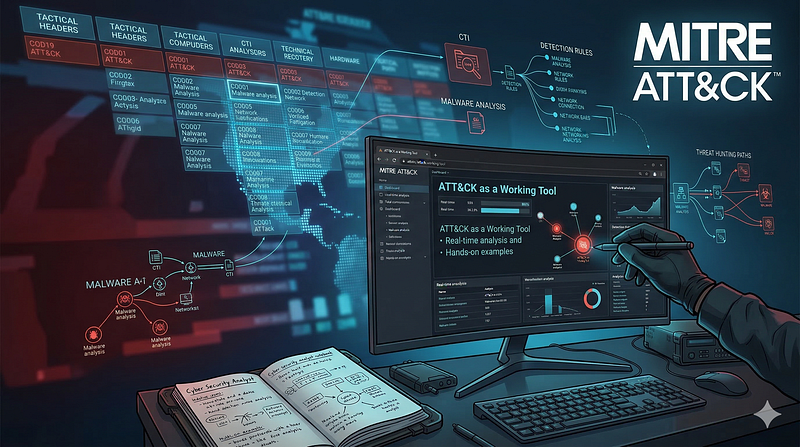
Israel Threat Actors CTI · explicit report mentionATT&CK as a Working Tool: Theory and Hands-On Practical Usage
1200km CTI repository · explicit report mentionCTI Research: Handala Hack Group (aka Handala Hack Team)
1200km CTI repository · explicit report mentionCTI Research: Handala Hack Group (aka Handala Hack Team)
1200km CTI repository · explicit report mentionCTI Research: LLM/AI/MCP Usage in the Cyber Kill Chain
1200km CTI repository · explicit report mentionCTI Research: LLM/AI/MCP Usage in the Cyber Kill Chain
1200km CTI repository · explicit report mentionDetection Guide — Operation DragonRx
1200km CTI repository · explicit report mentionExecutive Summary
Israel Threat Actors CTI · explicit report mentionIOC Tables — MuddyWater / Seedworm (Mango Sandstorm)
1200km CTI repository · explicit report mentionOilRig (APT34 / Helix Kitten / Earth Simnavaz etc)
Israel Threat Actors CTI · explicit report mentionATT CK as a Working Tool Theory and Hands On Practical Usage
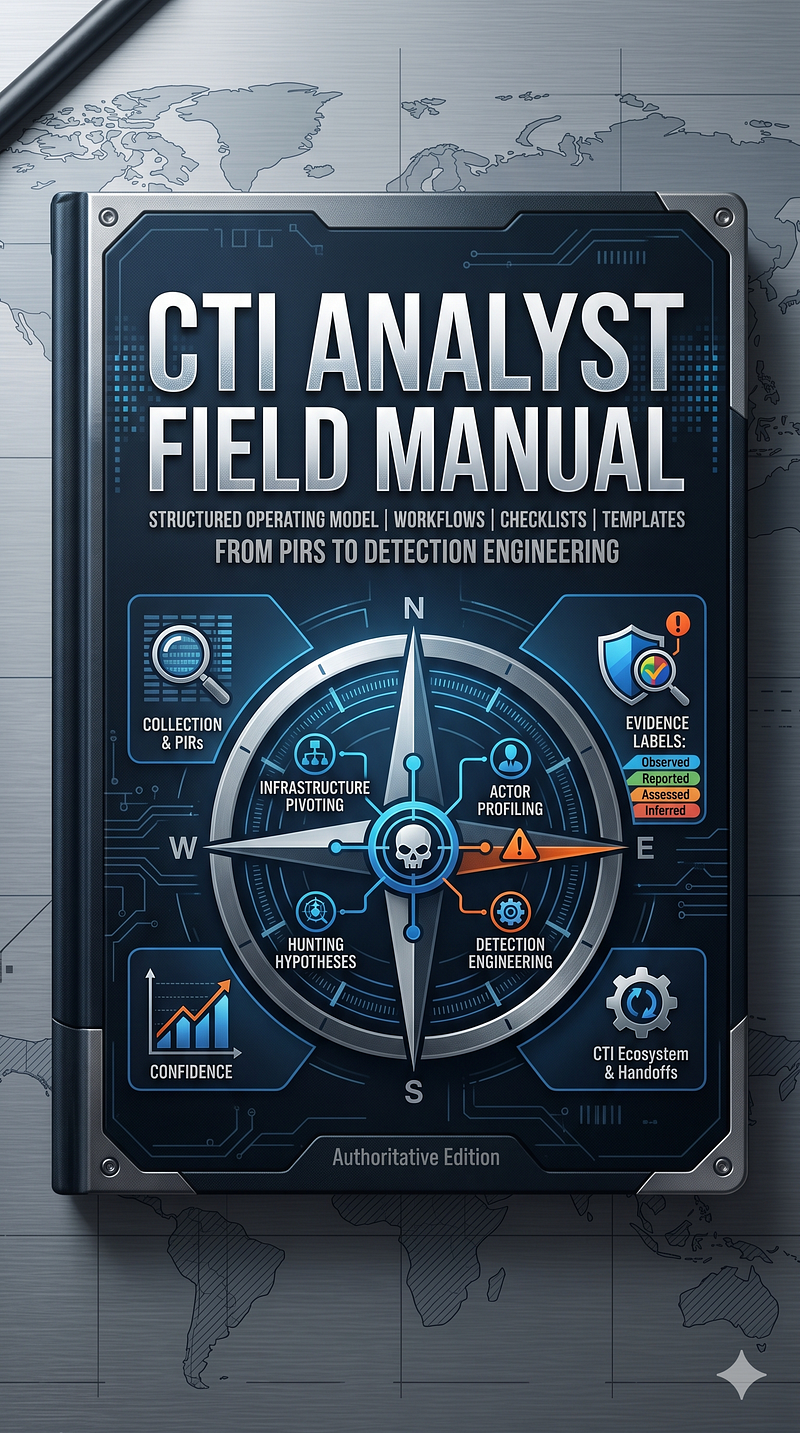
1200km Medium · authored report mentionCTI Analyst Field Manual Complete Reference
1200km Medium · authored report mentionCTI Research Handala Hack Group aka Handala Hack Team
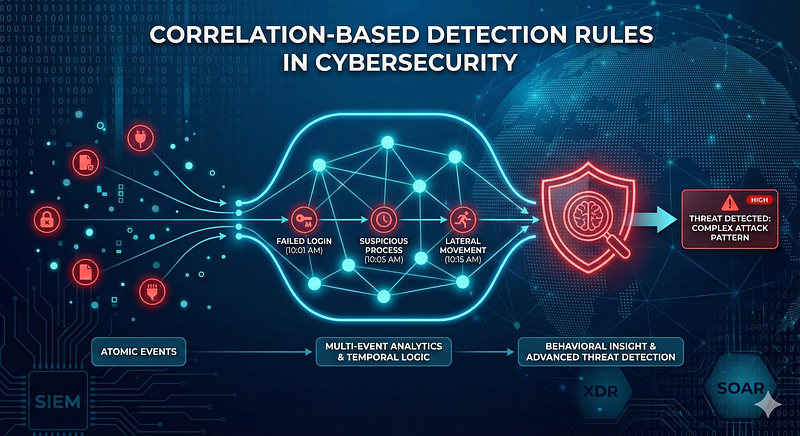
1200km Medium · authored report mentionCorrelation Based Detection Rules in Cybersecurity From Atomic Events to Behavioral Insight
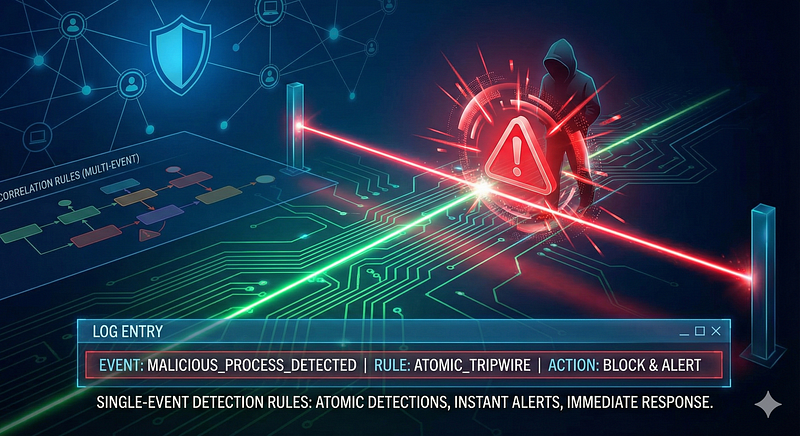
1200km Medium · authored report mentionSingle Event Detection Rules in Cybersecurity
1200km Medium · authored report mention
Cyber Knowledge context
Use these routes to move from the ATT&CK behavior into explanation, implementation, evidence handling, validation, and defensive operations. Relevance is generated from explicit identifiers/names and governed topic mappings; it is not attribution evidence.
Blue Team & Defensive Security · Explicit ATT&CK ID · 100/100Scripts, documents, shortcuts, and fileless chains
Malware Analysis & Reverse Engineering · Governed topic match · 51/100Input boundaries, injection prevention, and safe output
Secure Code & Application Security · Governed topic match · 42/100Module 5 — Cloud, containers, and Kubernetes
Red Team & Offensive Security · Tactic learning route · 24/100Static triage: strings, imports, resources, and capabilities
Malware Analysis & Reverse Engineering · Tactic learning route · 24/100
MITRE mitigations
Code Signing is a security process that ensures the authenticity and integrity of software by digitally signing executables, scripts, and other code artifacts. It prevents untrusted or malicious code from executing by verifying the digital signatures against trusted sources. Code signing protects against tampering, impersonation, and distribution of unauthorized or malicious software, forming a critical defense against supply chain and software exploitation attacks. This mitigation can be implemented through the following measures: Enforce Signed Code Execution: - Implementation: Configure operating systems (e.g., Windows with AppLocker or Linux with Secure Boot) to allow only signed code to execute. - Use Case: Prevent the execution of malicious PowerShell scripts by requiring all scripts to be signed with a trusted certificate. Vendor-Signed Driver Enforcement: - Implementation: Enabl…
MITRE mitigation sourceDisable or remove unnecessary and potentially vulnerable software, features, or services to reduce the attack surface and prevent abuse by adversaries. This involves identifying software or features that are no longer needed or that could be exploited and ensuring they are either removed or properly disabled. This mitigation can be implemented through the following measures: Remove Legacy Software: - Use Case: Disable or remove older versions of software that no longer receive updates or security patches (e.g., legacy Java, Adobe Flash). - Implementation: A company removes Flash Player from all employee systems after it has reached its end-of-life date. Disable Unused Features: - Use Case: Turn off unnecessary operating system features like SMBv1, Telnet, or RDP if they are not required. - Implementation: Disable SMBv1 in a Windows environment to mitigate vulnerabilities like EternalBlu…
MITRE mitigation sourcePrevent the execution of unauthorized or malicious code on systems by implementing application control, script blocking, and other execution prevention mechanisms. This ensures that only trusted and authorized code is executed, reducing the risk of malware and unauthorized actions. This mitigation can be implemented through the following measures: Application Control: - Use Case: Use tools like AppLocker or Windows Defender Application Control (WDAC) to create whitelists of authorized applications and block unauthorized ones. On Linux, use tools like SELinux or AppArmor to define mandatory access control policies for application execution. - Implementation: Allow only digitally signed or pre-approved applications to execute on servers and endpoints. (e.g., `New-AppLockerPolicy -PolicyType Enforced -FilePath "C:\Policies\AppLocker.xml"`) Script Blocking: - Use Case: Use script control me…
MITRE mitigation sourceAntivirus/Antimalware solutions utilize signatures, heuristics, and behavioral analysis to detect, block, and remediate malicious software, including viruses, trojans, ransomware, and spyware. These solutions continuously monitor endpoints and systems for known malicious patterns and suspicious behaviors that indicate compromise. Antivirus/Antimalware software should be deployed across all devices, with automated updates to ensure protection against the latest threats. This mitigation can be implemented through the following measures: Signature-Based Detection: - Implementation: Use predefined signatures to identify known malware based on unique patterns such as file hashes, byte sequences, or command-line arguments. This method is effective against known threats. - Use Case: When malware like "Emotet" is detected, its signature (such as a specific file hash) matches a known database of…
MITRE mitigation sourcePrivileged Account Management focuses on implementing policies, controls, and tools to securely manage privileged accounts (e.g., SYSTEM, root, or administrative accounts). This includes restricting access, limiting the scope of permissions, monitoring privileged account usage, and ensuring accountability through logging and auditing.This mitigation can be implemented through the following measures: Account Permissions and Roles: - Implement RBAC and least privilege principles to allocate permissions securely. - Use tools like Active Directory Group Policies to enforce access restrictions. Credential Security: - Deploy password vaulting tools like CyberArk, HashiCorp Vault, or KeePass for secure storage and rotation of credentials. - Enforce password policies for complexity, uniqueness, and expiration using tools like Microsoft Group Policy Objects (GPO). Multi-Factor Authentication (MF…
MITRE mitigation sourceAuditing is the process of recording activity and systematically reviewing and analyzing the activity and system configurations. The primary purpose of auditing is to detect anomalies and identify potential threats or weaknesses in the environment. Proper auditing configurations can also help to meet compliance requirements. The process of auditing encompasses regular analysis of user behaviors and system logs in support of proactive security measures. Auditing is applicable to all systems used within an organization, from the front door of a building to accessing a file on a fileserver. It is considered more critical for regulated industries such as, healthcare, finance and government where compliance requirements demand stringent tracking of user and system activates.This mitigation can be implemented through the following measures: System Audit: - Use Case: Regularly assess system co…
MITRE mitigation sourceRestricting web-based content involves enforcing policies and technologies that limit access to potentially malicious websites, unsafe downloads, and unauthorized browser behaviors. This can include URL filtering, download restrictions, script blocking, and extension control to protect against exploitation, phishing, and malware delivery. This mitigation can be implemented through the following measures: Deploy Web Proxy Filtering: - Use solutions to filter web traffic based on categories, reputation, and content types. - Enforce policies that block unsafe websites or file types at the gateway level. Enable DNS-Based Filtering: - Implement tools to restrict access to domains associated with malware or phishing campaigns. - Use public DNS filtering services to enhance protection. Enforce Content Security Policies (CSP): - Configure CSP headers on internal and external web applications to…
MITRE mitigation sourceBehavior Prevention on Endpoint refers to the use of technologies and strategies to detect and block potentially malicious activities by analyzing the behavior of processes, files, API calls, and other endpoint events. Rather than relying solely on known signatures, this approach leverages heuristics, machine learning, and real-time monitoring to identify anomalous patterns indicative of an attack. This mitigation can be implemented through the following measures: Suspicious Process Behavior: - Implementation: Use Endpoint Detection and Response (EDR) tools to monitor and block processes exhibiting unusual behavior, such as privilege escalation attempts. - Use Case: An attacker uses a known vulnerability to spawn a privileged process from a user-level application. The endpoint tool detects the abnormal parent-child process relationship and blocks the action. Unauthorized File Access: -…
MITRE mitigation sourceMITRE detection strategies and analytics
- AN1428 · Analytic 1428 — Detects the execution of scripting or command interpreters (e.g., powershell.exe, cmd.exe, wscript.exe) outside expected administrative time windows or from abnormal user contexts, often followed by encoded/obfuscated arguments or secondary execution events.
- AN1429 · Analytic 1429 — Detects use of shell interpreters (e.g., bash, sh, python, perl) initiated by users or processes not normally executing them, especially when chaining suspicious utilities like netcat, curl, or ssh.
- AN1430 · Analytic 1430 — Detects launch of command-line interpreters via Terminal, Automator, or hidden `osascript`, especially when parent process lineage deviates from user-initiated applications.
- AN1431 · Analytic 1431 — Detects use of 'esxcli system' or direct interpreter commands (e.g., busybox shell) invoked from SSH or host terminal unexpectedly.
- AN1432 · Analytic 1432 — Identifies CLI interpreter access (e.g., Cisco IOS, Juniper JUNOS) via `enable` mode or scripting-capable sessions used by uncommon accounts or from unknown IPs.
Continue the investigation
Attack tools, simulations and detection rules
Follow explicit source relationships into the reference modules. Linked procedures and detectors are not claims of live validation or actor attribution.
- T1059 Command and Scripting Interpreter simulation — Exact active technique ID
- T1059 detection rules — Exact active technique ID; not actor-specific detector coverage