Network segmentation involves dividing a network into smaller, isolated segments to control and limit the flow of traffic between devices, systems, and applications. By segmenting networks, organizations can reduce the attack surface, restrict lateral movement by adversaries, and protect critical assets from compromise. Effective network segmentation leverages a combination of physical boundaries, logical separation through VLANs, and access control policies enforced by network appliances like firewalls, routers, and cloud-based configurations. This mitigation can be implemented through the following measures: Segment Critical Systems: - Identify and group systems based on their function, sensitivity, and risk. Examples include payment systems, HR databases, production systems, and internet-facing servers. - Use VLANs, firewalls, or routers to enforce logical separation. Implement DMZ f…
MITRE mitigation sourceAdversaryGraph public intelligence page
This page is part of Threat Matrix, the public browser workspace for the main AdversaryGraph platform. Use it for ATT&CK pivots, actor and technique context, similarity leads, detection coverage review, and analyst-ready investigation paths.
Validation disclaimer: TTP overlap, actor similarity, generated summaries, and coverage findings are investigation leads, not attribution proof or operational validation without analyst review.
Main AdversaryGraph project Documentation Malware Analysis GitHub
Exfiltration Over Alternative Protocol
Adversaries may steal data by exfiltrating it over a different protocol than that of the existing command and control channel. The data may also be sent to an alternate network location from the main command and control server. Alternate protocols include FTP, SMTP, HTTP/S, DNS, SMB, or any other network protocol not being used as the main command and control channel. Adversaries may also opt to encrypt and/or obfuscate these alternate channels. [Exfiltration Over Alternative Protocol](https://attack.mitre.org/techniques/T1048) can be done using various common operating system utilities such as [Net](https://attack.mitre.org/software/S0039)/SMB or FTP.(Citation: Palo Alto OilRig Oct 2016) On macOS and Linux <code>curl</code> may be used to invoke protocols such as HTTP/S or FTP/S to exfiltrate data from a system.(Citation: 20 macOS Common Tools and Techniques) Many IaaS and SaaS platforms (such as Microsoft Exchange, Microsoft SharePoint, GitHub, and AWS S3) support the direct download of files, emails, source code, and other sensitive information via the web console or [Cloud API](https://attack.mitre.org/techniques/T1059/009).
Open detection, hunting, mitigation, and evidence workspace
Detection logic
Analyze network data for uncommon data flows (e.g., a client sending significantly more data than it receives from a server). Processes utilizing the network that do not normally have network communication or have never been seen before are suspicious. Analyze packet contents to detect communications that do not follow the expected protocol behavior for the port that is being used.
Observed actors
Correlated CTI and IR reports
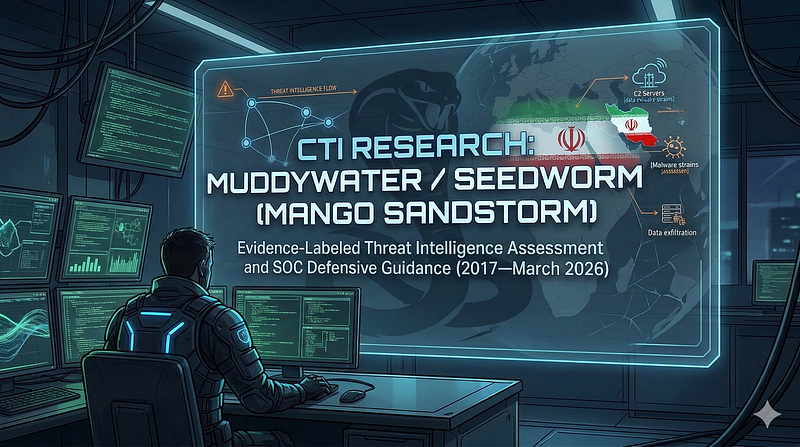
1200km CTI repository · explicit report mentionCTI Research: MuddyWater / Seedworm (Mango Sandstorm)
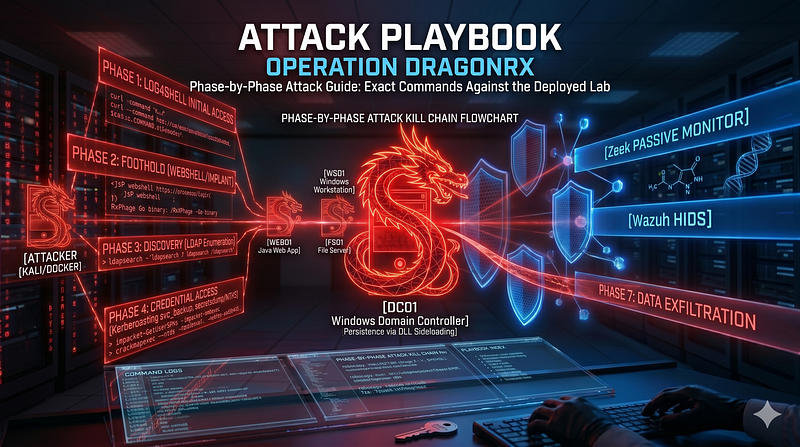
1200km CTI repository · explicit report mentionAttack Playbook Operation DragonRx
1200km Medium · authored report mentionCTI Research MuddyWater Seedworm Mango Sandstorm
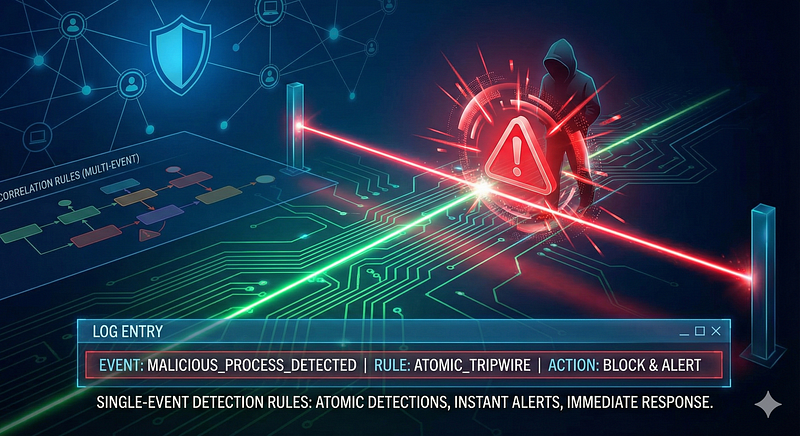
1200km Medium · authored report mentionSingle Event Detection Rules in Cybersecurity
1200km Medium · authored report mention
Cyber Knowledge context
Use these routes to move from the ATT&CK behavior into explanation, implementation, evidence handling, validation, and defensive operations. Relevance is generated from explicit identifiers/names and governed topic mappings; it is not attribution evidence.
Digital Forensics & Incident Response (DFIR) · Governed topic match · 42/100Windows endpoint and identity forensics
Digital Forensics & Incident Response (DFIR) · Tactic learning route · 24/100Module 6 — Alert triage, investigation, and escalation
Blue Team & Defensive Security · Tactic learning route · 24/100Infrastructure as code, CI/CD, artifact provenance, and policy as code
Cloud Security · Tactic learning route · 24/100
MITRE mitigations
Data Loss Prevention (DLP) involves implementing strategies and technologies to identify, categorize, monitor, and control the movement of sensitive data within an organization. This includes protecting data formats indicative of Personally Identifiable Information (PII), intellectual property, or financial data from unauthorized access, transmission, or exfiltration. DLP solutions integrate with network, endpoint, and cloud platforms to enforce security policies and prevent accidental or malicious data leaks. (Citation: PurpleSec Data Loss Prevention) This mitigation can be implemented through the following measures: Sensitive Data Categorization: - Use Case: Identify and classify data based on sensitivity (e.g., PII, financial data, trade secrets). - Implementation: Use DLP solutions to scan and tag files containing sensitive information using predefined patterns, such as Social Secur…
MITRE mitigation sourceEmploy network appliances and endpoint software to filter ingress, egress, and lateral network traffic. This includes protocol-based filtering, enforcing firewall rules, and blocking or restricting traffic based on predefined conditions to limit adversary movement and data exfiltration. This mitigation can be implemented through the following measures: Ingress Traffic Filtering: - Use Case: Configure network firewalls to allow traffic only from authorized IP addresses to public-facing servers. - Implementation: Limit SSH (port 22) and RDP (port 3389) traffic to specific IP ranges. Egress Traffic Filtering: - Use Case: Use firewalls or endpoint security software to block unauthorized outbound traffic to prevent data exfiltration and command-and-control (C2) communications. - Implementation: Block outbound traffic to known malicious IPs or regions where communication is unexpected. Protoc…
MITRE mitigation sourceUse intrusion detection signatures to block traffic at network boundaries.
MITRE mitigation sourceRestricting file and directory permissions involves setting access controls at the file system level to limit which users, groups, or processes can read, write, or execute files. By configuring permissions appropriately, organizations can reduce the attack surface for adversaries seeking to access sensitive data, plant malicious code, or tamper with system files. Enforce Least Privilege Permissions: - Remove unnecessary write permissions on sensitive files and directories. - Use file ownership and groups to control access for specific roles. Example (Windows): Right-click the shared folder → Properties → Security tab → Adjust permissions for NTFS ACLs. Harden File Shares: - Disable anonymous access to shared folders. - Enforce NTFS permissions for shared folders on Windows. Example: Set permissions to restrict write access to critical files, such as system executables (e.g., `/bin` or `…
MITRE mitigation sourceUser Account Management involves implementing and enforcing policies for the lifecycle of user accounts, including creation, modification, and deactivation. Proper account management reduces the attack surface by limiting unauthorized access, managing account privileges, and ensuring accounts are used according to organizational policies. This mitigation can be implemented through the following measures: Enforcing the Principle of Least Privilege - Implementation: Assign users only the minimum permissions required to perform their job functions. Regularly audit accounts to ensure no excess permissions are granted. - Use Case: Reduces the risk of privilege escalation by ensuring accounts cannot perform unauthorized actions. Implementing Strong Password Policies - Implementation: Enforce password complexity requirements (e.g., length, character types). Require password expiration every 90…
MITRE mitigation sourceMITRE detection strategies and analytics
- AN0367 · Analytic 0367 — Detects unusual outbound file transfer behavior using protocols like FTP, SMB, SMTP, or DNS, involving non-standard processes, off-hour activity, or uncommonly high volume.
- AN0368 · Analytic 0368 — Detects file exfiltration using tools like curl, scp, or custom binaries over protocols such as FTP, HTTP/S, or DNS tunneling, especially outside baseline user behavior.
- AN0369 · Analytic 0369 — Detects non-native file transfer via curl, Python scripts, or AppleScript using uncommon protocols like FTP, SMTP, or DNS exfiltration through mDNSResponder abuse.
- AN0370 · Analytic 0370 — Detects access to cloud APIs or CLI tools to move or sync files from sensitive buckets to external endpoints using protocols like HTTPS or S3 APIs.
- AN0371 · Analytic 0371 — Detects outbound traffic from hostd/vpxa or guest VM interfaces using unauthorized protocols such as FTP, HTTP POST bursts, or long-lived DNS tunnels.
Continue the investigation
Attack tools, simulations and detection rules
Follow explicit source relationships into the reference modules. Linked procedures and detectors are not claims of live validation or actor attribution.
- T1048 Exfiltration Over Alternative Protocol simulation — Exact active technique ID
- T1048 detection rules — Exact active technique ID; not actor-specific detector coverage