User Account Control (UAC) is a security feature in Microsoft Windows that prevents unauthorized changes to the operating system. UAC prompts users to confirm or provide administrator credentials when an action requires elevated privileges. Proper configuration of UAC reduces the risk of privilege escalation attacks. This mitigation can be implemented through the following measures: Enable UAC Globally: - Ensure UAC is enabled through Group Policy by setting `User Account Control: Run all administrators in Admin Approval Mode` to `Enabled`. Require Credential Prompt: - Use Group Policy to configure UAC to prompt for administrative credentials instead of just confirmation (`User Account Control: Behavior of the elevation prompt`). Restrict Built-in Administrator Account: Set `Admin Approval Mode` for the built-in Administrator account to `Enabled` in Group Policy. Secure the UAC Prompt:…
MITRE mitigation sourceAdversaryGraph public intelligence page
This page is part of Threat Matrix, the public browser workspace for the main AdversaryGraph platform. Use it for ATT&CK pivots, actor and technique context, similarity leads, detection coverage review, and analyst-ready investigation paths.
Validation disclaimer: TTP overlap, actor similarity, generated summaries, and coverage findings are investigation leads, not attribution proof or operational validation without analyst review.
Main AdversaryGraph project Documentation Malware Analysis GitHub
Hijack Execution Flow
Adversaries may execute their own malicious payloads by hijacking the way operating systems run programs. Hijacking execution flow can be for the purposes of persistence, since this hijacked execution may reoccur over time. Adversaries may also use these mechanisms to elevate privileges or evade defenses, such as application control or other restrictions on execution. There are many ways an adversary may hijack the flow of execution, including by manipulating how the operating system locates programs to be executed. How the operating system locates libraries to be used by a program can also be intercepted. Locations where the operating system looks for programs/resources, such as file directories and in the case of Windows the Registry, could also be poisoned to include malicious payloads.(Citation: Execution flow hijack attempt)
Open detection, hunting, mitigation, and evidence workspace
Detection logic
Monitor file systems for moving, renaming, replacing, or modifying DLLs. Changes in the set of DLLs that are loaded by a process (compared with past behavior) that do not correlate with known software, patches, etc., are suspicious. Monitor DLLs loaded into a process and detect DLLs that have the same file name but abnormal paths. Modifications to or creation of .manifest and .local redirection files that do not correlate with software updates are suspicious. Look for changes to binaries and service executables that may normally occur during software updates. If an executable is written, renamed, and/or moved to match an existing service executable, it could be detected and correlated with other suspicious behavior. Hashing of binaries and service executables could be used to detect replacement against historical data. Monitor for changes to environment variables, as well as the commands to implement these changes. Monitor processes for unusual activity (e.g., a process that does not use the network begins to do so, abnormal process call trees). Track library metadata, such as a hash, and compare libraries that are loaded at process execution time against previous executions to detect differences that do not correlate with patching or updates. Service changes are reflected in the Registry. Modification to existing services should not occur frequently. If a service binary path or failure parameters are changed to values that are not typical for that service and does not correlate with software updates, then it may be due to malicious activity. Data and events should not be viewed in isolation, but as part of a chain of behavior that could lead to other activities, such as network connections made for Command and Control, learning details about the environment through Discovery, and Lateral Movement. Tools such as Sysinternals Autoruns may also be used to detect system changes that could be attempts at persistence, including listing current service information. Suspicious program execution through services may show up as outlier processes that have not been seen before when compared against historical data.
Observed actors
No current Enterprise group relationship is published in this bundle.
Correlated CTI and IR reports
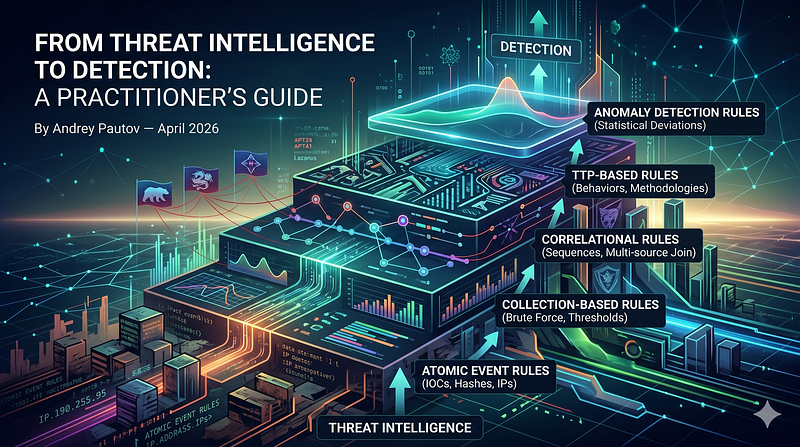
1200km CTI repository · explicit report mentionFrom Threat Intelligence to Detection: A Practitioner's Guide
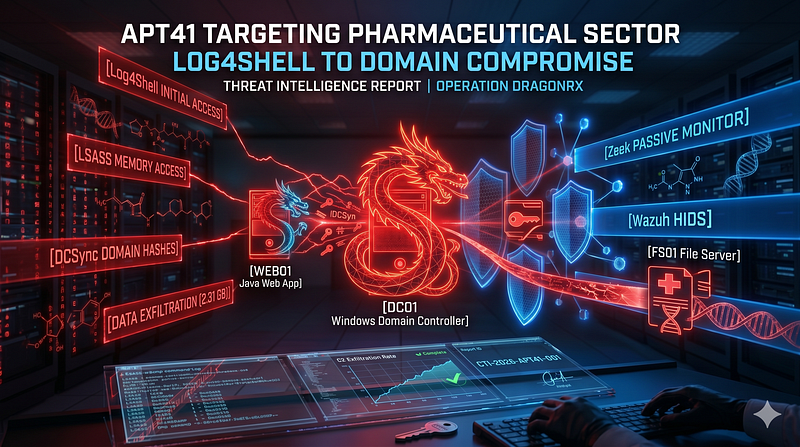
1200km CTI repository · explicit report mentionAPT41 Targeting Pharmaceutical Sector Log4Shell to Domain Compromise
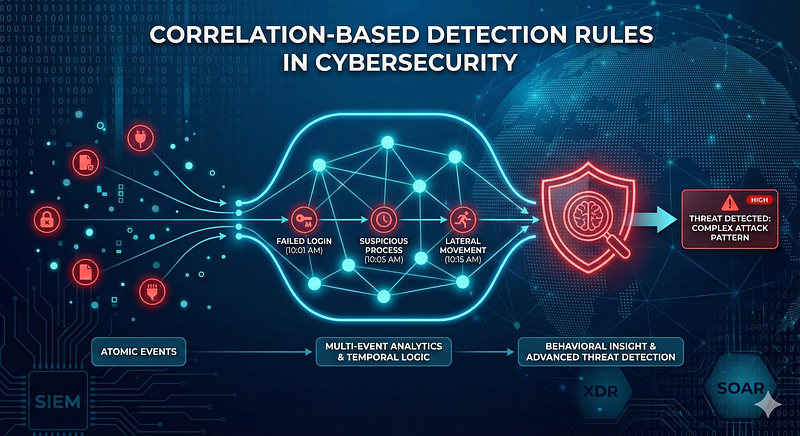
1200km Medium · authored report mentionCorrelation Based Detection Rules in Cybersecurity From Atomic Events to Behavioral Insight
1200km Medium · authored report mentionFrom Threat Intelligence to Detection A Practitioner s Guide
1200km Medium · authored report mention
Cyber Knowledge context
Use these routes to move from the ATT&CK behavior into explanation, implementation, evidence handling, validation, and defensive operations. Relevance is generated from explicit identifiers/names and governed topic mappings; it is not attribution evidence.
Vulnerability Research & Exploit Development · Governed topic match · 60/100Binary formats, ABI, loaders, and mitigations
Vulnerability Research & Exploit Development · Governed topic match · 51/100Post-incident learning and controlled AI/RAG/MCP assistance
Digital Forensics & Incident Response (DFIR) · Governed topic match · 42/100Controlled dynamic behavior and differential observation
Malware Analysis & Reverse Engineering · Tactic learning route · 24/100Module 4 — Detection engineering and detection as code
Blue Team & Defensive Security · Tactic learning route · 24/100Disk, file-system, and persistence forensics
Digital Forensics & Incident Response (DFIR) · Tactic learning route · 24/100Module 5 — Cloud, containers, and Kubernetes
Red Team & Offensive Security · Tactic learning route · 24/100Static triage: strings, imports, resources, and capabilities
Malware Analysis & Reverse Engineering · Tactic learning route · 24/100
MITRE mitigations
Behavior Prevention on Endpoint refers to the use of technologies and strategies to detect and block potentially malicious activities by analyzing the behavior of processes, files, API calls, and other endpoint events. Rather than relying solely on known signatures, this approach leverages heuristics, machine learning, and real-time monitoring to identify anomalous patterns indicative of an attack. This mitigation can be implemented through the following measures: Suspicious Process Behavior: - Implementation: Use Endpoint Detection and Response (EDR) tools to monitor and block processes exhibiting unusual behavior, such as privilege escalation attempts. - Use Case: An attacker uses a known vulnerability to spawn a privileged process from a user-level application. The endpoint tool detects the abnormal parent-child process relationship and blocks the action. Unauthorized File Access: -…
MITRE mitigation sourceRestricting library loading involves implementing security controls to ensure that only trusted and verified libraries (DLLs, shared objects, etc.) are loaded into processes. Adversaries often abuse Dynamic-Link Library (DLL) Injection, DLL Search Order Hijacking, or LD_PRELOAD mechanisms to execute malicious code by forcing the operating system to load untrusted libraries. This mitigation can be implemented through the following measures: Enforce Safe Library Loading Practices: - Enable `SafeDLLSearchMode` on Windows. - Restrict `LD_PRELOAD` and `LD_LIBRARY_PATH` usage on Linux systems. Code Signing Enforcement: - Require digital signatures for all libraries loaded into processes. - Use tools like Signtool, and WDAC to enforce signed DLL execution. Environment Hardening: - Secure library paths and directories to prevent adversaries from placing rogue libraries. - Monitor user-writable…
MITRE mitigation sourceAuditing is the process of recording activity and systematically reviewing and analyzing the activity and system configurations. The primary purpose of auditing is to detect anomalies and identify potential threats or weaknesses in the environment. Proper auditing configurations can also help to meet compliance requirements. The process of auditing encompasses regular analysis of user behaviors and system logs in support of proactive security measures. Auditing is applicable to all systems used within an organization, from the front door of a building to accessing a file on a fileserver. It is considered more critical for regulated industries such as, healthcare, finance and government where compliance requirements demand stringent tracking of user and system activates.This mitigation can be implemented through the following measures: System Audit: - Use Case: Regularly assess system co…
MITRE mitigation sourceApplication Developer Guidance focuses on providing developers with the knowledge, tools, and best practices needed to write secure code, reduce vulnerabilities, and implement secure design principles. By integrating security throughout the software development lifecycle (SDLC), this mitigation aims to prevent the introduction of exploitable weaknesses in applications, systems, and APIs. This mitigation can be implemented through the following measures: Preventing SQL Injection (Secure Coding Practice): - Implementation: Train developers to use parameterized queries or prepared statements instead of directly embedding user input into SQL queries. - Use Case: A web application accepts user input to search a database. By sanitizing and validating user inputs, developers can prevent attackers from injecting malicious SQL commands. Cross-Site Scripting (XSS) Mitigation: - Implementation: Re…
MITRE mitigation sourceUser Account Management involves implementing and enforcing policies for the lifecycle of user accounts, including creation, modification, and deactivation. Proper account management reduces the attack surface by limiting unauthorized access, managing account privileges, and ensuring accounts are used according to organizational policies. This mitigation can be implemented through the following measures: Enforcing the Principle of Least Privilege - Implementation: Assign users only the minimum permissions required to perform their job functions. Regularly audit accounts to ensure no excess permissions are granted. - Use Case: Reduces the risk of privilege escalation by ensuring accounts cannot perform unauthorized actions. Implementing Strong Password Policies - Implementation: Enforce password complexity requirements (e.g., length, character types). Require password expiration every 90…
MITRE mitigation sourceSoftware updates ensure systems are protected against known vulnerabilities by applying patches and upgrades provided by vendors. Regular updates reduce the attack surface and prevent adversaries from exploiting known security gaps. This includes patching operating systems, applications, drivers, and firmware. This mitigation can be implemented through the following measures: Regular Operating System Updates - Implementation: Apply the latest Windows security updates monthly using WSUS (Windows Server Update Services) or a similar patch management solution. Configure systems to check for updates automatically and schedule reboots during maintenance windows. - Use Case: Prevents exploitation of OS vulnerabilities such as privilege escalation or remote code execution. Application Patching - Implementation: Monitor Apache's update release notes for security patches addressing vulnerabiliti…
MITRE mitigation sourcePrevent the execution of unauthorized or malicious code on systems by implementing application control, script blocking, and other execution prevention mechanisms. This ensures that only trusted and authorized code is executed, reducing the risk of malware and unauthorized actions. This mitigation can be implemented through the following measures: Application Control: - Use Case: Use tools like AppLocker or Windows Defender Application Control (WDAC) to create whitelists of authorized applications and block unauthorized ones. On Linux, use tools like SELinux or AppArmor to define mandatory access control policies for application execution. - Implementation: Allow only digitally signed or pre-approved applications to execute on servers and endpoints. (e.g., `New-AppLockerPolicy -PolicyType Enforced -FilePath "C:\Policies\AppLocker.xml"`) Script Blocking: - Use Case: Use script control me…
MITRE mitigation sourceRestricting file and directory permissions involves setting access controls at the file system level to limit which users, groups, or processes can read, write, or execute files. By configuring permissions appropriately, organizations can reduce the attack surface for adversaries seeking to access sensitive data, plant malicious code, or tamper with system files. Enforce Least Privilege Permissions: - Remove unnecessary write permissions on sensitive files and directories. - Use file ownership and groups to control access for specific roles. Example (Windows): Right-click the shared folder → Properties → Security tab → Adjust permissions for NTFS ACLs. Harden File Shares: - Disable anonymous access to shared folders. - Enforce NTFS permissions for shared folders on Windows. Example: Set permissions to restrict write access to critical files, such as system executables (e.g., `/bin` or `…
MITRE mitigation sourceRestricting registry permissions involves configuring access control settings for sensitive registry keys and hives to ensure that only authorized users or processes can make modifications. By limiting access, organizations can prevent unauthorized changes that adversaries might use for persistence, privilege escalation, or defense evasion. This mitigation can be implemented through the following measures: Review and Adjust Permissions on Critical Keys - Regularly review permissions on keys such as `Run`, `RunOnce`, and `Services` to ensure only authorized users have write access. - Use tools like `icacls` or `PowerShell` to automate permission adjustments. Enable Registry Auditing - Enable auditing on sensitive keys to log access attempts. - Use Event Viewer or SIEM solutions to analyze logs and detect suspicious activity. - Example Audit Policy: `auditpol /set /subcategory:"Registry"…
MITRE mitigation sourceMITRE detection strategies and analytics
- AN0609 · Analytic 0609 — Unusual modifications to service binary paths, registry keys, or DLL load paths resulting in alternate execution flow. Defender observes registry key modifications, suspicious file writes into system directories, and processes loading libraries from abnormal paths.
- AN0610 · Analytic 0610 — Adversary manipulation of shared library paths, environment variables, or replacement of service binaries. Defender observes suspicious modifications in /etc/ld.so.preload, service config changes, or file writes replacing existing executables.
- AN0611 · Analytic 0611 — Abuse of DYLD_INSERT_LIBRARIES or hijacking framework paths for malicious libraries. Defender observes processes invoking abnormal dylibs, modified plist files, or persistence entries pointing to altered binaries.
Continue the investigation
Attack tools, simulations and detection rules
Follow explicit source relationships into the reference modules. Linked procedures and detectors are not claims of live validation or actor attribution.
- T1574 Hijack Execution Flow simulation — Exact active technique ID
- T1574 detection rules — Exact active technique ID; not actor-specific detector coverage