Restricting web-based content involves enforcing policies and technologies that limit access to potentially malicious websites, unsafe downloads, and unauthorized browser behaviors. This can include URL filtering, download restrictions, script blocking, and extension control to protect against exploitation, phishing, and malware delivery. This mitigation can be implemented through the following measures: Deploy Web Proxy Filtering: - Use solutions to filter web traffic based on categories, reputation, and content types. - Enforce policies that block unsafe websites or file types at the gateway level. Enable DNS-Based Filtering: - Implement tools to restrict access to domains associated with malware or phishing campaigns. - Use public DNS filtering services to enhance protection. Enforce Content Security Policies (CSP): - Configure CSP headers on internal and external web applications to…
MITRE mitigation sourceAdversaryGraph public intelligence page
This page is part of Threat Matrix, the public browser workspace for the main AdversaryGraph platform. Use it for ATT&CK pivots, actor and technique context, similarity leads, detection coverage review, and analyst-ready investigation paths.
Validation disclaimer: TTP overlap, actor similarity, generated summaries, and coverage findings are investigation leads, not attribution proof or operational validation without analyst review.
Main AdversaryGraph project Documentation Malware Analysis GitHub
Exfiltration Over Web Service
Adversaries may use an existing, legitimate external Web service to exfiltrate data rather than their primary command and control channel. Popular Web services acting as an exfiltration mechanism may give a significant amount of cover due to the likelihood that hosts within a network are already communicating with them prior to compromise. Firewall rules may also already exist to permit traffic to these services. Web service providers also commonly use SSL/TLS encryption, giving adversaries an added level of protection.
Open detection, hunting, mitigation, and evidence workspace
Detection logic
Analyze network data for uncommon data flows (e.g., a client sending significantly more data than it receives from a server). Processes utilizing the network that do not normally have network communication or have never been seen before are suspicious. User behavior monitoring may help to detect abnormal patterns of activity.
Observed actors
Correlated CTI and IR reports
Andrey Pautov · direct source mappingIranian State Actors Conduct Cyber Operations Against the Government of Albania
CISA · curated primary-source mappingCTI Research: LLM/AI/MCP Usage in the Cyber Kill Chain
1200km CTI repository · explicit report mentionCTI Research: LLM/AI/MCP Usage in the Cyber Kill Chain
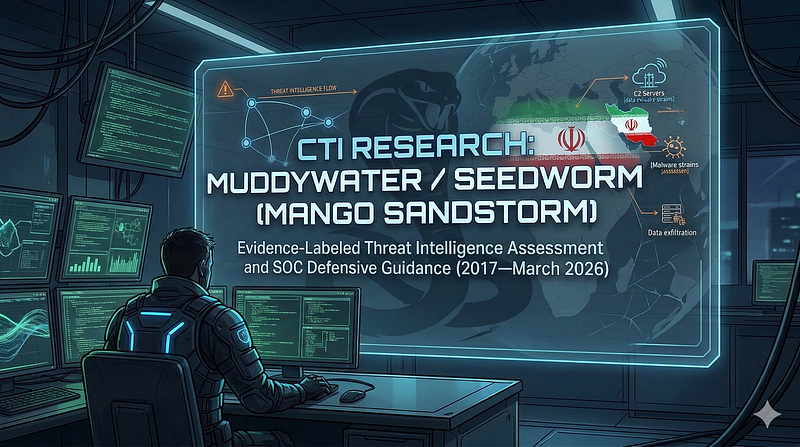
1200km CTI repository · explicit report mentionCTI Research: MuddyWater / Seedworm (Mango Sandstorm)
1200km CTI repository · explicit report mentionCTI Research: MuddyWater / Seedworm (Mango Sandstorm)
1200km CTI repository · explicit report mentionOilRig (APT34 / Helix Kitten / Earth Simnavaz etc)
Israel Threat Actors CTI · explicit report mentionCTI Research MuddyWater Seedworm Mango Sandstorm
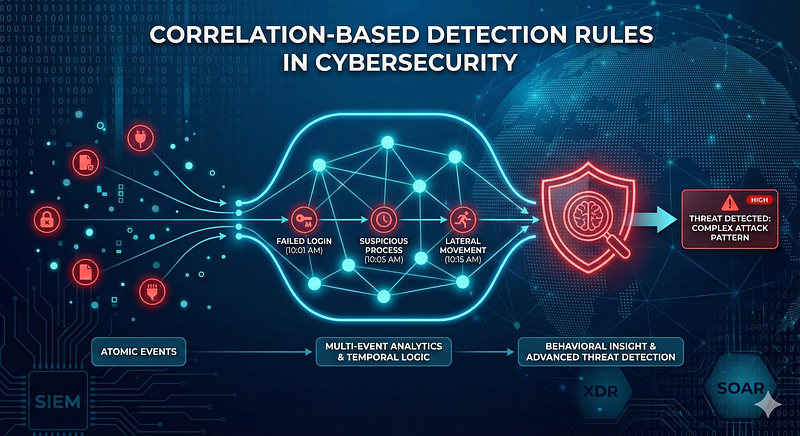
1200km Medium · authored report mentionCorrelation Based Detection Rules in Cybersecurity From Atomic Events to Behavioral Insight
1200km Medium · authored report mention
Cyber Knowledge context
Use these routes to move from the ATT&CK behavior into explanation, implementation, evidence handling, validation, and defensive operations. Relevance is generated from explicit identifiers/names and governed topic mappings; it is not attribution evidence.
Digital Forensics & Incident Response (DFIR) · Tactic learning route · 24/100Module 6 — Alert triage, investigation, and escalation
Blue Team & Defensive Security · Tactic learning route · 24/100Infrastructure as code, CI/CD, artifact provenance, and policy as code
Cloud Security · Tactic learning route · 24/100
MITRE mitigations
Data Loss Prevention (DLP) involves implementing strategies and technologies to identify, categorize, monitor, and control the movement of sensitive data within an organization. This includes protecting data formats indicative of Personally Identifiable Information (PII), intellectual property, or financial data from unauthorized access, transmission, or exfiltration. DLP solutions integrate with network, endpoint, and cloud platforms to enforce security policies and prevent accidental or malicious data leaks. (Citation: PurpleSec Data Loss Prevention) This mitigation can be implemented through the following measures: Sensitive Data Categorization: - Use Case: Identify and classify data based on sensitivity (e.g., PII, financial data, trade secrets). - Implementation: Use DLP solutions to scan and tag files containing sensitive information using predefined patterns, such as Social Secur…
MITRE mitigation sourceMITRE detection strategies and analytics
- AN1511 · Analytic 1511 — Processes that normally do not initiate network communications suddenly making outbound HTTPS connections with high outbound-to-inbound data ratios. Defender view: correlation between process creation logs (e.g., Word, Excel, PowerShell) and subsequent anomalous network traffic volumes toward common web services (Dropbox, Google Drive, OneDrive).
- AN1512 · Analytic 1512 — Processes (tar, curl, python scripts) accessing large file sets and initiating outbound HTTPS POST requests with payload sizes inconsistent with baseline activity. Defender perspective: detect abnormal sequence of file archival followed by encrypted uploads to external web services.
- AN1513 · Analytic 1513 — Office apps or scripts writing files followed by xattr manipulation (to evade quarantine) and subsequent HTTPS uploads. Defender perspective: anomalous file modification + outbound TLS traffic originating from non-networking apps (Word, Excel, Preview).
- AN1514 · Analytic 1514 — Abnormal API calls from user accounts invoking file upload endpoints outside normal baselines (M365, Google Drive, Box). Defender perspective: monitor unified audit logs for elevated frequency of Upload, Create, or Copy operations from compromised accounts.
- AN1515 · Analytic 1515 — ESXi guest OS or management interface processes establishing unexpected external HTTPS connections. Defender perspective: monitor vmx or hostd processes making outbound web requests with significant data transfer.
Continue the investigation
Attack tools, simulations and detection rules
Follow explicit source relationships into the reference modules. Linked procedures and detectors are not claims of live validation or actor attribution.
- T1567 Exfiltration Over Web Service simulation — Exact active technique ID
- T1567 detection rules — Exact active technique ID; not actor-specific detector coverage