- AN0764 · Analytic 0764 — Correlation of registry key modification for Run/RunOnce with abnormal parent-child process relationships and outlier execution at user logon or system startup
- AN0765 · Analytic 0765 — Correlates creation/modification of systemd service files or /etc/init.d scripts with outlier process behavior during boot
- AN0766 · Analytic 0766 — Observes creation or modification of LaunchAgent/LaunchDaemon property list files combined with anomalous plist payload execution after user logon
AdversaryGraph public intelligence page
This page is part of Threat Matrix, the public browser workspace for the main AdversaryGraph platform. Use it for ATT&CK pivots, actor and technique context, similarity leads, detection coverage review, and analyst-ready investigation paths.
Validation disclaimer: TTP overlap, actor similarity, generated summaries, and coverage findings are investigation leads, not attribution proof or operational validation without analyst review.
Main AdversaryGraph project Documentation Malware Analysis GitHub
Boot or Logon Autostart Execution
Adversaries may configure system settings to automatically execute a program during system boot or logon to maintain persistence or gain higher-level privileges on compromised systems. Operating systems may have mechanisms for automatically running a program on system boot or account logon.(Citation: Microsoft Run Key)(Citation: MSDN Authentication Packages)(Citation: Microsoft TimeProvider)(Citation: Cylance Reg Persistence Sept 2013)(Citation: Linux Kernel Programming) These mechanisms may include automatically executing programs that are placed in specially designated directories or are referenced by repositories that store configuration information, such as the Windows Registry. An adversary may achieve the same goal by modifying or extending features of the kernel. Since some boot or logon autostart programs run with higher privileges, an adversary may leverage these to elevate privileges.
Open detection, hunting, mitigation, and evidence workspace
Detection logic
Monitor for additions or modifications of mechanisms that could be used to trigger autostart execution, such as relevant additions to the Registry. Look for changes that are not correlated with known updates, patches, or other planned administrative activity. Tools such as Sysinternals Autoruns may also be used to detect system autostart configuration changes that could be attempts at persistence. Changes to some autostart configuration settings may happen under normal conditions when legitimate software is installed. Suspicious program execution as autostart programs may show up as outlier processes that have not been seen before when compared against historical data.To increase confidence of malicious activity, data and events should not be viewed in isolation, but as part of a chain of behavior that could lead to other activities, such as network connections made for Command and Control, learning details about the environment through Discovery, and Lateral Movement. Monitor DLL loads by processes, specifically looking for DLLs that are not recognized or not normally loaded into a process. Look for abnormal process behavior that may be due to a process loading a malicious DLL. Monitor for abnormal usage of utilities and command-line parameters involved in kernel modification or driver installation.
Observed actors
Correlated CTI and IR reports
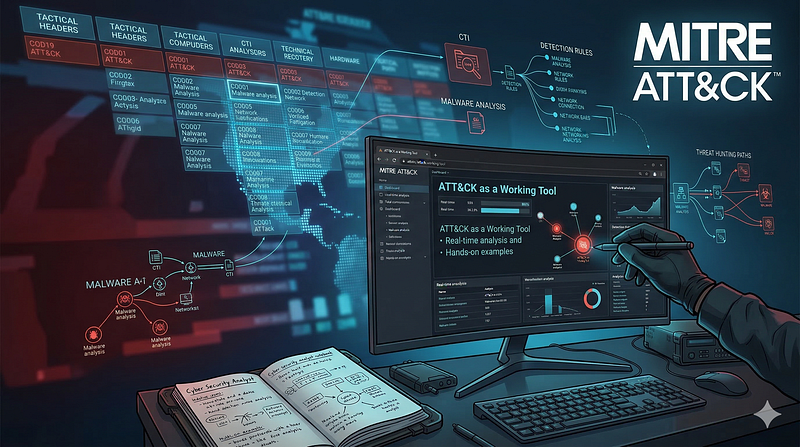
ATT&CK as a Working Tool: Theory and Hands-On Practical Usage
1200km CTI repository · explicit report mentionATT CK as a Working Tool Theory and Hands On Practical Usage
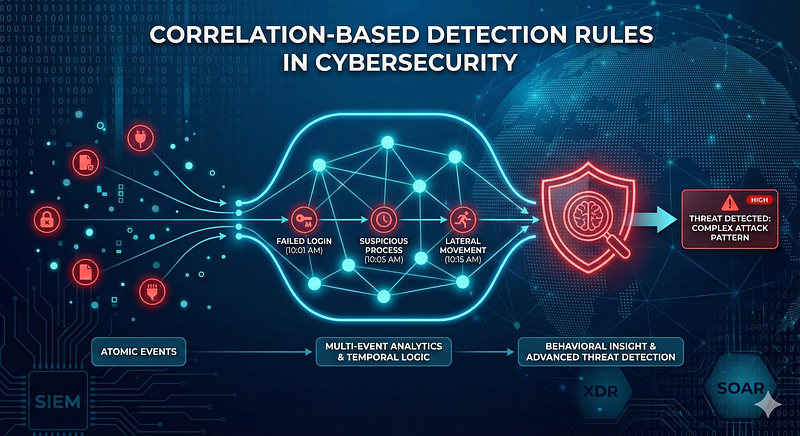
1200km Medium · authored report mentionCorrelation Based Detection Rules in Cybersecurity From Atomic Events to Behavioral Insight
1200km Medium · authored report mention
1200km CTI repository · explicit report mentionATT CK as a Working Tool Theory and Hands On Practical Usage
1200km Medium · authored report mentionCorrelation Based Detection Rules in Cybersecurity From Atomic Events to Behavioral Insight
1200km Medium · authored report mention
Cyber Knowledge context
Use these routes to move from the ATT&CK behavior into explanation, implementation, evidence handling, validation, and defensive operations. Relevance is generated from explicit identifiers/names and governed topic mappings; it is not attribution evidence.
Source review and static analysis
Vulnerability Research & Exploit Development · Governed topic match · 51/100Module 5 — Cloud, containers, and Kubernetes
Red Team & Offensive Security · Tactic learning route · 24/100Module 4 — Detection engineering and detection as code
Blue Team & Defensive Security · Tactic learning route · 24/100Disk, file-system, and persistence forensics
Digital Forensics & Incident Response (DFIR) · Tactic learning route · 24/100Binary formats, ABI, loaders, and mitigations
Vulnerability Research & Exploit Development · Tactic learning route · 24/100Network, edge, service communication, hybrid access, and zero trust
Cloud Security · Tactic learning route · 24/100
Vulnerability Research & Exploit Development · Governed topic match · 51/100Module 5 — Cloud, containers, and Kubernetes
Red Team & Offensive Security · Tactic learning route · 24/100Module 4 — Detection engineering and detection as code
Blue Team & Defensive Security · Tactic learning route · 24/100Disk, file-system, and persistence forensics
Digital Forensics & Incident Response (DFIR) · Tactic learning route · 24/100Binary formats, ABI, loaders, and mitigations
Vulnerability Research & Exploit Development · Tactic learning route · 24/100Network, edge, service communication, hybrid access, and zero trust
Cloud Security · Tactic learning route · 24/100
MITRE mitigations
No ATT&CK mitigation relationship is published for this technique. Apply risk-based controls and verify scope.
MITRE detection strategies and analytics
Continue the investigation
Attack tools, simulations and detection rules
Follow explicit source relationships into the reference modules. Linked procedures and detectors are not claims of live validation or actor attribution.
- T1547 Boot or Logon Autostart Execution simulation — Exact active technique ID
- T1547 detection rules — Exact active technique ID; not actor-specific detector coverage