
Employ network appliances and endpoint software to filter ingress, egress, and lateral network traffic. This includes protocol-based filtering, enforcing firewall rules, and blocking or restricting traffic based on predefined conditions to limit adversary movement and data exfiltration. This mitigation can be implemented through the following measures: Ingress Traffic Filtering: - Use Case: Configure network firewalls to allow traffic only from authorized IP addresses to public-facing servers. - Implementation: Limit SSH (port 22) and RDP (port 3389) traffic to specific IP ranges. Egress Traffic Filtering: - Use Case: Use firewalls or endpoint security software to block unauthorized outbound traffic to prevent data exfiltration and command-and-control (C2) communications. - Implementation: Block outbound traffic to known malicious IPs or regions where communication is unexpected. Protoc…
MITRE mitigation sourceAdversaryGraph public intelligence page
This page is part of Threat Matrix, the public browser workspace for the main AdversaryGraph platform. Use it for ATT&CK pivots, actor and technique context, similarity leads, detection coverage review, and analyst-ready investigation paths.
Validation disclaimer: TTP overlap, actor similarity, generated summaries, and coverage findings are investigation leads, not attribution proof or operational validation without analyst review.
Main AdversaryGraph project Documentation Malware Analysis GitHub
Endpoint Denial of Service
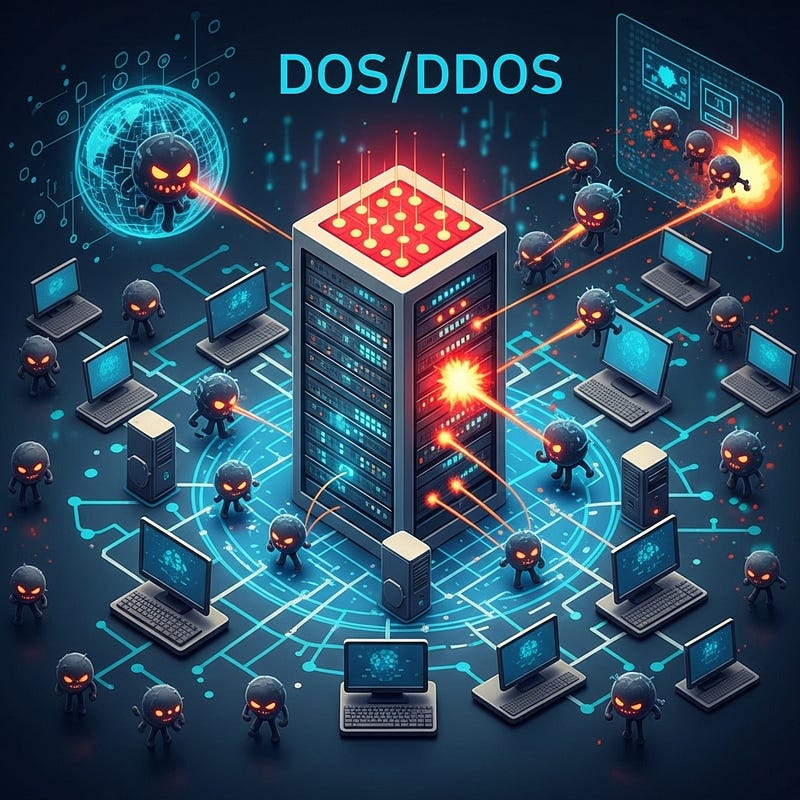
Adversaries may perform Endpoint Denial of Service (DoS) attacks to degrade or block the availability of services to users. Endpoint DoS can be performed by exhausting the system resources those services are hosted on or exploiting the system to cause a persistent crash condition. Example services include websites, email services, DNS, and web-based applications. Adversaries have been observed conducting DoS attacks for political purposes(Citation: FireEye OpPoisonedHandover February 2016) and to support other malicious activities, including distraction(Citation: FSISAC FraudNetDoS September 2012), hacktivism, and extortion.(Citation: Symantec DDoS October 2014) An Endpoint DoS denies the availability of a service without saturating the network used to provide access to the service. Adversaries can target various layers of the application stack that is hosted on the system used to provide the service. These layers include the Operating Systems (OS), server applications such as web servers, DNS servers, databases, and the (typically web-based) applications that sit on top of them. Attacking each layer requires different techniques that take advantage of bottlenecks that are unique to the respective components. A DoS attack may be generated by a single system or multiple systems spread across the internet, which is commonly referred to as a distributed DoS (DDoS). To perform DoS attacks against endpoint resources, several aspects apply to multiple methods, including IP address spoofing and botnets. Adversaries may use the original IP address of an attacking system, or spoof…
Open detection, hunting, mitigation, and evidence workspace
Detection logic
Detection of Endpoint DoS can sometimes be achieved before the effect is sufficient to cause significant impact to the availability of the service, but such response time typically requires very aggressive monitoring and responsiveness. Typical network throughput monitoring tools such as netflow, SNMP, and custom scripts can be used to detect sudden increases in circuit utilization. Real-time, automated, and qualitative study of the network traffic can identify a sudden surge in one type of protocol can be used to detect an attack as it starts. In addition to network level detections, endpoint logging and instrumentation can be useful for detection. Attacks targeting web applications may generate logs in the web server, application server, and/or database server that can be used to identify the type of attack, possibly before the impact is felt. Externally monitor the availability of services that may be targeted by an Endpoint DoS.
Observed actors
Correlated CTI and IR reports
Cyber Knowledge context
Use these routes to move from the ATT&CK behavior into explanation, implementation, evidence handling, validation, and defensive operations. Relevance is generated from explicit identifiers/names and governed topic mappings; it is not attribution evidence.
Digital Forensics & Incident Response (DFIR) · Tactic learning route · 24/100Policy architecture, standards, procedures, and exceptions
Governance, Risk & Compliance (GRC) · Tactic learning route · 24/100Module 6 — Alert triage, investigation, and escalation
Blue Team & Defensive Security · Tactic learning route · 24/100
MITRE mitigations
MITRE detection strategies and analytics
- AN0584 · Analytic 0584 — Excessive resource exhaustion or service crash induced by processes launched by users or scripts that rapidly consume CPU/memory or attempt malformed service interactions.
- AN0585 · Analytic 0585 — Malicious script or binary causes repeated kernel panics, OOM kills, or systemd service restarts targeting services like nginx, httpd, sshd.
- AN0586 · Analytic 0586 — Adversary launches high-entropy process or malformed app bundle causing repeated application crashes and system slowdowns.
- AN0587 · Analytic 0587 — Instance enters degraded/unhealthy state due to abnormal process load or memory exhaustion, often caused by automation or script-based attacks.
- AN0588 · Analytic 0588 — Container orchestrator logs show crashlooping pods, repeated resource exhaustion, or malicious binaries with infinite loops consuming systemd/cgroup limits.
Continue the investigation
Attack tools, simulations and detection rules
Follow explicit source relationships into the reference modules. Linked procedures and detectors are not claims of live validation or actor attribution.
- T1499 Endpoint Denial of Service simulation — Exact active technique ID
- T1499 detection rules — Exact active technique ID; not actor-specific detector coverage