
User Account Management involves implementing and enforcing policies for the lifecycle of user accounts, including creation, modification, and deactivation. Proper account management reduces the attack surface by limiting unauthorized access, managing account privileges, and ensuring accounts are used according to organizational policies. This mitigation can be implemented through the following measures: Enforcing the Principle of Least Privilege - Implementation: Assign users only the minimum permissions required to perform their job functions. Regularly audit accounts to ensure no excess permissions are granted. - Use Case: Reduces the risk of privilege escalation by ensuring accounts cannot perform unauthorized actions. Implementing Strong Password Policies - Implementation: Enforce password complexity requirements (e.g., length, character types). Require password expiration every 90…
MITRE mitigation sourceAdversaryGraph public intelligence page
This page is part of Threat Matrix, the public browser workspace for the main AdversaryGraph platform. Use it for ATT&CK pivots, actor and technique context, similarity leads, detection coverage review, and analyst-ready investigation paths.
Validation disclaimer: TTP overlap, actor similarity, generated summaries, and coverage findings are investigation leads, not attribution proof or operational validation without analyst review.
Main AdversaryGraph project Documentation Malware Analysis GitHub
Brute Force
Adversaries may use brute force techniques to gain access to accounts when passwords are unknown or when password hashes are obtained.(Citation: TrendMicro Pawn Storm Dec 2020) Without knowledge of the password for an account or set of accounts, an adversary may systematically guess the password using a repetitive or iterative mechanism.(Citation: Dragos Crashoverride 2018) Brute forcing passwords can take place via interaction with a service that will check the validity of those credentials or offline against previously acquired credential data, such as password hashes. Brute forcing credentials may take place at various points during a breach. For example, adversaries may attempt to brute force access to [Valid Accounts](https://attack.mitre.org/techniques/T1078) within a victim environment leveraging knowledge gathered from other post-compromise behaviors such as [OS Credential Dumping](https://attack.mitre.org/techniques/T1003), [Account Discovery](https://attack.mitre.org/techniques/T1087), or [Password Policy Discovery](https://attack.mitre.org/techniques/T1201). Adversaries may also combine brute forcing activity with behaviors such as [External Remote Services](https://attack.mitre.org/techniques/T1133) as part of Initial Access. If an adversary guesses the correct password but fails to login to a compromised account due to location-based conditional access policies, they may change their infrastructure until they match the victim’s location and therefore bypass those policies.(Citation: ReliaQuest Health Care Social Engineering Campaign 2024)
Open detection, hunting, mitigation, and evidence workspace
Detection logic
Monitor authentication logs for system and application login failures of Valid Accounts. If authentication failures are high, then there may be a brute force attempt to gain access to a system using legitimate credentials. Also monitor for many failed authentication attempts across various accounts that may result from password spraying attempts. It is difficult to detect when hashes are cracked, since this is generally done outside the scope of the target network.
Observed actors
Correlated CTI and IR reports
Israel Threat Actors CTI · explicit report mentionATT&CK as a Working Tool: Theory and Hands-On Practical Usage
1200km CTI repository · explicit report mentionDefensive CTI Research on Threats to Israeli Government and Public-Sector Environments
Israel Threat Actors CTI · explicit report mentionATT CK as a Working Tool Theory and Hands On Practical Usage
1200km Medium · authored report mentionCTI Led Defensive Strategy for a Cellular Provider Case Study
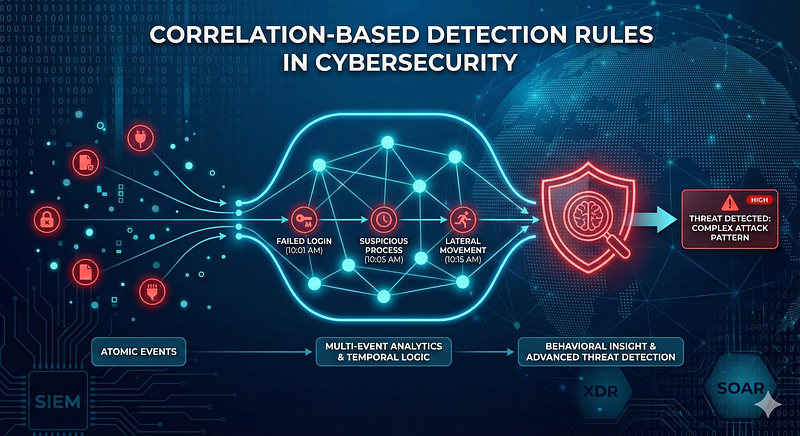
1200km Medium · authored report mentionCorrelation Based Detection Rules in Cybersecurity From Atomic Events to Behavioral Insight
1200km Medium · authored report mentionCyberattacks on 4G LTE Telecom Networks Threat Mapping and Defense
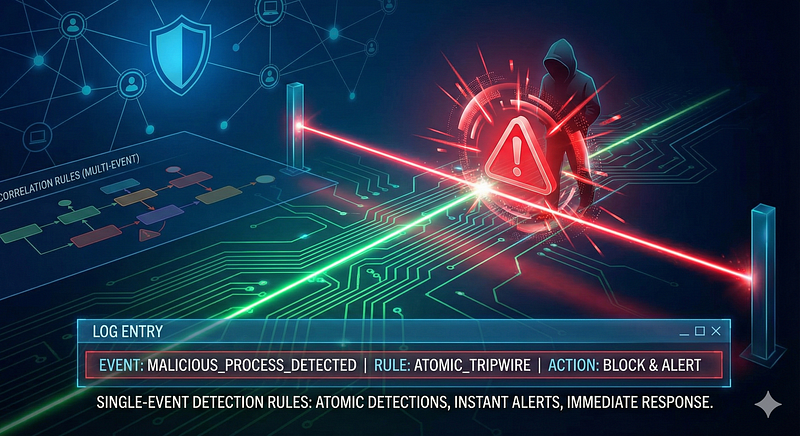
1200km Medium · authored report mentionSingle Event Detection Rules in Cybersecurity
1200km Medium · authored report mention
Cyber Knowledge context
Use these routes to move from the ATT&CK behavior into explanation, implementation, evidence handling, validation, and defensive operations. Relevance is generated from explicit identifiers/names and governed topic mappings; it is not attribution evidence.
OSINT & Reconnaissance · Exact technique name · 92/100Module 5 — Threat hunting
Blue Team & Defensive Security · Tactic learning route · 24/100Human, workload, pipeline, and emergency identity
Cloud Security · Tactic learning route · 24/100Disk, file-system, and persistence forensics
Digital Forensics & Incident Response (DFIR) · Tactic learning route · 24/100
MITRE mitigations
Account Use Policies help mitigate unauthorized access by configuring and enforcing rules that govern how and when accounts can be used. These policies include enforcing account lockout mechanisms, restricting login times, and setting inactivity timeouts. Proper configuration of these policies reduces the risk of brute-force attacks, credential theft, and unauthorized access by limiting the opportunities for malicious actors to exploit accounts. This mitigation can be implemented through the following measures: Account Lockout Policies: - Implementation: Configure account lockout settings so that after a defined number of failed login attempts (e.g., 3-5 attempts), the account is locked for a specific time period (e.g., 15 minutes) or requires an administrator to unlock it. - Use Case: This prevents brute-force attacks by limiting how many incorrect password attempts can be made before…
MITRE mitigation sourceMulti-Factor Authentication (MFA) enhances security by requiring users to provide at least two forms of verification to prove their identity before granting access. These factors typically include: - *Something you know*: Passwords, PINs. - *Something you have*: Physical tokens, smartphone authenticator apps. - *Something you are*: Biometric data such as fingerprints, facial recognition, or retinal scans. Implementing MFA across all critical systems and services ensures robust protection against account takeover and unauthorized access. This mitigation can be implemented through the following measures: Identity and Access Management (IAM): - Use IAM solutions like Azure Active Directory, Okta, or AWS IAM to enforce MFA policies for all user logins, especially for privileged roles. - Enable conditional access policies to enforce MFA for risky sign-ins (e.g., unfamiliar devices, geolocati…
MITRE mitigation sourceSet and enforce secure password policies for accounts to reduce the likelihood of unauthorized access. Strong password policies include enforcing password complexity, requiring regular password changes, and preventing password reuse. This mitigation can be implemented through the following measures: Windows Systems: - Use Group Policy Management Console (GPMC) to configure: - Minimum password length (e.g., 12+ characters). - Password complexity requirements. - Password history (e.g., disallow last 24 passwords). - Account lockout duration and thresholds. Linux Systems: - Configure Pluggable Authentication Modules (PAM): - Use `pam_pwquality` to enforce complexity and length requirements. - Implement `pam_tally2` or `pam_faillock` for account lockouts. - Use `pwunconv` to disable password reuse. Password Managers: - Enforce usage of enterprise password managers (e.g., Bitwarden, 1Passwor…
MITRE mitigation sourceMITRE detection strategies and analytics
- AN1275 · Analytic 1275 — High volume of failed logon attempts followed by a successful one from a suspicious user, host, or timeframe
- AN1276 · Analytic 1276 — Multiple authentication failures for valid or invalid users followed by success from same IP/user
- AN1277 · Analytic 1277 — Password spraying or brute force attempts across user pool within short time intervals
- AN1278 · Analytic 1278 — Multiple failed authentications in unified logs (e.g., loginwindow or sshd)
- AN1279 · Analytic 1279 — Excessive login attempts followed by success from SaaS apps like O365, Dropbox, etc.
Continue the investigation
Attack tools, simulations and detection rules
Follow explicit source relationships into the reference modules. Linked procedures and detectors are not claims of live validation or actor attribution.
- T1110 Brute Force simulation — Exact active technique ID
- T1110 detection rules — Exact active technique ID; not actor-specific detector coverage