Use intrusion detection signatures to block traffic at network boundaries.
MITRE mitigation sourceAdversaryGraph public intelligence page
This page is part of Threat Matrix, the public browser workspace for the main AdversaryGraph platform. Use it for ATT&CK pivots, actor and technique context, similarity leads, detection coverage review, and analyst-ready investigation paths.
Validation disclaimer: TTP overlap, actor similarity, generated summaries, and coverage findings are investigation leads, not attribution proof or operational validation without analyst review.
Main AdversaryGraph project Documentation Malware Analysis GitHub
Web Service
Adversaries may use an existing, legitimate external Web service as a means for relaying data to/from a compromised system. Popular websites, cloud services, and social media acting as a mechanism for C2 may give a significant amount of cover due to the likelihood that hosts within a network are already communicating with them prior to a compromise. Using common services, such as those offered by Google, Microsoft, or Twitter, makes it easier for adversaries to hide in expected noise.(Citation: Broadcom BirdyClient Microsoft Graph API 2024) Web service providers commonly use SSL/TLS encryption, giving adversaries an added level of protection. Use of Web services may also protect back-end C2 infrastructure from discovery through malware binary analysis while also enabling operational resiliency (since this infrastructure may be dynamically changed).
Open detection, hunting, mitigation, and evidence workspace
Detection logic
Host data that can relate unknown or suspicious process activity using a network connection is important to supplement any existing indicators of compromise based on malware command and control signatures and infrastructure or the presence of strong encryption. Packet capture analysis will require SSL/TLS inspection if data is encrypted. Analyze network data for uncommon data flows (e.g., a client sending significantly more data than it receives from a server). User behavior monitoring may help to detect abnormal patterns of activity.
Observed actors
Correlated CTI and IR reports
APT42 G1044
MITRE ATT&CK · direct source mapping1. Executive Summary
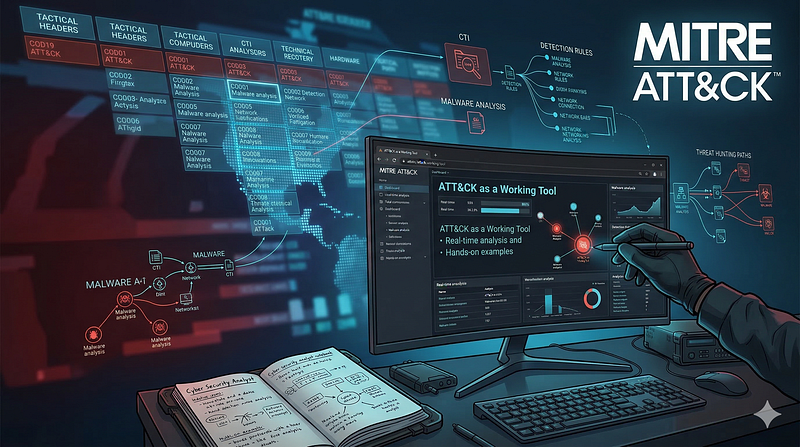
Israel Threat Actors CTI · explicit report mentionATT&CK as a Working Tool: Theory and Hands-On Practical Usage
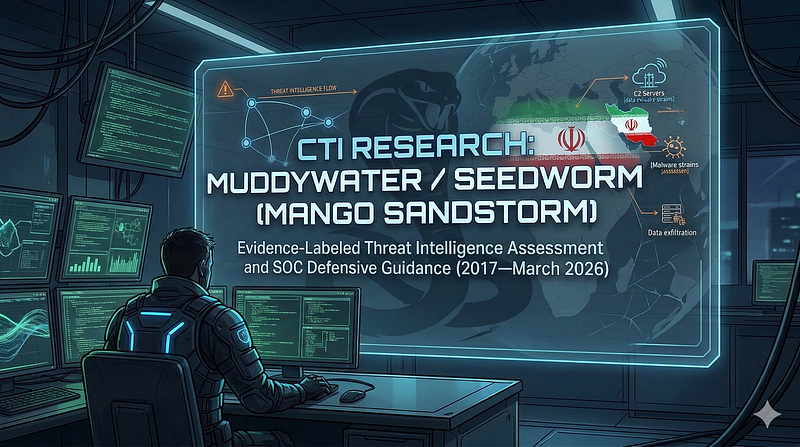
1200km CTI repository · explicit report mentionCTI Research: MuddyWater / Seedworm (Mango Sandstorm)
1200km CTI repository · explicit report mentionCTI Research: MuddyWater / Seedworm (Mango Sandstorm)
1200km CTI repository · explicit report mentionOilRig (APT34 / Helix Kitten / Earth Simnavaz etc)
Israel Threat Actors CTI · explicit report mentionATT CK as a Working Tool Theory and Hands On Practical Usage
1200km Medium · authored report mentionCTI Research MuddyWater Seedworm Mango Sandstorm
1200km Medium · authored report mention
MITRE ATT&CK · direct source mapping1. Executive Summary
Israel Threat Actors CTI · explicit report mentionATT&CK as a Working Tool: Theory and Hands-On Practical Usage
1200km CTI repository · explicit report mentionCTI Research: MuddyWater / Seedworm (Mango Sandstorm)
1200km CTI repository · explicit report mentionCTI Research: MuddyWater / Seedworm (Mango Sandstorm)
1200km CTI repository · explicit report mentionOilRig (APT34 / Helix Kitten / Earth Simnavaz etc)
Israel Threat Actors CTI · explicit report mentionATT CK as a Working Tool Theory and Hands On Practical Usage
1200km Medium · authored report mentionCTI Research MuddyWater Seedworm Mango Sandstorm
1200km Medium · authored report mention
Cyber Knowledge context
Use these routes to move from the ATT&CK behavior into explanation, implementation, evidence handling, validation, and defensive operations. Relevance is generated from explicit identifiers/names and governed topic mappings; it is not attribution evidence.
Module 4 — Web applications and APIs
Red Team & Offensive Security · Exact technique name · 92/100Module 6 — The Threat Actor Landscape
Cyber Threat Intelligence (CTI) · Tactic learning route · 24/100Disassembly, decompilation, and code-led analysis
Malware Analysis & Reverse Engineering · Tactic learning route · 24/100Module 5 — Threat hunting
Blue Team & Defensive Security · Tactic learning route · 24/100
Red Team & Offensive Security · Exact technique name · 92/100Module 6 — The Threat Actor Landscape
Cyber Threat Intelligence (CTI) · Tactic learning route · 24/100Disassembly, decompilation, and code-led analysis
Malware Analysis & Reverse Engineering · Tactic learning route · 24/100Module 5 — Threat hunting
Blue Team & Defensive Security · Tactic learning route · 24/100
MITRE mitigations
Restricting web-based content involves enforcing policies and technologies that limit access to potentially malicious websites, unsafe downloads, and unauthorized browser behaviors. This can include URL filtering, download restrictions, script blocking, and extension control to protect against exploitation, phishing, and malware delivery. This mitigation can be implemented through the following measures: Deploy Web Proxy Filtering: - Use solutions to filter web traffic based on categories, reputation, and content types. - Enforce policies that block unsafe websites or file types at the gateway level. Enable DNS-Based Filtering: - Implement tools to restrict access to domains associated with malware or phishing campaigns. - Use public DNS filtering services to enhance protection. Enforce Content Security Policies (CSP): - Configure CSP headers on internal and external web applications to…
MITRE mitigation sourceMITRE detection strategies and analytics
- AN1189 · Analytic 1189 — Detects unusual outbound connections to web services from uncommon processes using SSL/TLS, particularly those exhibiting high outbound data volume or persistence.
- AN1190 · Analytic 1190 — Detects command-line tools, agents, or scripts making outbound HTTPS connections to popular web services like Discord, Slack, Dropbox, or Graph API in an unusual context.
- AN1191 · Analytic 1191 — Detects user agents or background services making unauthorized or unscheduled web API calls to cloud/web services over HTTPS.
- AN1192 · Analytic 1192 — Detects guest VMs or management agents issuing HTTP(S) traffic to external services without a valid patch management or backup justification.
Continue the investigation
Attack tools, simulations and detection rules
Follow explicit source relationships into the reference modules. Linked procedures and detectors are not claims of live validation or actor attribution.
- T1102 Web Service simulation — Exact active technique ID
- T1102 detection rules — Exact active technique ID; not actor-specific detector coverage