- AN0282 · Analytic 0282 — Monitors for abnormal process behavior and API calls like SetWindowsHookEx, GetAsyncKeyState, or device input polling commonly used for keystroke logging.
- AN0283 · Analytic 0283 — Detects use of tools/scripts accessing input devices like /dev/input/* or evdev via suspicious processes lacking GUI context.
- AN0284 · Analytic 0284 — Monitors for TCC-bypassing or unauthorized access to input services like IOHIDSystem or Quartz Event Services used in keylogging or screen monitoring.
- AN0285 · Analytic 0285 — Detects web-based credential phishing by analyzing traffic to suspicious URLs that mimic login portals and POST credential content.
AdversaryGraph public intelligence page
This page is part of Threat Matrix, the public browser workspace for the main AdversaryGraph platform. Use it for ATT&CK pivots, actor and technique context, similarity leads, detection coverage review, and analyst-ready investigation paths.
Validation disclaimer: TTP overlap, actor similarity, generated summaries, and coverage findings are investigation leads, not attribution proof or operational validation without analyst review.
Main AdversaryGraph project Documentation Malware Analysis GitHub
Input Capture
Adversaries may use methods of capturing user input to obtain credentials or collect information. During normal system usage, users often provide credentials to various different locations, such as login pages/portals or system dialog boxes. Input capture mechanisms may be transparent to the user (e.g. [Credential API Hooking](https://attack.mitre.org/techniques/T1056/004)) or rely on deceiving the user into providing input into what they believe to be a genuine service (e.g. [Web Portal Capture](https://attack.mitre.org/techniques/T1056/003)).
Open detection, hunting, mitigation, and evidence workspace
Detection logic
Detection may vary depending on how input is captured but may include monitoring for certain Windows API calls (e.g. `SetWindowsHook`, `GetKeyState`, and `GetAsyncKeyState`), monitoring for malicious instances of Command and Scripting Interpreter, and ensuring no unauthorized drivers or kernel modules that could indicate keylogging or API hooking are present.
Observed actors
Correlated CTI and IR reports
1. Executive Summary
Israel Threat Actors CTI · explicit report mentionAPT39 (Chafer / Remix Kitten)
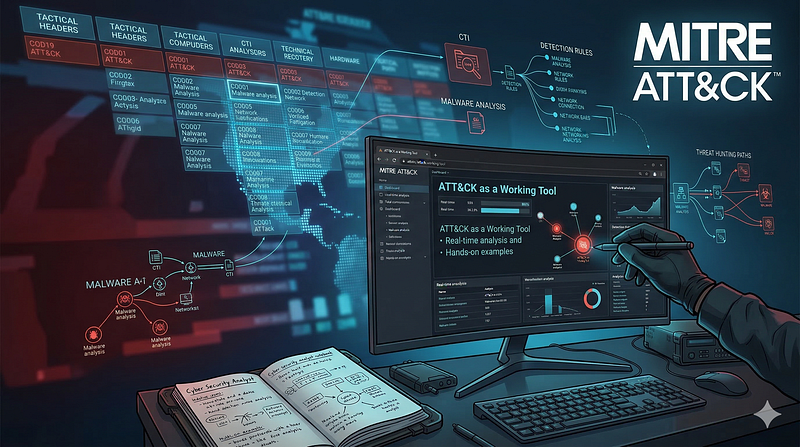
Israel Threat Actors CTI · explicit report mentionATT&CK as a Working Tool: Theory and Hands-On Practical Usage
1200km CTI repository · explicit report mentionATT CK as a Working Tool Theory and Hands On Practical Usage
1200km Medium · authored report mention
Israel Threat Actors CTI · explicit report mentionAPT39 (Chafer / Remix Kitten)
Israel Threat Actors CTI · explicit report mentionATT&CK as a Working Tool: Theory and Hands-On Practical Usage
1200km CTI repository · explicit report mentionATT CK as a Working Tool Theory and Hands On Practical Usage
1200km Medium · authored report mention
Cyber Knowledge context
Use these routes to move from the ATT&CK behavior into explanation, implementation, evidence handling, validation, and defensive operations. Relevance is generated from explicit identifiers/names and governed topic mappings; it is not attribution evidence.
Module 4 — Collection Sources
Cyber Threat Intelligence (CTI) · Tactic learning route · 24/100Endpoint live response and volatile acquisition
Digital Forensics & Incident Response (DFIR) · Tactic learning route · 24/100Module 5 — Threat hunting
Blue Team & Defensive Security · Tactic learning route · 24/100Human, workload, pipeline, and emergency identity
Cloud Security · Tactic learning route · 24/100Disk, file-system, and persistence forensics
Digital Forensics & Incident Response (DFIR) · Tactic learning route · 24/100
Cyber Threat Intelligence (CTI) · Tactic learning route · 24/100Endpoint live response and volatile acquisition
Digital Forensics & Incident Response (DFIR) · Tactic learning route · 24/100Module 5 — Threat hunting
Blue Team & Defensive Security · Tactic learning route · 24/100Human, workload, pipeline, and emergency identity
Cloud Security · Tactic learning route · 24/100Disk, file-system, and persistence forensics
Digital Forensics & Incident Response (DFIR) · Tactic learning route · 24/100
MITRE mitigations
No ATT&CK mitigation relationship is published for this technique. Apply risk-based controls and verify scope.
MITRE detection strategies and analytics
Continue the investigation
Attack tools, simulations and detection rules
Follow explicit source relationships into the reference modules. Linked procedures and detectors are not claims of live validation or actor attribution.
- T1056 Input Capture simulation — Exact active technique ID
- T1056 detection rules — Exact active technique ID; not actor-specific detector coverage