User Account Management involves implementing and enforcing policies for the lifecycle of user accounts, including creation, modification, and deactivation. Proper account management reduces the attack surface by limiting unauthorized access, managing account privileges, and ensuring accounts are used according to organizational policies. This mitigation can be implemented through the following measures: Enforcing the Principle of Least Privilege - Implementation: Assign users only the minimum permissions required to perform their job functions. Regularly audit accounts to ensure no excess permissions are granted. - Use Case: Reduces the risk of privilege escalation by ensuring accounts cannot perform unauthorized actions. Implementing Strong Password Policies - Implementation: Enforce password complexity requirements (e.g., length, character types). Require password expiration every 90…
MITRE mitigation sourceAdversaryGraph public intelligence page
This page is part of Threat Matrix, the public browser workspace for the main AdversaryGraph platform. Use it for ATT&CK pivots, actor and technique context, similarity leads, detection coverage review, and analyst-ready investigation paths.
Validation disclaimer: TTP overlap, actor similarity, generated summaries, and coverage findings are investigation leads, not attribution proof or operational validation without analyst review.
Main AdversaryGraph project Documentation Malware Analysis GitHub
Scheduled Task/Job
Adversaries may abuse task scheduling functionality to facilitate initial or recurring execution of malicious code. Utilities exist within all major operating systems to schedule programs or scripts to be executed at a specified date and time. A task can also be scheduled on a remote system, provided the proper authentication is met (ex: RPC and file and printer sharing in Windows environments). Scheduling a task on a remote system typically may require being a member of an admin or otherwise privileged group on the remote system.(Citation: TechNet Task Scheduler Security) Adversaries may use task scheduling to execute programs at system startup or on a scheduled basis for persistence. These mechanisms can also be abused to run a process under the context of a specified account (such as one with elevated permissions/privileges). Similar to [System Binary Proxy Execution](https://attack.mitre.org/techniques/T1218), adversaries have also abused task scheduling to potentially mask one-time execution under a trusted system process.(Citation: ProofPoint Serpent)
Open detection, hunting, mitigation, and evidence workspace
Detection logic
Monitor scheduled task creation from common utilities using command-line invocation. Legitimate scheduled tasks may be created during installation of new software or through system administration functions. Look for changes to tasks that do not correlate with known software, patch cycles, etc. Suspicious program execution through scheduled tasks may show up as outlier processes that have not been seen before when compared against historical data. Data and events should not be viewed in isolation, but as part of a chain of behavior that could lead to other activities, such as network connections made for Command and Control, learning details about the environment through Discovery, and Lateral Movement.
Observed actors
No current Enterprise group relationship is published in this bundle.
Correlated CTI and IR reports
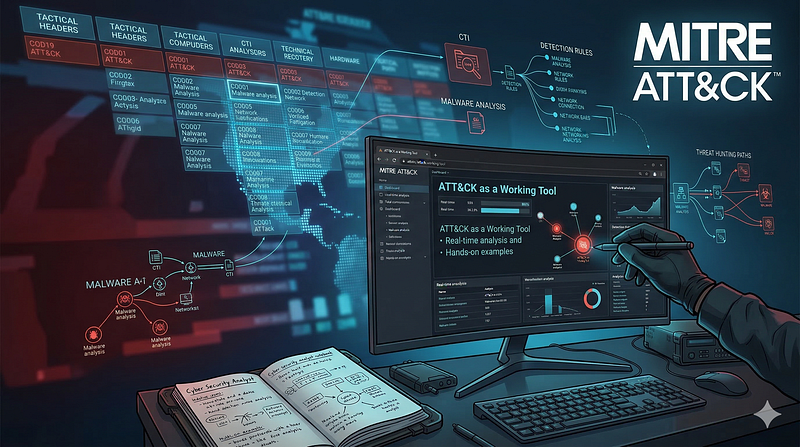
Israel Threat Actors CTI · explicit report mentionATT&CK as a Working Tool: Theory and Hands-On Practical Usage
1200km CTI repository · explicit report mentionCTI Research: LLM/AI/MCP Usage in the Cyber Kill Chain
1200km CTI repository · explicit report mentionCTI Research: LLM/AI/MCP Usage in the Cyber Kill Chain
1200km CTI repository · explicit report mentionPioneer Kitten (Fox Kitten, Lemon Sandstorm, UNC757) – Actor Deep Research
Israel Threat Actors CTI · explicit report mentionATT CK as a Working Tool Theory and Hands On Practical Usage
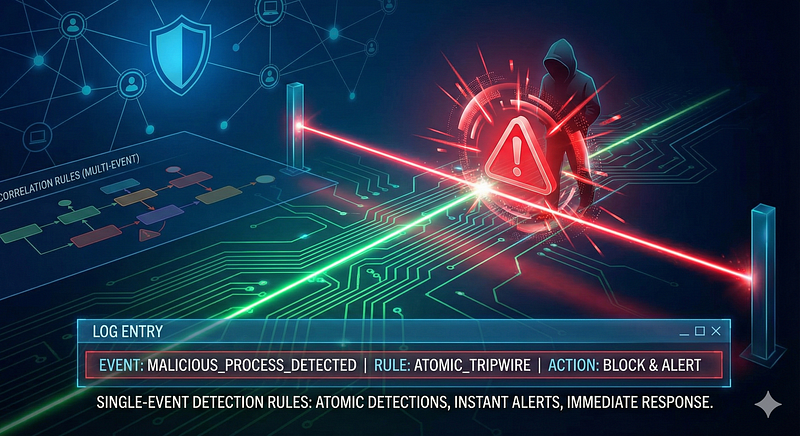
1200km Medium · authored report mentionSingle Event Detection Rules in Cybersecurity
1200km Medium · authored report mention
Cyber Knowledge context
Use these routes to move from the ATT&CK behavior into explanation, implementation, evidence handling, validation, and defensive operations. Relevance is generated from explicit identifiers/names and governed topic mappings; it is not attribution evidence.
Red Team & Offensive Security · Tactic learning route · 24/100Static triage: strings, imports, resources, and capabilities
Malware Analysis & Reverse Engineering · Tactic learning route · 24/100Module 4 — Detection engineering and detection as code
Blue Team & Defensive Security · Tactic learning route · 24/100Disk, file-system, and persistence forensics
Digital Forensics & Incident Response (DFIR) · Tactic learning route · 24/100Binary formats, ABI, loaders, and mitigations
Vulnerability Research & Exploit Development · Tactic learning route · 24/100Network, edge, service communication, hybrid access, and zero trust
Cloud Security · Tactic learning route · 24/100
MITRE mitigations
Operating System Configuration involves adjusting system settings and hardening the default configurations of an operating system (OS) to mitigate adversary exploitation and prevent abuse of system functionality. Proper OS configurations address security vulnerabilities, limit attack surfaces, and ensure robust defense against a wide range of techniques. This mitigation can be implemented through the following measures: Disable Unused Features: - Turn off SMBv1, LLMNR, and NetBIOS where not needed. - Disable remote registry and unnecessary services. Enforce OS-level Protections: - Enable Data Execution Prevention (DEP), Address Space Layout Randomization (ASLR), and Control Flow Guard (CFG) on Windows. - Use AppArmor or SELinux on Linux for mandatory access controls. Secure Access Settings: - Enable User Account Control (UAC) for Windows. - Restrict root/sudo access on Linux/macOS and e…
MITRE mitigation sourceRestricting file and directory permissions involves setting access controls at the file system level to limit which users, groups, or processes can read, write, or execute files. By configuring permissions appropriately, organizations can reduce the attack surface for adversaries seeking to access sensitive data, plant malicious code, or tamper with system files. Enforce Least Privilege Permissions: - Remove unnecessary write permissions on sensitive files and directories. - Use file ownership and groups to control access for specific roles. Example (Windows): Right-click the shared folder → Properties → Security tab → Adjust permissions for NTFS ACLs. Harden File Shares: - Disable anonymous access to shared folders. - Enforce NTFS permissions for shared folders on Windows. Example: Set permissions to restrict write access to critical files, such as system executables (e.g., `/bin` or `…
MITRE mitigation sourcePrivileged Account Management focuses on implementing policies, controls, and tools to securely manage privileged accounts (e.g., SYSTEM, root, or administrative accounts). This includes restricting access, limiting the scope of permissions, monitoring privileged account usage, and ensuring accountability through logging and auditing.This mitigation can be implemented through the following measures: Account Permissions and Roles: - Implement RBAC and least privilege principles to allocate permissions securely. - Use tools like Active Directory Group Policies to enforce access restrictions. Credential Security: - Deploy password vaulting tools like CyberArk, HashiCorp Vault, or KeePass for secure storage and rotation of credentials. - Enforce password policies for complexity, uniqueness, and expiration using tools like Microsoft Group Policy Objects (GPO). Multi-Factor Authentication (MF…
MITRE mitigation sourceAuditing is the process of recording activity and systematically reviewing and analyzing the activity and system configurations. The primary purpose of auditing is to detect anomalies and identify potential threats or weaknesses in the environment. Proper auditing configurations can also help to meet compliance requirements. The process of auditing encompasses regular analysis of user behaviors and system logs in support of proactive security measures. Auditing is applicable to all systems used within an organization, from the front door of a building to accessing a file on a fileserver. It is considered more critical for regulated industries such as, healthcare, finance and government where compliance requirements demand stringent tracking of user and system activates.This mitigation can be implemented through the following measures: System Audit: - Use Case: Regularly assess system co…
MITRE mitigation sourceMITRE detection strategies and analytics
- AN0258 · Analytic 0258 — Detects creation or modification of scheduled tasks using schtasks.exe, at.exe, or COM objects followed by execution of outlier processes tied to the scheduled job.
- AN0259 · Analytic 0259 — Detects creation or modification of cron jobs via crontab, /etc/cron.* directories, or systemd timer units with execution by unusual users or non-standard intervals.
- AN0260 · Analytic 0260 — Detects creation or alteration of LaunchAgents or LaunchDaemons with corresponding plist modification followed by execution of associated binaries.
- AN0261 · Analytic 0261 — Detects unusual use of `cron` or `sleep` loops inside containers executing unfamiliar scripts or binaries repeatedly.
- AN0262 · Analytic 0262 — Detects modification of ESXi cron jobs, local.sh scripts, or scheduled API calls to persist custom binaries or shell scripts.
Continue the investigation
Attack tools, simulations and detection rules
Follow explicit source relationships into the reference modules. Linked procedures and detectors are not claims of live validation or actor attribution.
- T1053 Scheduled Task/Job simulation — Exact active technique ID
- T1053 detection rules — Exact active technique ID; not actor-specific detector coverage