
Disable or remove unnecessary and potentially vulnerable software, features, or services to reduce the attack surface and prevent abuse by adversaries. This involves identifying software or features that are no longer needed or that could be exploited and ensuring they are either removed or properly disabled. This mitigation can be implemented through the following measures: Remove Legacy Software: - Use Case: Disable or remove older versions of software that no longer receive updates or security patches (e.g., legacy Java, Adobe Flash). - Implementation: A company removes Flash Player from all employee systems after it has reached its end-of-life date. Disable Unused Features: - Use Case: Turn off unnecessary operating system features like SMBv1, Telnet, or RDP if they are not required. - Implementation: Disable SMBv1 in a Windows environment to mitigate vulnerabilities like EternalBlu…
MITRE mitigation sourceAdversaryGraph public intelligence page
This page is part of Threat Matrix, the public browser workspace for the main AdversaryGraph platform. Use it for ATT&CK pivots, actor and technique context, similarity leads, detection coverage review, and analyst-ready investigation paths.
Validation disclaimer: TTP overlap, actor similarity, generated summaries, and coverage findings are investigation leads, not attribution proof or operational validation without analyst review.
Main AdversaryGraph project Documentation Malware Analysis GitHub
Network Service Discovery
Adversaries may attempt to get a listing of services running on remote hosts and local network infrastructure devices, including those that may be vulnerable to remote software exploitation. Common methods to acquire this information include port, vulnerability, and/or wordlist scans using tools that are brought onto a system.(Citation: CISA AR21-126A FIVEHANDS May 2021) Within cloud environments, adversaries may attempt to discover services running on other cloud hosts. Additionally, if the cloud environment is connected to a on-premises environment, adversaries may be able to identify services running on non-cloud systems as well. Within macOS environments, adversaries may use the native Bonjour application to discover services running on other macOS hosts within a network. The Bonjour mDNSResponder daemon automatically registers and advertises a host’s registered services on the network. For example, adversaries can use a mDNS query (such as <code>dns-sd -B _ssh._tcp .</code>) to find other systems broadcasting the ssh service.(Citation: apple doco bonjour description)(Citation: macOS APT Activity Bradley)
Open detection, hunting, mitigation, and evidence workspace
Detection logic
System and network discovery techniques normally occur throughout an operation as an adversary learns the environment. Data and events should not be viewed in isolation, but as part of a chain of behavior that could lead to other activities, such as Lateral Movement, based on the information obtained. Normal, benign system and network events from legitimate remote service scanning may be uncommon, depending on the environment and how they are used. Legitimate open port and vulnerability scanning may be conducted within the environment and will need to be deconflicted with any detection capabilities developed. Network intrusion detection systems can also be used to identify scanning activity. Monitor for process use of the networks and inspect intra-network flows to detect port scans.
Observed actors
G0019Threat Group-3390
G0027Lotus Blossom
G0030Lazarus Group
G0032FIN6
G0037Suckfly
G0039menuPass
G0045OilRig
G0049APT32
G0050Magic Hound
G0059Leafminer
G0077Cobalt Group
G0080Tropic Trooper
G0081APT39
G0087APT41
G0096BlackTech
G0098DarkVishnya
G0105Rocke
G0106Chimera
G0114Fox Kitten
G0117Mustang Panda
G0129BackdoorDiplomacy
G0135TeamTNT
G0139Ember Bear
G1003FIN13
G1016Volt Typhoon
G1017Agrius
G1030INC Ransom
G1032RedCurl
G1039BlackByte
G1043Salt Typhoon
G1045Medusa Group
G1051NIMBUS MANTICORE
G1059
Correlated CTI and IR reports
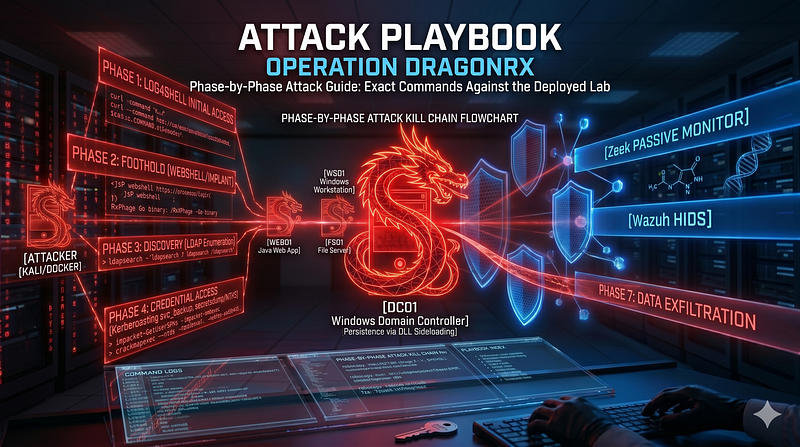
1200km CTI repository · explicit report mentionAttack Playbook — Operation DragonRx
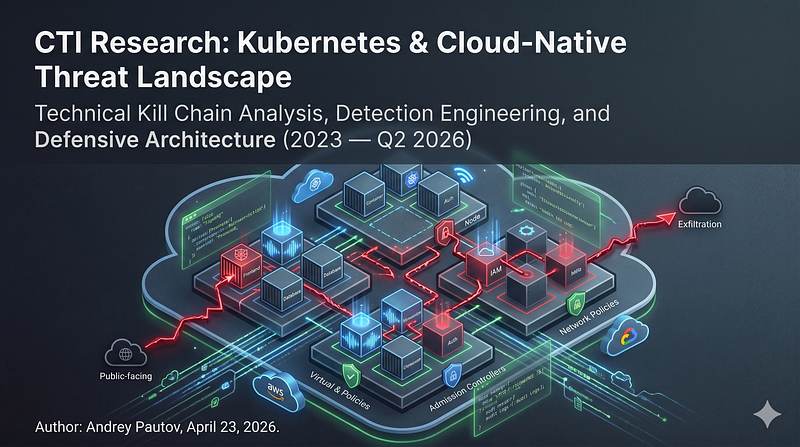
1200km CTI repository · explicit report mentionCTI Research: Kubernetes & Cloud-Native Threat Landscape
1200km CTI repository · explicit report mentionCTI Research: Sandworm / APT44
1200km CTI repository · explicit report mentionCTI Research: Sandworm / APT44
1200km CTI repository · explicit report mentionOperation DragonRx — APT41 Full Attack Simulation
1200km CTI repository · explicit report mentionOperation DragonRx: Simulating an APT41 Attack End-to-End — From Log4Shell to DFIR and Malware Analysis
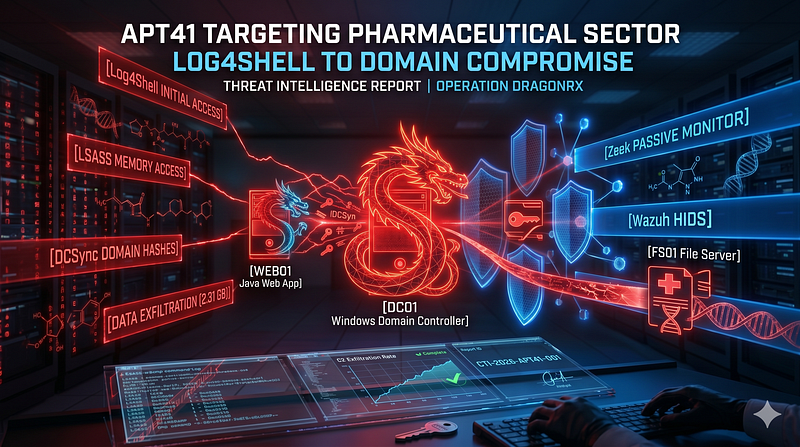
1200km CTI repository · explicit report mentionAPT41 Targeting Pharmaceutical Sector Log4Shell to Domain Compromise
1200km Medium · authored report mentionAttack Playbook Operation DragonRx
1200km Medium · authored report mentionCTI Research Kubernetes Cloud Native Threat Landscape
1200km Medium · authored report mentionCTI Research Sandworm APT44
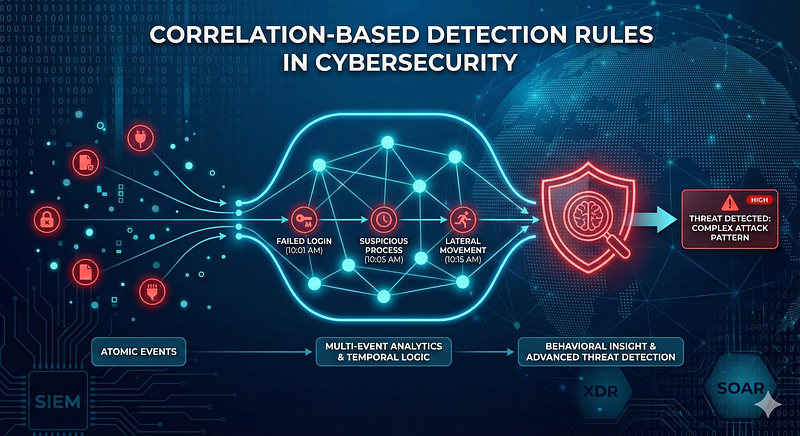
1200km Medium · authored report mentionCorrelation Based Detection Rules in Cybersecurity From Atomic Events to Behavioral Insight
1200km Medium · authored report mentionCyberattacks on 4G LTE Telecom Networks Threat Mapping and Defense
1200km Medium · authored report mentionOperation DragonRx Simulating an APT41 Attack End to End From Log4Shell to DFIR and Malware
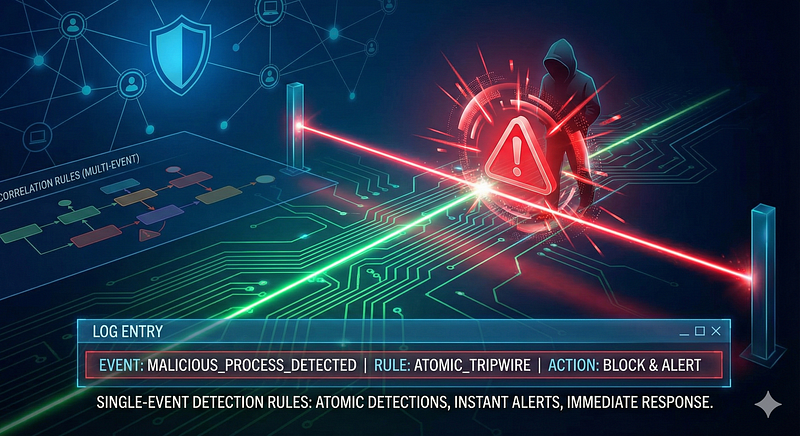
1200km Medium · authored report mentionSingle Event Detection Rules in Cybersecurity
1200km Medium · authored report mention
Cyber Knowledge context
Use these routes to move from the ATT&CK behavior into explanation, implementation, evidence handling, validation, and defensive operations. Relevance is generated from explicit identifiers/names and governed topic mappings; it is not attribution evidence.
Blue Team & Defensive Security · Governed topic match · 54/100Module 5 — Threat hunting
Blue Team & Defensive Security · Governed topic match · 42/100Module 8 — Network defense, protocol analysis, and NDR
Blue Team & Defensive Security · Governed topic match · 42/100Exploitability validation and laboratory exploit engineering
Vulnerability Research & Exploit Development · Governed topic match · 42/100Internet exposure, service indexes, and infrastructure search
OSINT & Reconnaissance · Tactic learning route · 24/100Module 5 — Cloud, containers, and Kubernetes
Red Team & Offensive Security · Tactic learning route · 24/100Data classification, storage, cryptography, keys, backup, and deletion
Cloud Security · Tactic learning route · 24/100
MITRE mitigations
Use intrusion detection signatures to block traffic at network boundaries.
MITRE mitigation sourceNetwork segmentation involves dividing a network into smaller, isolated segments to control and limit the flow of traffic between devices, systems, and applications. By segmenting networks, organizations can reduce the attack surface, restrict lateral movement by adversaries, and protect critical assets from compromise. Effective network segmentation leverages a combination of physical boundaries, logical separation through VLANs, and access control policies enforced by network appliances like firewalls, routers, and cloud-based configurations. This mitigation can be implemented through the following measures: Segment Critical Systems: - Identify and group systems based on their function, sensitivity, and risk. Examples include payment systems, HR databases, production systems, and internet-facing servers. - Use VLANs, firewalls, or routers to enforce logical separation. Implement DMZ f…
MITRE mitigation sourceMITRE detection strategies and analytics
- AN1057 · Analytic 1057 — Detects processes performing network enumeration (e.g., port scans, service probing) by correlating process creation, socket connections, and sequential destination IP probing within a time window.
- AN1058 · Analytic 1058 — Detects use of network scanning utilities or scripts performing rapid connections to multiple services or hosts using auditd and netflow/pcap telemetry.
- AN1059 · Analytic 1059 — Detects Bonjour-based mDNS enumeration or use of system tools (e.g., dns-sd, nmap) to find active services via multicast probing or targeted scans.
- AN1060 · Analytic 1060 — Detects lateral discovery or container breakout attempts using netcat, curl, or custom binaries probing other services within the same namespace or VPC subnet.
Continue the investigation
Attack tools, simulations and detection rules
Follow explicit source relationships into the reference modules. Linked procedures and detectors are not claims of live validation or actor attribution.
- T1046 Network Service Discovery simulation — Exact active technique ID
- T1046 detection rules — Exact active technique ID; not actor-specific detector coverage