
Auditing is the process of recording activity and systematically reviewing and analyzing the activity and system configurations. The primary purpose of auditing is to detect anomalies and identify potential threats or weaknesses in the environment. Proper auditing configurations can also help to meet compliance requirements. The process of auditing encompasses regular analysis of user behaviors and system logs in support of proactive security measures. Auditing is applicable to all systems used within an organization, from the front door of a building to accessing a file on a fileserver. It is considered more critical for regulated industries such as, healthcare, finance and government where compliance requirements demand stringent tracking of user and system activates.This mitigation can be implemented through the following measures: System Audit: - Use Case: Regularly assess system co…
MITRE mitigation sourceAdversaryGraph public intelligence page
This page is part of Threat Matrix, the public browser workspace for the main AdversaryGraph platform. Use it for ATT&CK pivots, actor and technique context, similarity leads, detection coverage review, and analyst-ready investigation paths.
Validation disclaimer: TTP overlap, actor similarity, generated summaries, and coverage findings are investigation leads, not attribution proof or operational validation without analyst review.
Main AdversaryGraph project Documentation Malware Analysis GitHub
Obfuscated Files or Information
Adversaries may attempt to make an executable or file difficult to discover or analyze by encrypting, encoding, or otherwise obfuscating its contents on the system or in transit. This is common behavior that can be used across different platforms and the network to evade defenses. Payloads may be compressed, archived, or encrypted in order to avoid detection. These payloads may be used during Initial Access or later to mitigate detection. Sometimes a user's action may be required to open and [Deobfuscate/Decode Files or Information](https://attack.mitre.org/techniques/T1140) for [User Execution](https://attack.mitre.org/techniques/T1204). The user may also be required to input a password to open a password protected compressed/encrypted file that was provided by the adversary.(Citation: Volexity PowerDuke November 2016) Adversaries may also use compressed or archived scripts, such as JavaScript. Portions of files can also be encoded to hide the plain-text strings that would otherwise help defenders with discovery.(Citation: Linux/Cdorked.A We Live Security Analysis) Payloads may also be split into separate, seemingly benign files that only reveal malicious functionality when reassembled.(Citation: Carbon Black Obfuscation Sept 2016) Adversaries may also abuse [Command Obfuscation](https://attack.mitre.org/techniques/T1027/010) to obscure commands executed from payloads or directly via [Command and Scripting Interpreter](https://attack.mitre.org/techniques/T1059). Environment variables, aliases, characters, and other platform/language specific semantics can be used to evade…
Open detection, hunting, mitigation, and evidence workspace
Detection logic
Detection of file obfuscation is difficult unless artifacts are left behind by the obfuscation process that are uniquely detectable with a signature. If detection of the obfuscation itself is not possible, it may be possible to detect the malicious activity that caused the obfuscated file (for example, the method that was used to write, read, or modify the file on the file system). Flag and analyze commands containing indicators of obfuscation and known suspicious syntax such as uninterpreted escape characters like '''^''' and '''"'''. Windows' Sysmon and Event ID 4688 displays command-line arguments for processes. Deobfuscation tools can be used to detect these indicators in files/payloads. Obfuscation used in payloads for Initial Access can be detected at the network. Use network intrusion detection systems and email gateway filtering to identify compressed and encrypted attachments and scripts. Some email attachment detonation systems can open compressed and encrypted attachments. Payloads delivered over an encrypted connection from a website require encrypted network traffic inspection. The first detection of a malicious tool may trigger an anti-virus or other security tool alert. Similar events may also occur at the boundary through network IDS, email scanning appliance, etc. The initial detection should be treated as an indication of a potentially more invasive intrusion. The alerting system should be thoroughly investigated beyond that initial alert for activity that was not detected. Adversaries may continue with an operation, assuming that individual events like an anti-virus detect will not be investigated or that an analyst will not be able to conclusively link that event to other activity occurring on the network.
Observed actors
Correlated CTI and IR reports
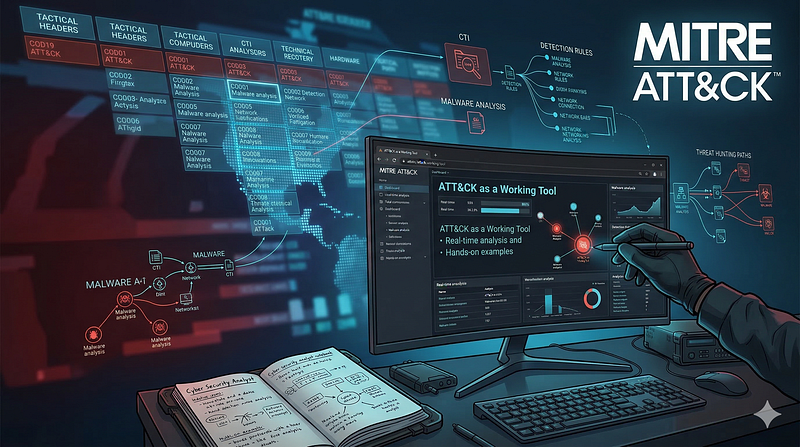
1200km CTI repository · explicit report mentionATT&CK as a Working Tool: Theory and Hands-On Practical Usage
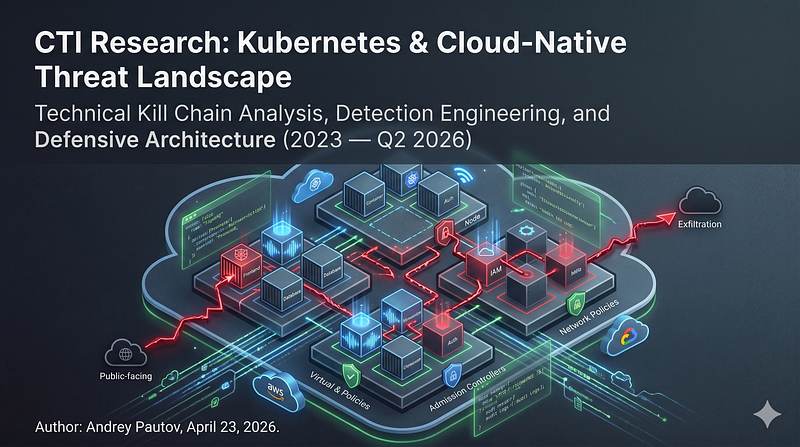
1200km CTI repository · explicit report mentionCTI Research: Kubernetes & Cloud-Native Threat Landscape
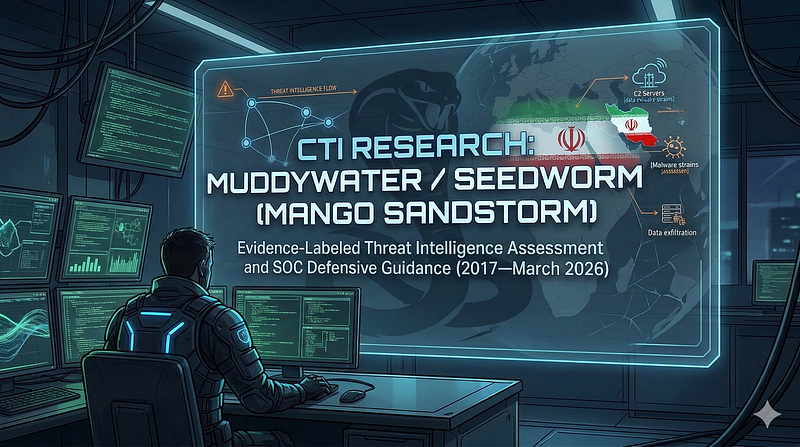
1200km CTI repository · explicit report mentionCTI Research: MuddyWater / Seedworm (Mango Sandstorm)
1200km CTI repository · explicit report mentionCTI Research: MuddyWater / Seedworm (Mango Sandstorm)
1200km CTI repository · explicit report mentionExecutive Summary
Israel Threat Actors CTI · explicit report mentionFrom Threat Intelligence to Detection: A Practitioner's Guide
1200km CTI repository · explicit report mentionOperation DragonRx — APT41 Full Attack Simulation
1200km CTI repository · explicit report mentionOperation DragonRx: Simulating an APT41 Attack End-to-End — From Log4Shell to DFIR and Malware Analysis
1200km CTI repository · explicit report mentionATT CK as a Working Tool Theory and Hands On Practical Usage
1200km Medium · authored report mentionCTI Research Kubernetes Cloud Native Threat Landscape
1200km Medium · authored report mentionCTI Research MuddyWater Seedworm Mango Sandstorm
1200km Medium · authored report mentionFrom Threat Intelligence to Detection A Practitioner s Guide
1200km Medium · authored report mention
Cyber Knowledge context
Use these routes to move from the ATT&CK behavior into explanation, implementation, evidence handling, validation, and defensive operations. Relevance is generated from explicit identifiers/names and governed topic mappings; it is not attribution evidence.
Malware Analysis & Reverse Engineering · Governed topic match · 42/100Controlled dynamic behavior and differential observation
Malware Analysis & Reverse Engineering · Tactic learning route · 24/100Module 4 — Detection engineering and detection as code
Blue Team & Defensive Security · Tactic learning route · 24/100Disk, file-system, and persistence forensics
Digital Forensics & Incident Response (DFIR) · Tactic learning route · 24/100
MITRE mitigations
Behavior Prevention on Endpoint refers to the use of technologies and strategies to detect and block potentially malicious activities by analyzing the behavior of processes, files, API calls, and other endpoint events. Rather than relying solely on known signatures, this approach leverages heuristics, machine learning, and real-time monitoring to identify anomalous patterns indicative of an attack. This mitigation can be implemented through the following measures: Suspicious Process Behavior: - Implementation: Use Endpoint Detection and Response (EDR) tools to monitor and block processes exhibiting unusual behavior, such as privilege escalation attempts. - Use Case: An attacker uses a known vulnerability to spawn a privileged process from a user-level application. The endpoint tool detects the abnormal parent-child process relationship and blocks the action. Unauthorized File Access: -…
MITRE mitigation sourceUser Training involves educating employees and contractors on recognizing, reporting, and preventing cyber threats that rely on human interaction, such as phishing, social engineering, and other manipulative techniques. Comprehensive training programs create a human firewall by empowering users to be an active component of the organization's cybersecurity defenses. This mitigation can be implemented through the following measures: Create Comprehensive Training Programs: - Design training modules tailored to the organization's risk profile, covering topics such as phishing, password management, and incident reporting. - Provide role-specific training for high-risk employees, such as helpdesk staff or executives. Use Simulated Exercises: - Conduct phishing simulations to measure user susceptibility and provide targeted follow-up training. - Run social engineering drills to evaluate employ…
MITRE mitigation sourceAntivirus/Antimalware solutions utilize signatures, heuristics, and behavioral analysis to detect, block, and remediate malicious software, including viruses, trojans, ransomware, and spyware. These solutions continuously monitor endpoints and systems for known malicious patterns and suspicious behaviors that indicate compromise. Antivirus/Antimalware software should be deployed across all devices, with automated updates to ensure protection against the latest threats. This mitigation can be implemented through the following measures: Signature-Based Detection: - Implementation: Use predefined signatures to identify known malware based on unique patterns such as file hashes, byte sequences, or command-line arguments. This method is effective against known threats. - Use Case: When malware like "Emotet" is detected, its signature (such as a specific file hash) matches a known database of…
MITRE mitigation sourceMITRE detection strategies and analytics
- AN1064 · Analytic 1064 — Correlates script execution or suspicious parent processes with creation or modification of encoded, compressed, or encrypted file formats (e.g., .zip, .7z, .enc) and abnormal command-line syntax or PowerShell obfuscation.
- AN1065 · Analytic 1065 — Detects use of gzip, base64, tar, or openssl in scripts or commands that encode/encrypt files after file staging or system enumeration.
- AN1066 · Analytic 1066 — Monitors use of archive or encryption tools (zip, openssl) tied to user-scripted activity or binaries writing encoded payloads under /Users or /Volumes.
- AN1067 · Analytic 1067 — Identifies transfer of base64, uuencoded, or high-entropy files over HTTP, FTP, or custom protocols in lateral movement or exfiltration streams.
- AN1068 · Analytic 1068 — Detects encoded PowerCLI or Base64-encoded payloads staged via datastore uploads or shell access (e.g., ESXi Shell or backdoored VIBs).
Continue the investigation
Attack tools, simulations and detection rules
Follow explicit source relationships into the reference modules. Linked procedures and detectors are not claims of live validation or actor attribution.
- T1027 Obfuscated Files or Information simulation — Exact active technique ID
- T1027 detection rules — Exact active technique ID; not actor-specific detector coverage