- AN1583 · Analytic 1583 — Execution of network enumeration utilities (e.g., net.exe, ping.exe, tracert.exe) in short succession, often chained with lateral movement tools or system enumeration commands.
- AN1584 · Analytic 1584 — Use of bash scripts or interactive shells to issue sequential ping, arp, or traceroute commands to map remote hosts.
- AN1585 · Analytic 1585 — Execution of built-in or AppleScript-based system enumeration via `arp`, `netstat`, `ping`, and discovery of `/etc/hosts` contents.
- AN1586 · Analytic 1586 — ESXi shell or SSH access issuing `esxcli network diag ping` or viewing routing tables to identify connected hosts.
- AN1587 · Analytic 1587 — Execution of discovery commands like `show cdp neighbors`, `show arp`, and other interface-level introspection on Cisco or Juniper devices.
AdversaryGraph public intelligence page
This page is part of Threat Matrix, the public browser workspace for the main AdversaryGraph platform. Use it for ATT&CK pivots, actor and technique context, similarity leads, detection coverage review, and analyst-ready investigation paths.
Validation disclaimer: TTP overlap, actor similarity, generated summaries, and coverage findings are investigation leads, not attribution proof or operational validation without analyst review.
Main AdversaryGraph project Documentation Malware Analysis GitHub
Remote System Discovery
Adversaries may attempt to get a listing of other systems by IP address, hostname, or other logical identifier on a network that may be used for Lateral Movement from the current system. Functionality could exist within remote access tools to enable this, but utilities available on the operating system could also be used such as [Ping](https://attack.mitre.org/software/S0097), <code>net view</code> using [Net](https://attack.mitre.org/software/S0039), or, on ESXi servers, `esxcli network diag ping`. Adversaries may also analyze data from local host files (ex: <code>C:\Windows\System32\Drivers\etc\hosts</code> or <code>/etc/hosts</code>) or other passive means (such as local [Arp](https://attack.mitre.org/software/S0099) cache entries) in order to discover the presence of remote systems in an environment. Adversaries may also target discovery of network infrastructure as well as leverage [Network Device CLI](https://attack.mitre.org/techniques/T1059/008) commands on network devices to gather detailed information about systems within a network (e.g. <code>show cdp neighbors</code>, <code>show arp</code>).(Citation: US-CERT-TA18-106A)(Citation: CISA AR21-126A FIVEHANDS May 2021)
Open detection, hunting, mitigation, and evidence workspace
Detection logic
System and network discovery techniques normally occur throughout an operation as an adversary learns the environment. Data and events should not be viewed in isolation, but as part of a chain of behavior that could lead to other activities, such as Lateral Movement, based on the information obtained. Normal, benign system and network events related to legitimate remote system discovery may be uncommon, depending on the environment and how they are used. Monitor processes and command-line arguments for actions that could be taken to gather system and network information. Remote access tools with built-in features may interact directly with the Windows API to gather information. Information may also be acquired through Windows system management tools such as Windows Management Instrumentation and PowerShell. Monitor for processes that can be used to discover remote systems, such as ping.exe and tracert.exe, especially when executed in quick succession.
Observed actors
Ke3chang
G0004Deep Panda
G0009Turla
G0010Naikon
G0019APT3
G0022Threat Group-3390
G0027Lotus Blossom
G0030Sandworm Team
G0034Dragonfly
G0035FIN6
G0037menuPass
G0045APT32
G0050FIN5
G0053Magic Hound
G0059BRONZE BUTLER
G0060FIN8
G0061Leafminer
G0077APT39
G0087Silence
G0091GALLIUM
G0093APT41
G0096Wizard Spider
G0102Rocke
G0106Chimera
G0114Fox Kitten
G0117Indrik Spider
G0119HAFNIUM
G0125Mustang Panda
G0129HEXANE
G1001Ember Bear
G1003Earth Lusca
G1006Scattered Spider
G1015Volt Typhoon
G1017ToddyCat
G1022Akira
G1024Agrius
G1030Play
G1040BlackByte
G1043Salt Typhoon
G1045Medusa Group
G1051MirrorFace
G1054ShinyHunters
G1057The Gentlemen
G1058
Correlated CTI and IR reports
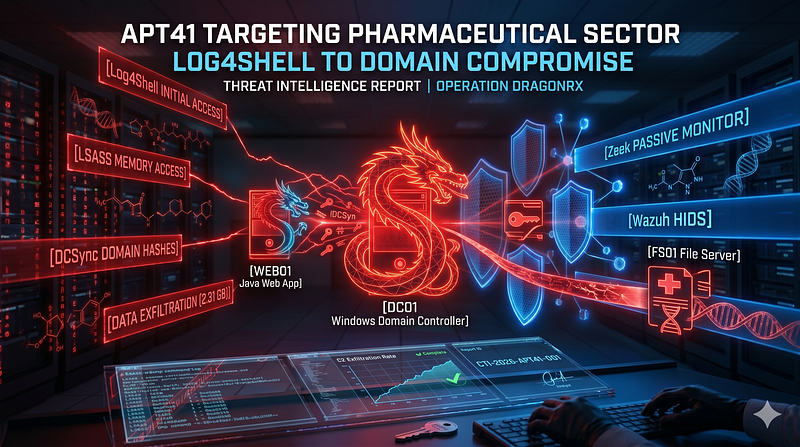
APT41 Targeting Pharmaceutical Sector: Log4Shell to Domain Compromise
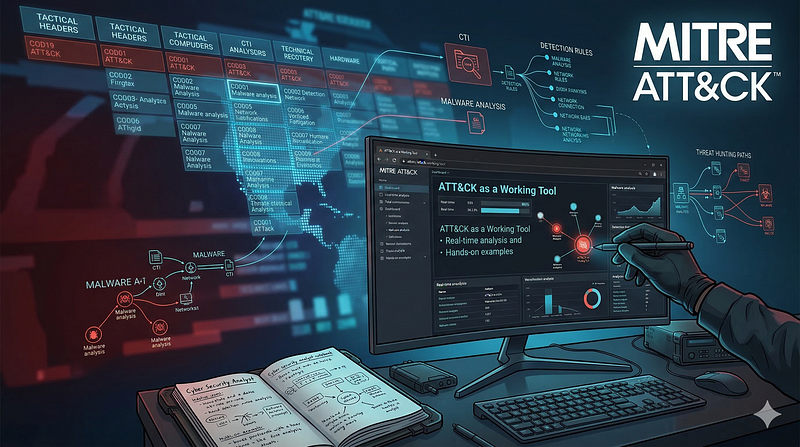
1200km CTI repository · explicit report mentionATT&CK as a Working Tool: Theory and Hands-On Practical Usage
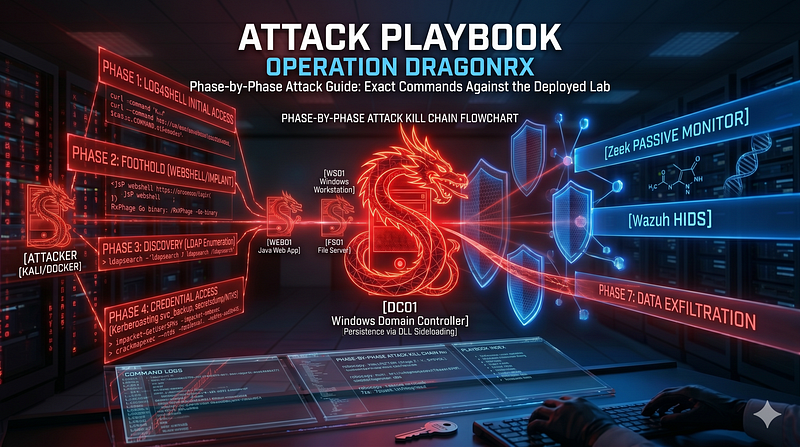
1200km CTI repository · explicit report mentionAttack Playbook — Operation DragonRx
1200km CTI repository · explicit report mentionOperation DragonRx — APT41 Full Attack Simulation
1200km CTI repository · explicit report mentionOperation DragonRx: Simulating an APT41 Attack End-to-End — From Log4Shell to DFIR and Malware Analysis
1200km CTI repository · explicit report mentionAPT41 Targeting Pharmaceutical Sector Log4Shell to Domain Compromise
1200km Medium · authored report mentionATT CK as a Working Tool Theory and Hands On Practical Usage
1200km Medium · authored report mentionAttack Playbook Operation DragonRx
1200km Medium · authored report mentionOperation DragonRx Simulating an APT41 Attack End to End From Log4Shell to DFIR and Malware
1200km Medium · authored report mention
Cyber Knowledge context
Use these routes to move from the ATT&CK behavior into explanation, implementation, evidence handling, validation, and defensive operations. Relevance is generated from explicit identifiers/names and governed topic mappings; it is not attribution evidence.
Module 6 — Alert triage, investigation, and escalation
Blue Team & Defensive Security · Governed topic match · 42/100Endpoint live response and volatile acquisition
Digital Forensics & Incident Response (DFIR) · Governed topic match · 42/100Internet exposure, service indexes, and infrastructure search
OSINT & Reconnaissance · Tactic learning route · 24/100Module 5 — Cloud, containers, and Kubernetes
Red Team & Offensive Security · Tactic learning route · 24/100Data classification, storage, cryptography, keys, backup, and deletion
Cloud Security · Tactic learning route · 24/100
MITRE mitigations
No ATT&CK mitigation relationship is published for this technique. Apply risk-based controls and verify scope.
MITRE detection strategies and analytics
Continue the investigation
Attack tools, simulations and detection rules
Follow explicit source relationships into the reference modules. Linked procedures and detectors are not claims of live validation or actor attribution.
- T1018 Remote System Discovery simulation — Exact active technique ID
- T1018 detection rules — Exact active technique ID; not actor-specific detector coverage