Protect sensitive information at rest, in transit, and during processing by using strong encryption algorithms. Encryption ensures the confidentiality and integrity of data, preventing unauthorized access or tampering. This mitigation can be implemented through the following measures: Encrypt Data at Rest: - Use Case: Use full-disk encryption or file-level encryption to secure sensitive data stored on devices. - Implementation: Implement BitLocker for Windows systems or FileVault for macOS devices to encrypt hard drives. Encrypt Data in Transit: - Use Case: Use secure communication protocols (e.g., TLS, HTTPS) to encrypt sensitive data as it travels over networks. - Implementation: Enable HTTPS for all web applications and configure mail servers to enforce STARTTLS for email encryption. Encrypt Backups: - Use Case: Ensure that backup data is encrypted both during storage and transfer to…
MITRE mitigation sourceAdversaryGraph public intelligence page
This page is part of Threat Matrix, the public browser workspace for the main AdversaryGraph platform. Use it for ATT&CK pivots, actor and technique context, similarity leads, detection coverage review, and analyst-ready investigation paths.
Validation disclaimer: TTP overlap, actor similarity, generated summaries, and coverage findings are investigation leads, not attribution proof or operational validation without analyst review.
Main AdversaryGraph project Documentation Malware Analysis GitHub
OS Credential Dumping
Adversaries may attempt to dump credentials to obtain account login and credential material, normally in the form of a hash or a clear text password. Credentials can be obtained from OS caches, memory, or structures.(Citation: Brining MimiKatz to Unix) Credentials can then be used to perform [Lateral Movement](https://attack.mitre.org/tactics/TA0008) and access restricted information. Several of the tools mentioned in associated sub-techniques may be used by both adversaries and professional security testers. Additional custom tools likely exist as well.
Open detection, hunting, mitigation, and evidence workspace
Detection logic
### Windows Monitor for unexpected processes interacting with lsass.exe. Common credential dumpers such as Mimikatz access the LSA Subsystem Service (LSASS) process by opening the process, locating the LSA secrets key, and decrypting the sections in memory where credential details are stored. Credential dumpers may also use methods for reflective Process Injection to reduce potential indicators of malicious activity. Hash dumpers open the Security Accounts Manager (SAM) on the local file system (%SystemRoot%/system32/config/SAM) or create a dump of the Registry SAM key to access stored account password hashes. Some hash dumpers will open the local file system as a device and parse to the SAM table to avoid file access defenses. Others will make an in-memory copy of the SAM table before reading hashes. Detection of compromised Valid Accounts in-use by adversaries may help as well. On Windows 8.1 and Windows Server 2012 R2, monitor Windows Logs for LSASS.exe creation to verify that LSASS started as a protected process. Monitor processes and command-line arguments for program execution that may be indicative of credential dumping. Remote access tools may contain built-in features or incorporate existing tools like Mimikatz. PowerShell scripts also exist that contain credential dumping functionality, such as PowerSploit's Invoke-Mimikatz module, which may require additional logging features to be configured in the operating system to collect necessary information for analysis. Monitor domain controller logs for replication requests and other unscheduled activity possibly associated with DCSync. Note: Domain controllers may not log replication requests originating from the default domain controller account. . Also monitor for network protocols and other replication requests from IPs not associated with known domain controllers. ### Linux To obtain the passwords and hashes stored in memory, processes must open a maps file in the `/proc` filesystem for the process being analyzed. This file is stored under the path `/proc//maps`, where the `` directory is the unique pid of the program being interrogated for such authentication data. The AuditD monitoring tool, which ships stock in many Linux distributions, can be used to watch for hostile processes opening this file in the proc file system, alerting on the pid, process name, and arguments of such programs.
Observed actors
Correlated CTI and IR reports
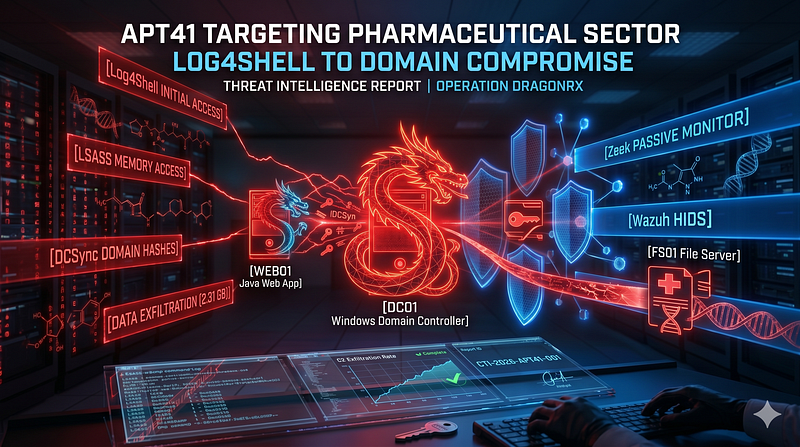
Israel Threat Actors CTI · explicit report mentionAPT41 Targeting Pharmaceutical Sector: Log4Shell to Domain Compromise
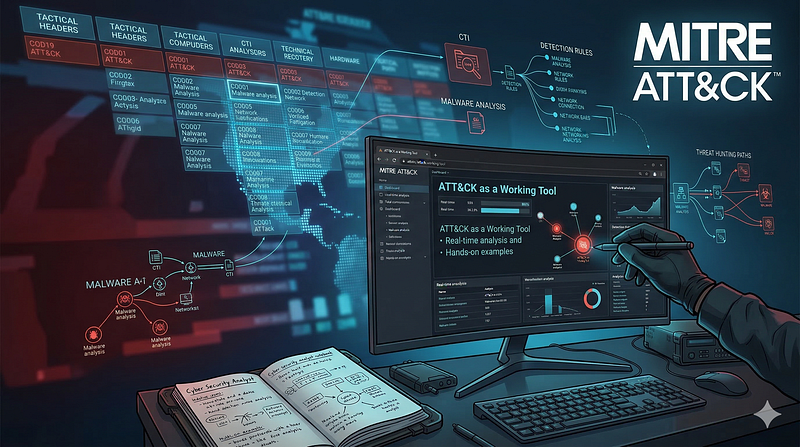
1200km CTI repository · explicit report mentionATT&CK as a Working Tool: Theory and Hands-On Practical Usage
1200km CTI repository · explicit report mentionCTI Research: LLM/AI/MCP Usage in the Cyber Kill Chain
1200km CTI repository · explicit report mentionCTI Research: LLM/AI/MCP Usage in the Cyber Kill Chain
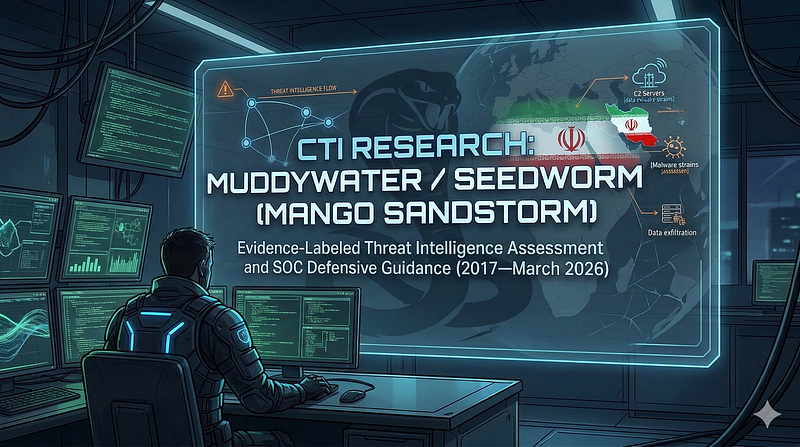
1200km CTI repository · explicit report mentionCTI Research: MuddyWater / Seedworm (Mango Sandstorm)
1200km CTI repository · explicit report mentionCTI Research: MuddyWater / Seedworm (Mango Sandstorm)
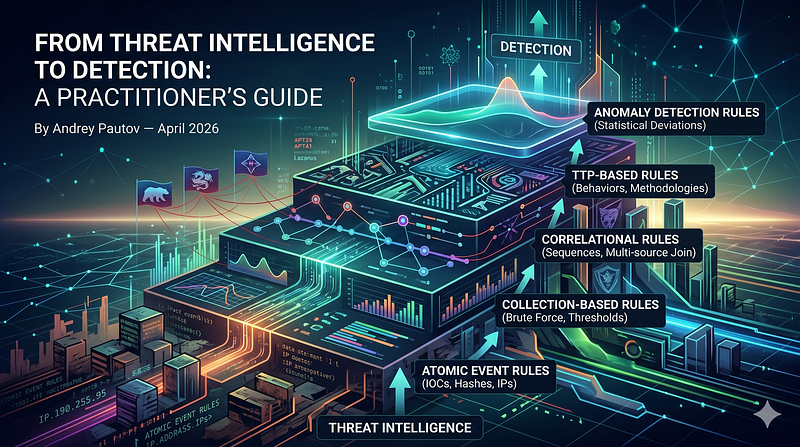
1200km CTI repository · explicit report mentionFrom Threat Intelligence to Detection: A Practitioner's Guide
1200km CTI repository · explicit report mentionIOC Tables — MuddyWater / Seedworm (Mango Sandstorm)
1200km CTI repository · explicit report mentionOilRig (APT34 / Helix Kitten / Earth Simnavaz etc)
Israel Threat Actors CTI · explicit report mentionAPT41 Targeting Pharmaceutical Sector Log4Shell to Domain Compromise
1200km Medium · authored report mentionATT CK as a Working Tool Theory and Hands On Practical Usage
1200km Medium · authored report mentionCTI Research MuddyWater Seedworm Mango Sandstorm
1200km Medium · authored report mentionFrom Threat Intelligence to Detection A Practitioner s Guide
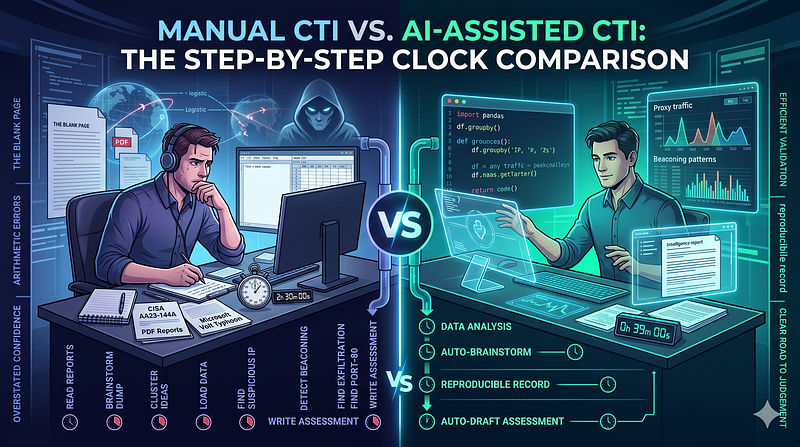
1200km Medium · authored report mentionManual CTI vs AI Assisted CTI A Step by Step Clock Comparison
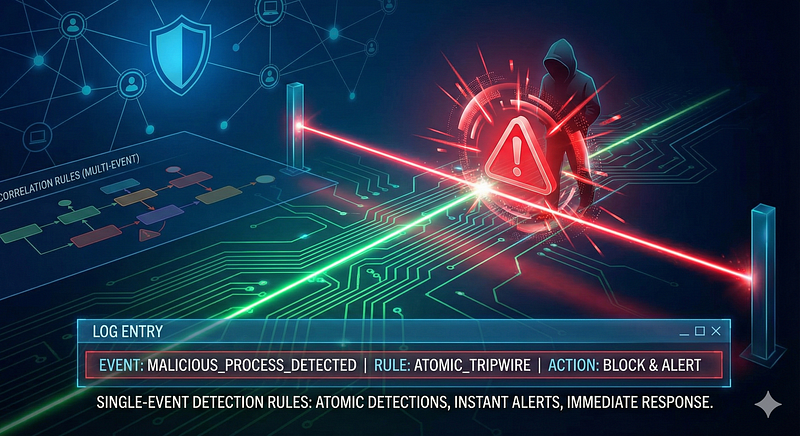
1200km Medium · authored report mentionSingle Event Detection Rules in Cybersecurity
1200km Medium · authored report mention
Cyber Knowledge context
Use these routes to move from the ATT&CK behavior into explanation, implementation, evidence handling, validation, and defensive operations. Relevance is generated from explicit identifiers/names and governed topic mappings; it is not attribution evidence.
Cyber Threat Intelligence (CTI) · Explicit ATT&CK ID · 100/100Module 3 — Core Frameworks Models
Cyber Threat Intelligence (CTI) · Explicit ATT&CK ID · 100/100Module 8 — Operationalizing CTI (CTI → Detection)
Cyber Threat Intelligence (CTI) · Explicit ATT&CK ID · 100/100Identity, authorization, tenancy, and human approval
AI Security · Governed topic match · 48/100Module 5 — Threat hunting
Blue Team & Defensive Security · Tactic learning route · 24/100Human, workload, pipeline, and emergency identity
Cloud Security · Tactic learning route · 24/100Disk, file-system, and persistence forensics
Digital Forensics & Incident Response (DFIR) · Tactic learning route · 24/100
MITRE mitigations
Behavior Prevention on Endpoint refers to the use of technologies and strategies to detect and block potentially malicious activities by analyzing the behavior of processes, files, API calls, and other endpoint events. Rather than relying solely on known signatures, this approach leverages heuristics, machine learning, and real-time monitoring to identify anomalous patterns indicative of an attack. This mitigation can be implemented through the following measures: Suspicious Process Behavior: - Implementation: Use Endpoint Detection and Response (EDR) tools to monitor and block processes exhibiting unusual behavior, such as privilege escalation attempts. - Use Case: An attacker uses a known vulnerability to spawn a privileged process from a user-level application. The endpoint tool detects the abnormal parent-child process relationship and blocks the action. Unauthorized File Access: -…
MITRE mitigation sourceSet and enforce secure password policies for accounts to reduce the likelihood of unauthorized access. Strong password policies include enforcing password complexity, requiring regular password changes, and preventing password reuse. This mitigation can be implemented through the following measures: Windows Systems: - Use Group Policy Management Console (GPMC) to configure: - Minimum password length (e.g., 12+ characters). - Password complexity requirements. - Password history (e.g., disallow last 24 passwords). - Account lockout duration and thresholds. Linux Systems: - Configure Pluggable Authentication Modules (PAM): - Use `pam_pwquality` to enforce complexity and length requirements. - Implement `pam_tally2` or `pam_faillock` for account lockouts. - Use `pwunconv` to disable password reuse. Password Managers: - Enforce usage of enterprise password managers (e.g., Bitwarden, 1Passwor…
MITRE mitigation sourceUser Training involves educating employees and contractors on recognizing, reporting, and preventing cyber threats that rely on human interaction, such as phishing, social engineering, and other manipulative techniques. Comprehensive training programs create a human firewall by empowering users to be an active component of the organization's cybersecurity defenses. This mitigation can be implemented through the following measures: Create Comprehensive Training Programs: - Design training modules tailored to the organization's risk profile, covering topics such as phishing, password management, and incident reporting. - Provide role-specific training for high-risk employees, such as helpdesk staff or executives. Use Simulated Exercises: - Conduct phishing simulations to measure user susceptibility and provide targeted follow-up training. - Run social engineering drills to evaluate employ…
MITRE mitigation sourcePrivileged Account Management focuses on implementing policies, controls, and tools to securely manage privileged accounts (e.g., SYSTEM, root, or administrative accounts). This includes restricting access, limiting the scope of permissions, monitoring privileged account usage, and ensuring accountability through logging and auditing.This mitigation can be implemented through the following measures: Account Permissions and Roles: - Implement RBAC and least privilege principles to allocate permissions securely. - Use tools like Active Directory Group Policies to enforce access restrictions. Credential Security: - Deploy password vaulting tools like CyberArk, HashiCorp Vault, or KeePass for secure storage and rotation of credentials. - Enforce password policies for complexity, uniqueness, and expiration using tools like Microsoft Group Policy Objects (GPO). Multi-Factor Authentication (MF…
MITRE mitigation sourcePrivileged Process Integrity focuses on defending highly privileged processes (e.g., system services, antivirus, or authentication processes) from tampering, injection, or compromise by adversaries. These processes often interact with critical components, making them prime targets for techniques like code injection, privilege escalation, and process manipulation. This mitigation can be implemented through the following measures: Protected Process Mechanisms: - Enable RunAsPPL on Windows systems to protect LSASS and other critical processes. - Use registry modifications to enforce protected process settings: `HKEY_LOCAL_MACHINE\SYSTEM\CurrentControlSet\Control\Lsa\RunAsPPL` Anti-Injection and Memory Protection: - Enable Control Flow Guard (CFG), DEP, and ASLR to protect against process memory tampering. - Deploy endpoint protection tools that actively block process injection attempts. Co…
MITRE mitigation sourceCredential Access Protection focuses on implementing measures to prevent adversaries from obtaining credentials, such as passwords, hashes, tokens, or keys, that could be used for unauthorized access. This involves restricting access to credential storage mechanisms, hardening configurations to block credential dumping methods, and using monitoring tools to detect suspicious credential-related activity. This mitigation can be implemented through the following measures: Restrict Access to Credential Storage: - Use Case: Prevent adversaries from accessing the SAM (Security Account Manager) database on Windows systems. - Implementation: Enforce least privilege principles and restrict administrative access to credential stores such as `C:\Windows\System32\config\SAM`. Use Credential Guard: - Use Case: Isolate LSASS (Local Security Authority Subsystem Service) memory to prevent credential du…
MITRE mitigation sourceImplement robust Active Directory (AD) configurations using group policies to secure user accounts, control access, and minimize the attack surface. AD configurations enable centralized control over account settings, logon policies, and permissions, reducing the risk of unauthorized access and lateral movement within the network. This mitigation can be implemented through the following measures: Account Configuration: - Implementation: Use domain accounts instead of local accounts to leverage AD’s centralized management, including group policies, auditing, and access control. - Use Case: For IT staff managing shared resources, provision domain accounts that allow IT teams to log in centrally, reducing the risk of unmanaged, rogue local accounts on individual machines. Interactive Logon Restrictions: - Implementation: Configure group policies to restrict interactive logons (e.g., direct…
MITRE mitigation sourceOperating System Configuration involves adjusting system settings and hardening the default configurations of an operating system (OS) to mitigate adversary exploitation and prevent abuse of system functionality. Proper OS configurations address security vulnerabilities, limit attack surfaces, and ensure robust defense against a wide range of techniques. This mitigation can be implemented through the following measures: Disable Unused Features: - Turn off SMBv1, LLMNR, and NetBIOS where not needed. - Disable remote registry and unnecessary services. Enforce OS-level Protections: - Enable Data Execution Prevention (DEP), Address Space Layout Randomization (ASLR), and Control Flow Guard (CFG) on Windows. - Use AppArmor or SELinux on Linux for mandatory access controls. Secure Access Settings: - Enable User Account Control (UAC) for Windows. - Restrict root/sudo access on Linux/macOS and e…
MITRE mitigation sourceMITRE detection strategies and analytics
- AN0648 · Analytic 0648 — Processes accessing LSASS memory or SAM registry hives outside of trusted security tools, often followed by file creation or lateral movement. Detects unauthorized access to sensitive OS subsystems for credential extraction.
- AN0649 · Analytic 0649 — Processes opening /proc/*/mem or /proc/*/maps targeting credential-storing services like sshd or login. Behavior often includes high privilege escalation and memory inspection tools such as gcore or gdb.
- AN0650 · Analytic 0650 — Unsigned processes accessing system memory or launching known credential scraping tools (e.g., osascript, dylib injections) to access the Keychain or sensitive memory regions.
Continue the investigation
Attack tools, simulations and detection rules
Follow explicit source relationships into the reference modules. Linked procedures and detectors are not claims of live validation or actor attribution.
- T1003 OS Credential Dumping simulation — Exact active technique ID
- T1003 detection rules — Exact active technique ID; not actor-specific detector coverage