Spearphishing Link
Adversaries may send spearphishing emails with a malicious link in an attempt to gain access to victim systems. Spearphishing with a link is a specific variant of spearphishing. It is different from other forms of spearphishing in that it employs the use of links to download malware contained in email, instead of attaching malicious files to the email itself, to avoid defenses that may inspect email attachments. Spearphishing may also involve social engineering techniques, such as posing as a trusted source. All forms of spearphishing are electronically delivered social engineering targeted at a specific individual, company, or industry. In this case, the malicious emails contain links. Generally, the links will be accompanied by social engineering text and require the user to actively click or copy and paste a URL into a browser, leveraging User Execution. The visited website may compromise the web browser using an exploit, or the user will be prompted to download applications, documents, zip files, or even executables depending on the pretext for the email in the first place. Adversaries may also include links that are intended to interact directly with an email reader, including embedded images intended to exploit the end system directly. Additionally, adversaries may use seemingly benign links that abuse special characters to mimic legitimate websites (known as an "IDN homograph attack"). URLs may also be obfuscated by taking advantage of quirks in the URL schema, such as the acceptance of integer- or hexadecimal-based hostname formats and the automatic discarding of text before an “@” symbol: for example, `hxxp://google.com@1157586937`. Adversaries may also utilize links to perform consent phishing, typically with OAuth 2.0 request URLs that when accepted by the user provide permissions/access for malicious applications, allowing adversaries to Steal Application Access Tokens. These stolen access tokens allow the adversary to perform various actions on behalf of the user via API calls. Adversaries may also utilize spearphishing links to Steal Application Access Tokens that grant immediate access to the victim environment. For example, a user may be lured through “consent phishing” into granting adversaries permissions/access via a malicious OAuth 2.0 request URL . Similarly, malicious links may also target device-based authorization, such as OAuth 2.0 device authorization grant flow which is typically used to authenticate devices without UIs/browsers. Known as “device code phishing,” an adversary may send a link that directs the victim to a malicious authorization page where the user is tricked into entering a code/credentials that produces a device token.
Open detection, hunting, mitigation, and evidence workspace
Detection logic
URL inspection within email (including expanding shortened links) can help detect links leading to known malicious sites as well as links redirecting to adversary infrastructure based by upon suspicious OAuth patterns with unusual TLDs.. Detonation chambers can be used to detect these links and either automatically go to these sites to determine if they're potentially malicious, or wait and capture the content if a user visits the link. Filtering based on DKIM+SPF or header analysis can help detect when the email sender is spoofed. Because this technique usually involves user interaction on the endpoint, many of the possible detections take place once User Execution occurs.
Observed actors
G0066APT3
G0022Mustard Tempest
G1020Kimsuky
G0094EXOTIC LILY
G1011TA577
G1037Patchwork
G0040Evilnum
G0120APT32
G0050MuddyWater
G0069FIN7
G0046Sandworm Team
G0034Machete
G0095Sidewinder
G0121Mustang Panda
G0129ZIRCONIUM
G0128APT39
G0087TA2541
G1018OilRig
G0049APT1
G0006Confucius
G0142BlackTech
G0098Leviathan
G0065Turla
G0010TA505
G0092RedCurl
G1039Mofang
G0103APT29
G0016Ember Bear
G1003LazyScripter
G0140Windshift
G0112LuminousMoth
G1014APT28
G0007Lazarus Group
G0032Earth Lusca
G1006FIN4
G0085Cobalt Group
G0080Wizard Spider
G0102Molerats
G0021Transparent Tribe
G0134Magic Hound
G0059APT33
G0064FIN8
G0061
Correlated CTI and IR reports
Google Threat Analysis Group · direct source mappingMagic Hound / APT35 G0059
MITRE ATT&CK · direct source mapping1. Executive Summary
Israel Threat Actors CTI · explicit report mentionATT&CK as a Working Tool: Theory and Hands-On Practical Usage
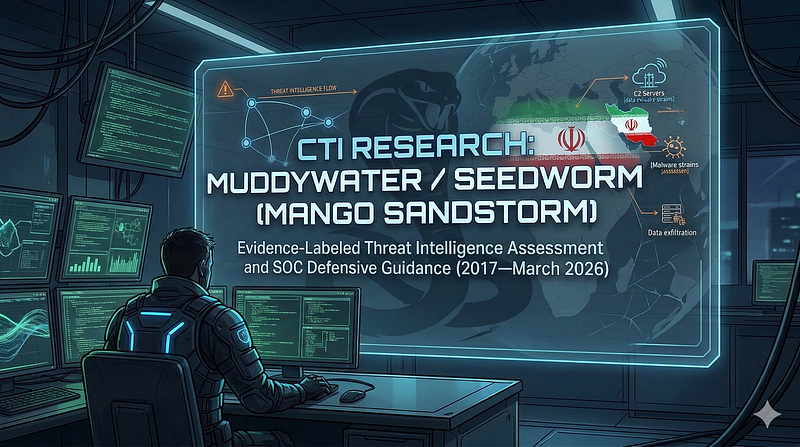
1200km CTI repository · explicit report mentionCTI Research: MuddyWater / Seedworm (Mango Sandstorm)
1200km CTI repository · explicit report mentionCTI Research: MuddyWater / Seedworm (Mango Sandstorm)
1200km CTI repository · explicit report mentionFrom Threat Intelligence to Detection: A Practitioner's Guide
1200km CTI repository · explicit report mentionATT CK as a Working Tool Theory and Hands On Practical Usage

1200km Medium · authored report mentionCTI Led Defensive Strategy for a Cellular Provider Case Study

1200km Medium · authored report mentionCTI Research MuddyWater Seedworm Mango Sandstorm
1200km Medium · authored report mentionFrom Threat Intelligence to Detection A Practitioner s Guide

1200km Medium · authored report mention