Spearphishing Attachment
Adversaries may send spearphishing emails with a malicious attachment in an attempt to gain access to victim systems. Spearphishing attachment is a specific variant of spearphishing. Spearphishing attachment is different from other forms of spearphishing in that it employs the use of malware attached to an email. All forms of spearphishing are electronically delivered social engineering targeted at a specific individual, company, or industry. In this scenario, adversaries attach a file to the spearphishing email and usually rely upon User Execution to gain execution. Spearphishing may also involve social engineering techniques, such as posing as a trusted source. There are many options for the attachment such as Microsoft Office documents, executables, PDFs, or archived files. Upon opening the attachment (and potentially clicking past protections), the adversary's payload exploits a vulnerability or directly executes on the user's system. The text of the spearphishing email usually tries to give a plausible reason why the file should be opened, and may explain how to bypass system protections in order to do so. The email may also contain instructions on how to decrypt an attachment, such as a zip file password, in order to evade email boundary defenses. Adversaries frequently manipulate file extensions and icons in order to make attached executables appear to be document files, or files exploiting one application appear to be a file for a different one.
Open detection, hunting, mitigation, and evidence workspace
Detection logic
Network intrusion detection systems and email gateways can be used to detect spearphishing with malicious attachments in transit. Detonation chambers may also be used to identify malicious attachments. Solutions can be signature and behavior based, but adversaries may construct attachments in a way to avoid these systems. Filtering based on DKIM+SPF or header analysis can help detect when the email sender is spoofed. Anti-virus can potentially detect malicious documents and attachments as they're scanned to be stored on the email server or on the user's computer. Endpoint sensing or network sensing can potentially detect malicious events once the attachment is opened (such as a Microsoft Word document or PDF reaching out to the internet or spawning Powershell.exe) for techniques such as Exploitation for Client Execution or usage of malicious scripts. Monitor for suspicious descendant process spawning from Microsoft Office and other productivity software.
Observed actors
G0082Elderwood
G0066SideCopy
G1008Kimsuky
G0094EXOTIC LILY
G1011admin@338
G0018Patchwork
G0040APT41
G0096Dragonfly
G0035Gorgon Group
G0078menuPass
G0045APT32
G0050MuddyWater
G0069Naikon
G0019FIN6
G0037Gamaredon Group
G0047Gallmaker
G0084FIN7
G0046Sandworm Team
G0034Machete
G0095Andariel
G0138CURIUM
G1012Sidewinder
G0121Mustang Panda
G0129APT39
G0087TA2541
G1018APT37
G0067OilRig
G0049Higaisa
G0126Tropic Trooper
G0081TA459
G0062Ferocious Kitten
G0137The White Company
G0089Saint Bear
G1031APT1
G0006DarkHydrus
G0079Confucius
G0142BlackTech
G0098Leviathan
G0065Winter Vivern
G1035Turla
G0010TA505
G0092BITTER
G1002RedCurl
G1039Mofang
G0103APT29
G0016BRONZE BUTLER
G0060TA551
G0127Star Blizzard
G1033Darkhotel
G0012Ember Bear
G1003LazyScripter
G0140Windshift
G0112APT28
G0007Malteiro
G1026RTM
G0048APT12
G0005APT-C-36
G0099Tonto Team
G0131Lazarus Group
G0032FIN4
G0085Silence
G0091Cobalt Group
G0080Wizard Spider
G0102Molerats
G0021Transparent Tribe
G0134IndigoZebra
G0136Moonstone Sleet
G1036Inception
G0100APT30
G0013Rancor
G0075WIRTE
G0090PLATINUM
G0068Magic Hound
G0059Ajax Security Team
G0130Threat Group-3390
G0027APT33
G0064FIN8
G0061APT19
G0073Nomadic Octopus
G0133
Correlated CTI and IR reports
MITRE ATT&CK · direct source mappingTA402 Targets Middle East Entities with IronWind Malware
Proofpoint · direct source mappingAPT39 (Chafer / Remix Kitten)
Israel Threat Actors CTI · explicit report mentionATT&CK as a Working Tool: Theory and Hands-On Practical Usage
1200km CTI repository · explicit report mentionCTI Research: MuddyWater / Seedworm (Mango Sandstorm)
1200km CTI repository · explicit report mentionCTI Research: MuddyWater / Seedworm (Mango Sandstorm)
1200km CTI repository · explicit report mentionExecutive Summary
Israel Threat Actors CTI · explicit report mentionFrom Threat Intelligence to Detection: A Practitioner's Guide
1200km CTI repository · explicit report mentionOilRig (APT34 / Helix Kitten / Earth Simnavaz etc)
Israel Threat Actors CTI · explicit report mentionATT CK as a Working Tool Theory and Hands On Practical Usage
1200km Medium · authored report mentionCTI Research MuddyWater Seedworm Mango Sandstorm
1200km Medium · authored report mentionCorrelation Based Detection Rules in Cybersecurity From Atomic Events to Behavioral Insight
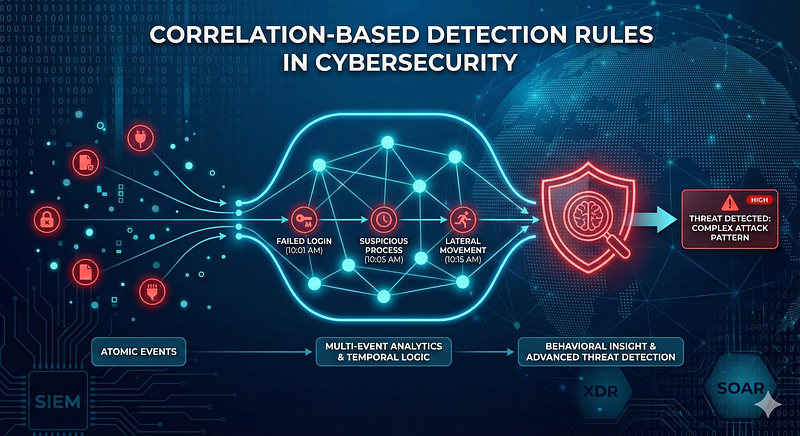
1200km Medium · authored report mentionFrom Threat Intelligence to Detection A Practitioner s Guide

1200km Medium · authored report mention