Data Loss Prevention (DLP) involves implementing strategies and technologies to identify, categorize, monitor, and control the movement of sensitive data within an organization. This includes protecting data formats indicative of Personally Identifiable Information (PII), intellectual property, or financial data from unauthorized access, transmission, or exfiltration. DLP solutions integrate with network, endpoint, and cloud platforms to enforce security policies and prevent accidental or malicious data leaks. (Citation: PurpleSec Data Loss Prevention) This mitigation can be implemented through the following measures: Sensitive Data Categorization: - Use Case: Identify and classify data based on sensitivity (e.g., PII, financial data, trade secrets). - Implementation: Use DLP solutions to scan and tag files containing sensitive information using predefined patterns, such as Social Secur…
MITRE mitigation sourceAdversaryGraph public intelligence page
This page is part of Threat Matrix, the public browser workspace for the main AdversaryGraph platform. Use it for ATT&CK pivots, actor and technique context, similarity leads, detection coverage review, and analyst-ready investigation paths.
Validation disclaimer: TTP overlap, actor similarity, generated summaries, and coverage findings are investigation leads, not attribution proof or operational validation without analyst review.
Main AdversaryGraph project Documentation Malware Analysis GitHub
Transfer Data to Cloud Account
Adversaries may exfiltrate data by transferring the data, including through sharing/syncing and creating backups of cloud environments, to another cloud account they control on the same service. A defender who is monitoring for large transfers to outside the cloud environment through normal file transfers or over command and control channels may not be watching for data transfers to another account within the same cloud provider. Such transfers may utilize existing cloud provider APIs and the internal address space of the cloud provider to blend into normal traffic or avoid data transfers over external network interfaces.(Citation: TLDRSec AWS Attacks) Adversaries may also use cloud-native mechanisms to share victim data with adversary-controlled cloud accounts, such as creating anonymous file sharing links or, in Azure, a shared access signature (SAS) URI.(Citation: Microsoft Azure Storage Shared Access Signature) Incidents have been observed where adversaries have created backups of cloud instances and transferred them to separate accounts.(Citation: DOJ GRU Indictment Jul 2018)
Open detection, hunting, mitigation, and evidence workspace
Detection logic
Monitor account activity for attempts to share data, snapshots, or backups with untrusted or unusual accounts on the same cloud service provider. Monitor for anomalous file transfer activity between accounts and to untrusted VPCs. In AWS, sharing an Elastic Block Store (EBS) snapshot, either with specified users or publicly, generates a ModifySnapshotAttribute event in CloudTrail logs. Similarly, in Azure, creating a Shared Access Signature (SAS) URI for a Virtual Hard Disk (VHS) snapshot generates a "Get Snapshot SAS URL" event in Activity Logs.
Observed actors
Correlated CTI and IR reports
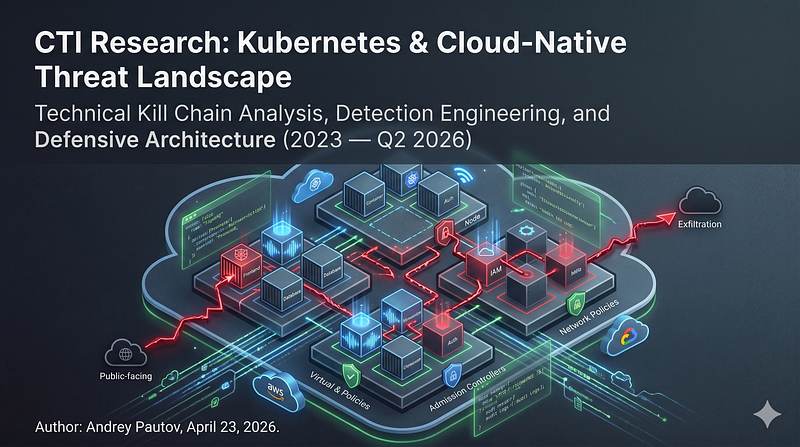
1200km CTI repository · explicit report mentionCTI Research: Kubernetes & Cloud-Native Threat Landscape
1200km CTI repository · explicit report mentionATT CK as a Working Tool Theory and Hands On Practical Usage
1200km Medium · authored report mentionCTI Research Kubernetes Cloud Native Threat Landscape
1200km Medium · authored report mention
Cyber Knowledge context
Use these routes to move from the ATT&CK behavior into explanation, implementation, evidence handling, validation, and defensive operations. Relevance is generated from explicit identifiers/names and governed topic mappings; it is not attribution evidence.
Digital Forensics & Incident Response (DFIR) · Governed topic match · 63/100Incident declaration, triage, scope, and hypotheses
Digital Forensics & Incident Response (DFIR) · Governed topic match · 51/100Cloud, DevSecOps, product, and control-as-code governance
Governance, Risk & Compliance (GRC) · Governed topic match · 45/100Windows endpoint and identity forensics
Digital Forensics & Incident Response (DFIR) · Tactic learning route · 24/100Module 6 — Alert triage, investigation, and escalation
Blue Team & Defensive Security · Tactic learning route · 24/100Infrastructure as code, CI/CD, artifact provenance, and policy as code
Cloud Security · Tactic learning route · 24/100
MITRE mitigations
User Account Management involves implementing and enforcing policies for the lifecycle of user accounts, including creation, modification, and deactivation. Proper account management reduces the attack surface by limiting unauthorized access, managing account privileges, and ensuring accounts are used according to organizational policies. This mitigation can be implemented through the following measures: Enforcing the Principle of Least Privilege - Implementation: Assign users only the minimum permissions required to perform their job functions. Regularly audit accounts to ensure no excess permissions are granted. - Use Case: Reduces the risk of privilege escalation by ensuring accounts cannot perform unauthorized actions. Implementing Strong Password Policies - Implementation: Enforce password complexity requirements (e.g., length, character types). Require password expiration every 90…
MITRE mitigation sourceSoftware configuration refers to making security-focused adjustments to the settings of applications, middleware, databases, or other software to mitigate potential threats. These changes help reduce the attack surface, enforce best practices, and protect sensitive data. This mitigation can be implemented through the following measures: Conduct a Security Review of Application Settings: - Review the software documentation to identify recommended security configurations. - Compare default settings against organizational policies and compliance requirements. Implement Access Controls and Permissions: - Restrict access to sensitive features or data within the software. - Enforce least privilege principles for all roles and accounts interacting with the software. Enable Logging and Monitoring: - Configure detailed logging for key application events such as authentication failures, configura…
MITRE mitigation sourceEmploy network appliances and endpoint software to filter ingress, egress, and lateral network traffic. This includes protocol-based filtering, enforcing firewall rules, and blocking or restricting traffic based on predefined conditions to limit adversary movement and data exfiltration. This mitigation can be implemented through the following measures: Ingress Traffic Filtering: - Use Case: Configure network firewalls to allow traffic only from authorized IP addresses to public-facing servers. - Implementation: Limit SSH (port 22) and RDP (port 3389) traffic to specific IP ranges. Egress Traffic Filtering: - Use Case: Use firewalls or endpoint security software to block unauthorized outbound traffic to prevent data exfiltration and command-and-control (C2) communications. - Implementation: Block outbound traffic to known malicious IPs or regions where communication is unexpected. Protoc…
MITRE mitigation sourceMITRE detection strategies and analytics
- AN1580 · Analytic 1580 — Detects snapshot sharing, backup exports, or data object transfers from victim-owned cloud accounts to other cloud identities within the same provider (e.g., AWS, Azure) using snapshot sharing, S3 bucket policy updates, or SAS URI generation.
- AN1581 · Analytic 1581 — Detects user activity that shares or syncs files with external domains via link generation, OneDrive external sharing, or file transfer actions involving non-whitelisted partner tenants.
- AN1582 · Analytic 1582 — Detects use of built-in SaaS sharing mechanisms to transfer ownership or share access of critical data to external tenants or untrusted users through API calls or link generation features.
Continue the investigation
Attack tools, simulations and detection rules
Follow explicit source relationships into the reference modules. Linked procedures and detectors are not claims of live validation or actor attribution.
- T1537 Transfer Data to Cloud Account simulation — Exact active technique ID
- T1537 detection rules — Exact active technique ID; not actor-specific detector coverage