Restricting web-based content involves enforcing policies and technologies that limit access to potentially malicious websites, unsafe downloads, and unauthorized browser behaviors. This can include URL filtering, download restrictions, script blocking, and extension control to protect against exploitation, phishing, and malware delivery. This mitigation can be implemented through the following measures: Deploy Web Proxy Filtering: - Use solutions to filter web traffic based on categories, reputation, and content types. - Enforce policies that block unsafe websites or file types at the gateway level. Enable DNS-Based Filtering: - Implement tools to restrict access to domains associated with malware or phishing campaigns. - Use public DNS filtering services to enhance protection. Enforce Content Security Policies (CSP): - Configure CSP headers on internal and external web applications to…
MITRE mitigation sourceAdversaryGraph public intelligence page
This page is part of Threat Matrix, the public browser workspace for the main AdversaryGraph platform. Use it for ATT&CK pivots, actor and technique context, similarity leads, detection coverage review, and analyst-ready investigation paths.
Validation disclaimer: TTP overlap, actor similarity, generated summaries, and coverage findings are investigation leads, not attribution proof or operational validation without analyst review.
Main AdversaryGraph project Documentation Malware Analysis GitHub
Steal Application Access Token
Adversaries can steal application access tokens as a means of acquiring credentials to access remote systems and resources. Application access tokens are used to make authorized API requests on behalf of a user or service and are commonly used as a way to access resources in cloud and container-based applications and software-as-a-service (SaaS).(Citation: Auth0 - Why You Should Always Use Access Tokens to Secure APIs Sept 2019) Adversaries who steal account API tokens in cloud and containerized environments may be able to access data and perform actions with the permissions of these accounts, which can lead to privilege escalation and further compromise of the environment. For example, in Kubernetes environments, processes running inside a container may communicate with the Kubernetes API server using service account tokens. If a container is compromised, an adversary may be able to steal the container’s token and thereby gain access to Kubernetes API commands.(Citation: Kubernetes Service Accounts) Similarly, instances within continuous-development / continuous-integration (CI/CD) pipelines will often use API tokens to authenticate to other services for testing and deployment.(Citation: Cider Security Top 10 CICD Security Risks) If these pipelines are compromised, adversaries may be able to steal these tokens and leverage their privileges. In Azure, an adversary who compromises a resource with an attached Managed Identity, such as an Azure VM, can request short-lived tokens through the Azure Instance Metadata Service (IMDS). These tokens can then facilitate unauthorized…
Open detection, hunting, mitigation, and evidence workspace
Detection logic
Administrators should set up monitoring to trigger automatic alerts when policy criteria are met. For example, using a Cloud Access Security Broker (CASB), admins can create a “High severity app permissions” policy that generates alerts if apps request high severity permissions or send permissions requests for too many users. Security analysts can hunt for malicious apps using the tools available in their CASB, identity provider, or resource provider (depending on platform.) For example, they can filter for apps that are authorized by a small number of users, apps requesting high risk permissions, permissions incongruous with the app’s purpose, or apps with old “Last authorized” fields. A specific app can be investigated using an activity log displaying activities the app has performed, although some activities may be mis-logged as being performed by the user. App stores can be useful resources to further investigate suspicious apps. Administrators can set up a variety of logs and leverage audit tools to monitor actions that can be conducted as a result of OAuth 2.0 access. For instance, audit reports enable admins to identify privilege escalation actions such as role creations or policy modifications, which could be actions performed after initial access.
Observed actors
Correlated CTI and IR reports
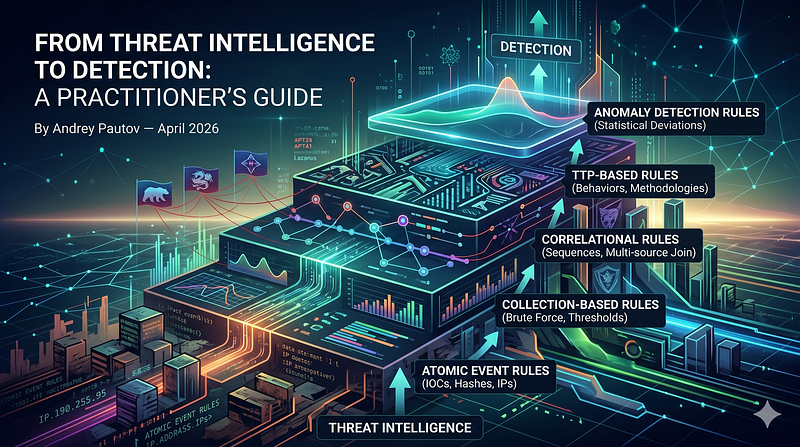
1200km CTI repository · explicit report mentionFrom Threat Intelligence to Detection: A Practitioner's Guide
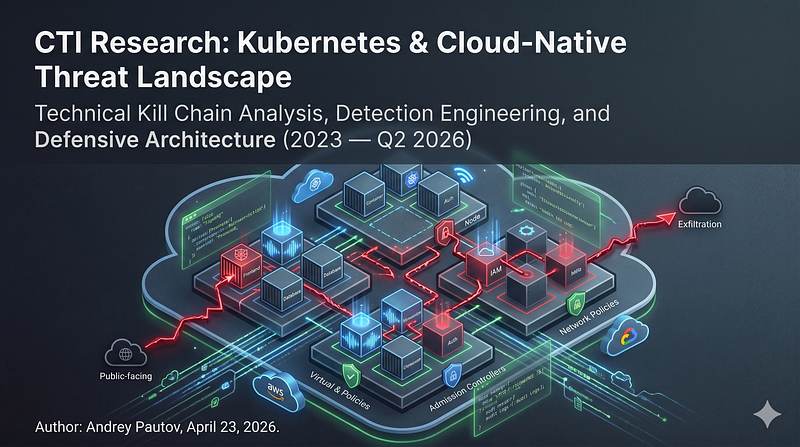
1200km CTI repository · explicit report mentionCTI Research Kubernetes Cloud Native Threat Landscape
1200km Medium · authored report mentionFrom Threat Intelligence to Detection A Practitioner s Guide
1200km Medium · authored report mention
Cyber Knowledge context
Use these routes to move from the ATT&CK behavior into explanation, implementation, evidence handling, validation, and defensive operations. Relevance is generated from explicit identifiers/names and governed topic mappings; it is not attribution evidence.
Cloud Security · Governed topic match · 88/100Cloud logging, detection engineering, ATT CK, and response automation
Cloud Security · Governed topic match · 88/100Cloud incident response, forensics, containment, and recovery
Cloud Security · Governed topic match · 88/100Cloud AI/ML, agents, RAG, MCP, and autonomous operations
Cloud Security · Governed topic match · 88/100Network, edge, service communication, hybrid access, and zero trust
Cloud Security · Governed topic match · 87/100Data classification, storage, cryptography, keys, backup, and deletion
Cloud Security · Governed topic match · 87/100Compute, managed services, serverless, SaaS, and workload hardening
Cloud Security · Governed topic match · 87/100Posture management, exposure, vulnerabilities, attack paths, and validation
Cloud Security · Governed topic match · 87/100Human, workload, pipeline, and emergency identity
Cloud Security · Governed topic match · 78/100Multi-cloud, SaaS, suppliers, compliance, and continuous assurance
Cloud Security · Governed topic match · 75/100Container image, registry, runtime, and host security
Cloud Security · Governed topic match · 69/100Shared responsibility, governance, and service ownership
Cloud Security · Governed topic match · 66/100
MITRE mitigations
Auditing is the process of recording activity and systematically reviewing and analyzing the activity and system configurations. The primary purpose of auditing is to detect anomalies and identify potential threats or weaknesses in the environment. Proper auditing configurations can also help to meet compliance requirements. The process of auditing encompasses regular analysis of user behaviors and system logs in support of proactive security measures. Auditing is applicable to all systems used within an organization, from the front door of a building to accessing a file on a fileserver. It is considered more critical for regulated industries such as, healthcare, finance and government where compliance requirements demand stringent tracking of user and system activates.This mitigation can be implemented through the following measures: System Audit: - Use Case: Regularly assess system co…
MITRE mitigation sourceUser Training involves educating employees and contractors on recognizing, reporting, and preventing cyber threats that rely on human interaction, such as phishing, social engineering, and other manipulative techniques. Comprehensive training programs create a human firewall by empowering users to be an active component of the organization's cybersecurity defenses. This mitigation can be implemented through the following measures: Create Comprehensive Training Programs: - Design training modules tailored to the organization's risk profile, covering topics such as phishing, password management, and incident reporting. - Provide role-specific training for high-risk employees, such as helpdesk staff or executives. Use Simulated Exercises: - Conduct phishing simulations to measure user susceptibility and provide targeted follow-up training. - Run social engineering drills to evaluate employ…
MITRE mitigation sourceUser Account Management involves implementing and enforcing policies for the lifecycle of user accounts, including creation, modification, and deactivation. Proper account management reduces the attack surface by limiting unauthorized access, managing account privileges, and ensuring accounts are used according to organizational policies. This mitigation can be implemented through the following measures: Enforcing the Principle of Least Privilege - Implementation: Assign users only the minimum permissions required to perform their job functions. Regularly audit accounts to ensure no excess permissions are granted. - Use Case: Reduces the risk of privilege escalation by ensuring accounts cannot perform unauthorized actions. Implementing Strong Password Policies - Implementation: Enforce password complexity requirements (e.g., length, character types). Require password expiration every 90…
MITRE mitigation sourceMITRE detection strategies and analytics
- AN1423 · Analytic 1423 — Access and retrieval of container service account tokens followed by unauthorized API requests using those tokens to interact with the Kubernetes API server or internal services.
- AN1424 · Analytic 1424 — Token retrieval from instance metadata endpoints such as AWS IMDS or Azure IMDS, followed by API usage using the obtained token from non-standard applications.
- AN1425 · Analytic 1425 — Unusual OAuth app registration followed by user-granted OAuth tokens and subsequent high-privilege resource access via those tokens.
- AN1426 · Analytic 1426 — Use of OAuth tokens by third-party apps to access user mail, calendar, or SharePoint resources where the token was granted recently or via spearphishing.
- AN1427 · Analytic 1427 — Programmatic access to user content via stolen access tokens in platforms like Slack, GitHub, Google Workspace — especially from new IPs, apps, or excessive resource access.
Continue the investigation
Attack tools, simulations and detection rules
Follow explicit source relationships into the reference modules. Linked procedures and detectors are not claims of live validation or actor attribution.
- T1528 Steal Application Access Token simulation — Exact active technique ID
- T1528 detection rules — Exact active technique ID; not actor-specific detector coverage