

Disable or remove unnecessary and potentially vulnerable software, features, or services to reduce the attack surface and prevent abuse by adversaries. This involves identifying software or features that are no longer needed or that could be exploited and ensuring they are either removed or properly disabled. This mitigation can be implemented through the following measures: Remove Legacy Software: - Use Case: Disable or remove older versions of software that no longer receive updates or security patches (e.g., legacy Java, Adobe Flash). - Implementation: A company removes Flash Player from all employee systems after it has reached its end-of-life date. Disable Unused Features: - Use Case: Turn off unnecessary operating system features like SMBv1, Telnet, or RDP if they are not required. - Implementation: Disable SMBv1 in a Windows environment to mitigate vulnerabilities like EternalBlu…
MITRE mitigation sourceAdversaryGraph public intelligence page
This page is part of Threat Matrix, the public browser workspace for the main AdversaryGraph platform. Use it for ATT&CK pivots, actor and technique context, similarity leads, detection coverage review, and analyst-ready investigation paths.
Validation disclaimer: TTP overlap, actor similarity, generated summaries, and coverage findings are investigation leads, not attribution proof or operational validation without analyst review.
Main AdversaryGraph project Documentation Malware Analysis GitHub
Web Shell
Adversaries may backdoor web servers with web shells to establish persistent access to systems. A Web shell is a Web script that is placed on an openly accessible Web server to allow an adversary to access the Web server as a gateway into a network. A Web shell may provide a set of functions to execute or a command-line interface on the system that hosts the Web server.(Citation: volexity_0day_sophos_FW) In addition to a server-side script, a Web shell may have a client interface program that is used to talk to the Web server (e.g. [China Chopper](https://attack.mitre.org/software/S0020) Web shell client).(Citation: Lee 2013)
Open detection, hunting, mitigation, and evidence workspace
Detection logic
Web shells can be difficult to detect. Unlike other forms of persistent remote access, they do not initiate connections. The portion of the Web shell that is on the server may be small and innocuous looking. The PHP version of the China Chopper Web shell, for example, is the following short payload: <?php @eval($_POST['password']);> Nevertheless, detection mechanisms exist. Process monitoring may be used to detect Web servers that perform suspicious actions such as spawning cmd.exe or accessing files that are not in the Web directory. File monitoring may be used to detect changes to files in the Web directory of a Web server that do not match with updates to the Web server's content and may indicate implantation of a Web shell script. Log authentication attempts to the server and any unusual traffic patterns to or from the server and internal network.
Observed actors
G0007Deep Panda
G0009APT29
G0016Threat Group-3390
G0027Sandworm Team
G0034Dragonfly
G0035OilRig
G0049APT32
G0050Magic Hound
G0059Leviathan
G0065Tropic Trooper
G0081APT38
G0082APT39
G0087GALLIUM
G0093Kimsuky
G0094Fox Kitten
G0117Volatile Cedar
G0123HAFNIUM
G0125Mustang Panda
G0129Tonto Team
G0131BackdoorDiplomacy
G0135Ember Bear
G1003Moses Staff
G1009CURIUM
G1012FIN13
G1016Volt Typhoon
G1017APT5
G1023Agrius
G1030Sea Turtle
G1041BlackByte
G1043Medusa Group
G1051
Correlated CTI and IR reports
Check Point Research · direct source mappingOilRig G0049
MITRE ATT&CK · direct source mappingUNC1860 and the Temple of Oats: Iran's Hidden Hand in Middle Eastern Networks
Google Cloud / Mandiant · direct source mappingLebanese Cedar APT
ClearSky Cyber Security · direct source mappingIranian Government-Sponsored APT Actors Exploiting Microsoft Exchange and Fortinet Vulnerabilities
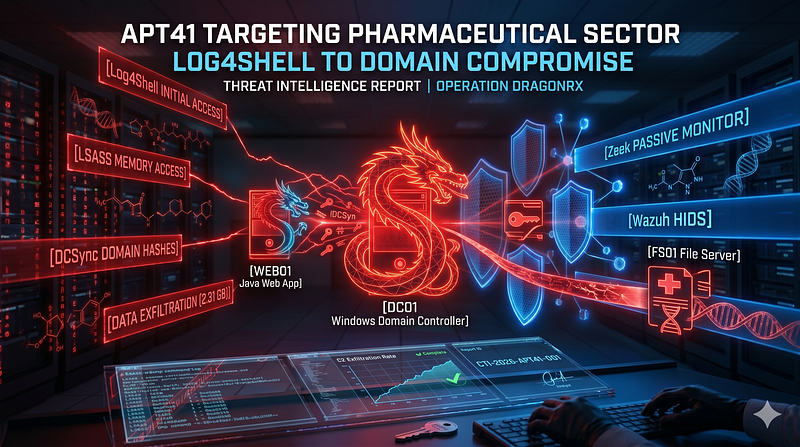
CISA · curated primary-source mappingAPT41 Targeting Pharmaceutical Sector: Log4Shell to Domain Compromise
1200km CTI repository · explicit report mentionATT&CK as a Working Tool: Theory and Hands-On Practical Usage
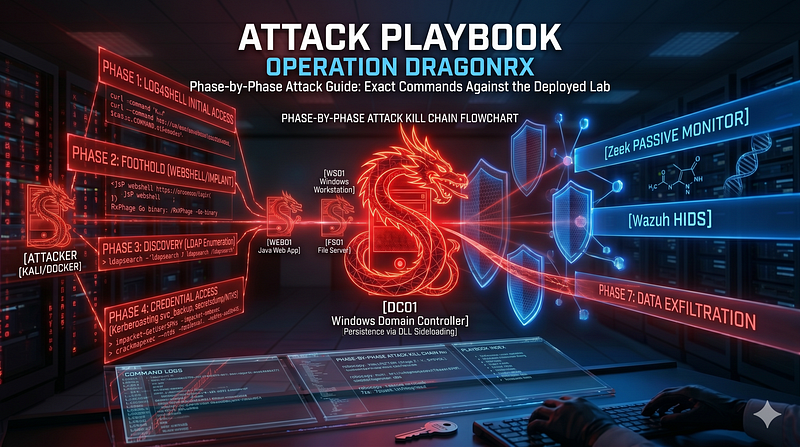
1200km CTI repository · explicit report mentionAttack Playbook — Operation DragonRx
1200km CTI repository · explicit report mentionCTI Research: Handala Hack Group (aka Handala Hack Team)
1200km CTI repository · explicit report mentionCTI Research: Handala Hack Group (aka Handala Hack Team)
1200km CTI repository · explicit report mentionDefensive CTI Research on Threats to Israeli Government and Public-Sector Environments
Israel Threat Actors CTI · explicit report mentionDefensive Cyber Threat Intelligence Report: Israeli Critical Infrastructure and Geopolitical Escalation (2024-2026)
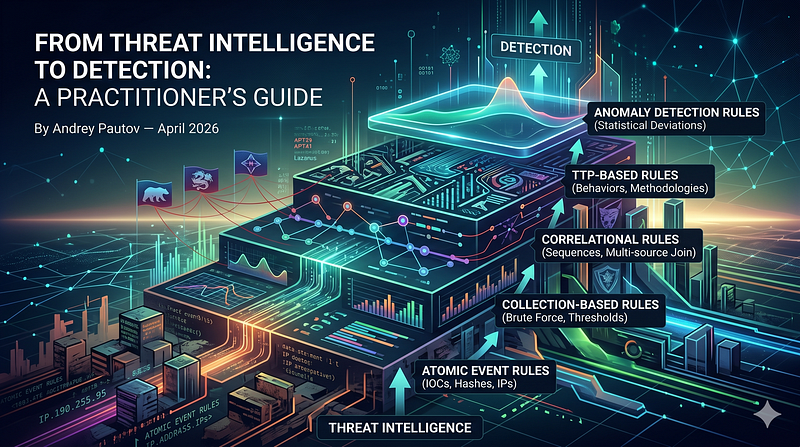
Israel Threat Actors CTI · explicit report mentionFrom Threat Intelligence to Detection: A Practitioner's Guide
1200km CTI repository · explicit report mentionOperation DragonRx — APT41 Full Attack Simulation
1200km CTI repository · explicit report mentionOperation DragonRx: Simulating an APT41 Attack End-to-End — From Log4Shell to DFIR and Malware Analysis
1200km CTI repository · explicit report mentionPioneer Kitten (Fox Kitten, Lemon Sandstorm, UNC757) – Actor Deep Research
Israel Threat Actors CTI · explicit report mentionWorked Cases
Israel Threat Actors CTI · explicit report mentionAPT41 Targeting Pharmaceutical Sector Log4Shell to Domain Compromise
1200km Medium · authored report mentionAttack Playbook Operation DragonRx
1200km Medium · authored report mentionCTI Analyst Field Manual Complete Reference
1200km Medium · authored report mentionCTI Led Defensive Strategy for a Cellular Provider Case Study
1200km Medium · authored report mentionCTI Research Handala Hack Group aka Handala Hack Team
1200km Medium · authored report mentionFrom Threat Intelligence to Detection A Practitioner s Guide
1200km Medium · authored report mentionOperation DragonRx Simulating an APT41 Attack End to End From Log4Shell to DFIR and Malware
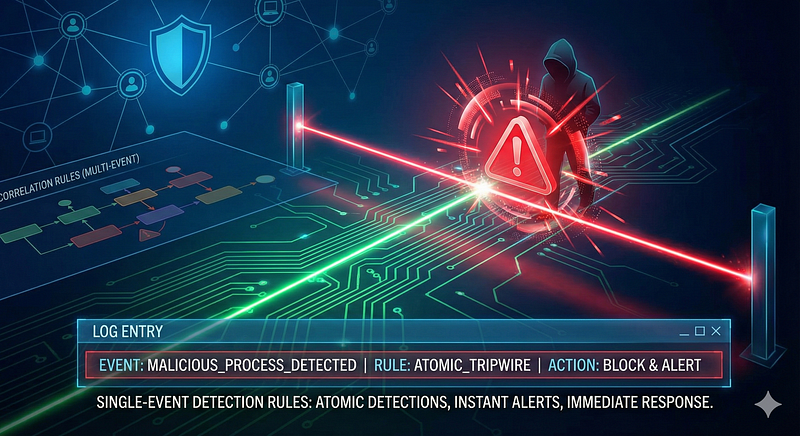
1200km Medium · authored report mentionSingle Event Detection Rules in Cybersecurity
1200km Medium · authored report mention
Cyber Knowledge context
Use these routes to move from the ATT&CK behavior into explanation, implementation, evidence handling, validation, and defensive operations. Relevance is generated from explicit identifiers/names and governed topic mappings; it is not attribution evidence.
Red Team & Offensive Security · Tactic learning route · 24/100Module 4 — Detection engineering and detection as code
Blue Team & Defensive Security · Tactic learning route · 24/100Disk, file-system, and persistence forensics
Digital Forensics & Incident Response (DFIR) · Tactic learning route · 24/100
MITRE mitigations
User Account Management involves implementing and enforcing policies for the lifecycle of user accounts, including creation, modification, and deactivation. Proper account management reduces the attack surface by limiting unauthorized access, managing account privileges, and ensuring accounts are used according to organizational policies. This mitigation can be implemented through the following measures: Enforcing the Principle of Least Privilege - Implementation: Assign users only the minimum permissions required to perform their job functions. Regularly audit accounts to ensure no excess permissions are granted. - Use Case: Reduces the risk of privilege escalation by ensuring accounts cannot perform unauthorized actions. Implementing Strong Password Policies - Implementation: Enforce password complexity requirements (e.g., length, character types). Require password expiration every 90…
MITRE mitigation sourceMITRE detection strategies and analytics
- AN1108 · Analytic 1108 — Unexpected file creation in web directories followed by web server processes (e.g., w3wp.exe) spawning command shells or script interpreters (e.g., cmd.exe, powershell.exe)
- AN1109 · Analytic 1109 — File creation of unauthorized script (e.g., .php, .sh) in /var/www/html followed by execution of unexpected system utilities (e.g., curl, bash, nc) by apache/nginx
- AN1110 · Analytic 1110 — Web servers (e.g., httpd) spawning abnormal processes post file upload into /Library/WebServer/Documents or /usr/local/var/www
Related sector research
Editorial reading routes, not additional MITRE relationships or proof of an actor's involvement in a particular incident.
- Cyberattacks on Big Pharma and Its Ecosystem — MOVEit campaign: CISA-documented LEMURLOOT web shell. Evidence cutoff: 2026-09-25.
Continue the investigation
Attack tools, simulations and detection rules
Follow explicit source relationships into the reference modules. Linked procedures and detectors are not claims of live validation or actor attribution.
- T1505.003 Web Shell simulation — Exact active technique ID
- T1505.003 detection rules — Exact active technique ID; not actor-specific detector coverage