

Prevent the execution of unauthorized or malicious code on systems by implementing application control, script blocking, and other execution prevention mechanisms. This ensures that only trusted and authorized code is executed, reducing the risk of malware and unauthorized actions. This mitigation can be implemented through the following measures: Application Control: - Use Case: Use tools like AppLocker or Windows Defender Application Control (WDAC) to create whitelists of authorized applications and block unauthorized ones. On Linux, use tools like SELinux or AppArmor to define mandatory access control policies for application execution. - Implementation: Allow only digitally signed or pre-approved applications to execute on servers and endpoints. (e.g., `New-AppLockerPolicy -PolicyType Enforced -FilePath "C:\Policies\AppLocker.xml"`) Script Blocking: - Use Case: Use script control me…
MITRE mitigation sourceAdversaryGraph public intelligence page
This page is part of Threat Matrix, the public browser workspace for the main AdversaryGraph platform. Use it for ATT&CK pivots, actor and technique context, similarity leads, detection coverage review, and analyst-ready investigation paths.
Validation disclaimer: TTP overlap, actor similarity, generated summaries, and coverage findings are investigation leads, not attribution proof or operational validation without analyst review.
Main AdversaryGraph project Documentation Malware Analysis GitHub
Inhibit System Recovery
Adversaries may delete or remove built-in data and turn off services designed to aid in the recovery of a corrupted system to prevent recovery.(Citation: Talos Olympic Destroyer 2018)(Citation: FireEye WannaCry 2017) This may deny access to available backups and recovery options. Operating systems may contain features that can help fix corrupted systems, such as a backup catalog, volume shadow copies, and automatic repair features. Adversaries may disable or delete system recovery features to augment the effects of [Data Destruction](https://attack.mitre.org/techniques/T1485) and [Data Encrypted for Impact](https://attack.mitre.org/techniques/T1486).(Citation: Talos Olympic Destroyer 2018)(Citation: FireEye WannaCry 2017) Furthermore, adversaries may disable recovery notifications, then corrupt backups.(Citation: disable_notif_synology_ransom) A number of native Windows utilities have been used by adversaries to disable or delete system recovery features: * <code>vssadmin.exe</code> can be used to delete all volume shadow copies on a system - <code>vssadmin.exe delete shadows /all /quiet</code> * [Windows Management Instrumentation](https://attack.mitre.org/techniques/T1047) can be used to delete volume shadow copies - <code>wmic shadowcopy delete</code> * <code>wbadmin.exe</code> can be used to delete the Windows Backup Catalog - <code>wbadmin.exe delete catalog -quiet</code> * <code>bcdedit.exe</code> can be used to disable automatic Windows recovery features by modifying boot configuration data - <code>bcdedit.exe /set {default} bootstatuspolicy ignoreallfailures & bcde…
Open detection, hunting, mitigation, and evidence workspace
Detection logic
Use process monitoring to monitor the execution and command line parameters of binaries involved in inhibiting system recovery, such as vssadmin, wbadmin, bcdedit, REAgentC, and diskshadow. The Windows event logs, ex. Event ID 524 indicating a system catalog was deleted, may contain entries associated with suspicious activity. Monitor the status of services involved in system recovery. Monitor the registry for changes associated with system recovery features (ex: the creation of HKEY_CURRENT_USER\Software\Policies\Microsoft\PreviousVersions\DisableLocalPage). For network infrastructure devices, collect AAA logging to monitor for `erase`, `format`, and `reload` commands being run in succession.
Observed actors
Correlated CTI and IR reports
Microsoft Security · direct source mappingCTI Research: Handala Hack Group aka Handala Hack Team
Andrey Pautov · direct source mappingIranian State Actors Conduct Cyber Operations Against the Government of Albania
CISA · curated primary-source mappingAPT39 (Chafer / Remix Kitten)
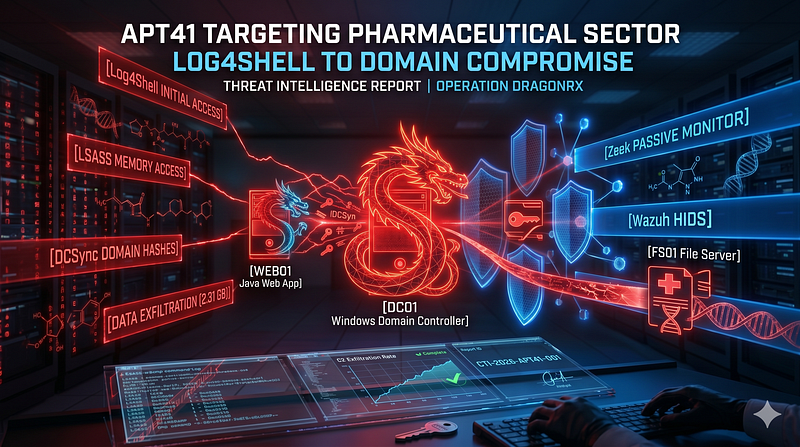
Israel Threat Actors CTI · explicit report mentionAPT41 Targeting Pharmaceutical Sector: Log4Shell to Domain Compromise
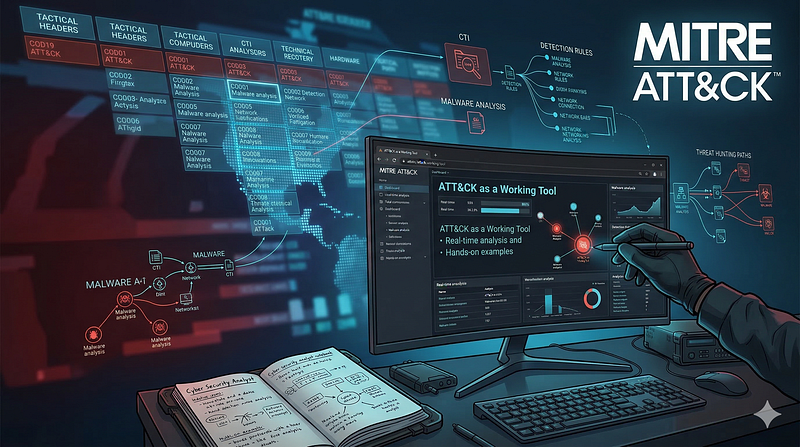
1200km CTI repository · explicit report mentionATT&CK as a Working Tool: Theory and Hands-On Practical Usage
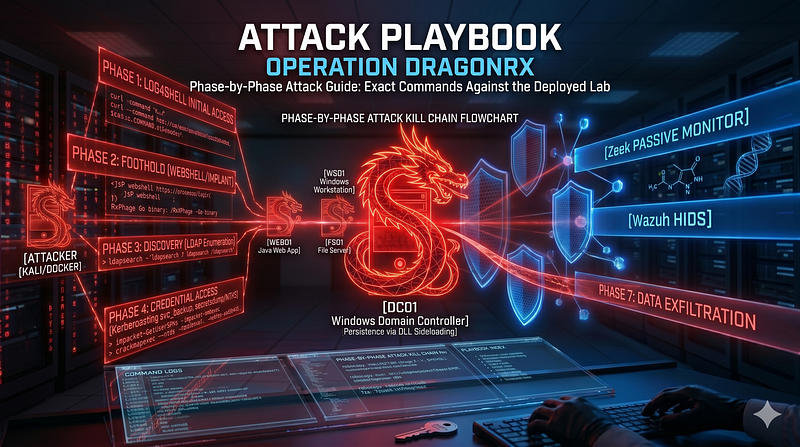
1200km CTI repository · explicit report mentionAttack Playbook — Operation DragonRx
1200km CTI repository · explicit report mentionCTI Research: Handala Hack Group (aka Handala Hack Team)
1200km CTI repository · explicit report mentionCTI Research: Handala Hack Group (aka Handala Hack Team)
1200km CTI repository · explicit report mentionCTI Research: Sandworm / APT44
1200km CTI repository · explicit report mentionCTI Research: Sandworm / APT44
1200km CTI repository · explicit report mentionDefensive Cyber Threat Intelligence Report: Israeli Critical Infrastructure and Geopolitical Escalation (2024-2026)
Israel Threat Actors CTI · explicit report mentionOperation DragonRx: Simulating an APT41 Attack End-to-End — From Log4Shell to DFIR and Malware Analysis
1200km CTI repository · explicit report mentionWorked Cases
Israel Threat Actors CTI · explicit report mentionAPT41 Targeting Pharmaceutical Sector Log4Shell to Domain Compromise
1200km Medium · authored report mentionATT CK as a Working Tool Theory and Hands On Practical Usage
1200km Medium · authored report mentionAttack Playbook Operation DragonRx
1200km Medium · authored report mentionCTI Led Defensive Strategy for a Cellular Provider Case Study
1200km Medium · authored report mentionCTI Research Handala Hack Group aka Handala Hack Team
1200km Medium · authored report mentionCTI Research Sandworm APT44
1200km Medium · authored report mentionCustomer Driven AI CTI Project Template Part 2B Reference Toolkit
1200km Medium · authored report mention
Cyber Knowledge context
Use these routes to move from the ATT&CK behavior into explanation, implementation, evidence handling, validation, and defensive operations. Relevance is generated from explicit identifiers/names and governed topic mappings; it is not attribution evidence.
Governance, Risk & Compliance (GRC) · Governed topic match · 51/100Architecture, assets, trust boundaries, and AI threat modeling
AI Security · Governed topic match · 51/100Control design, ownership, inheritance, and lifecycle
Governance, Risk & Compliance (GRC) · Governed topic match · 42/100Privacy engineering and data governance
Governance, Risk & Compliance (GRC) · Governed topic match · 39/100AI governance, machine-readable controls, and safe GRC automation
Governance, Risk & Compliance (GRC) · Governed topic match · 39/100Linux and macOS endpoint forensics
Digital Forensics & Incident Response (DFIR) · Tactic learning route · 24/100Policy architecture, standards, procedures, and exceptions
Governance, Risk & Compliance (GRC) · Tactic learning route · 24/100Module 6 — Alert triage, investigation, and escalation
Blue Team & Defensive Security · Tactic learning route · 24/100
MITRE mitigations
Operating System Configuration involves adjusting system settings and hardening the default configurations of an operating system (OS) to mitigate adversary exploitation and prevent abuse of system functionality. Proper OS configurations address security vulnerabilities, limit attack surfaces, and ensure robust defense against a wide range of techniques. This mitigation can be implemented through the following measures: Disable Unused Features: - Turn off SMBv1, LLMNR, and NetBIOS where not needed. - Disable remote registry and unnecessary services. Enforce OS-level Protections: - Enable Data Execution Prevention (DEP), Address Space Layout Randomization (ASLR), and Control Flow Guard (CFG) on Windows. - Use AppArmor or SELinux on Linux for mandatory access controls. Secure Access Settings: - Enable User Account Control (UAC) for Windows. - Restrict root/sudo access on Linux/macOS and e…
MITRE mitigation sourceUser Account Management involves implementing and enforcing policies for the lifecycle of user accounts, including creation, modification, and deactivation. Proper account management reduces the attack surface by limiting unauthorized access, managing account privileges, and ensuring accounts are used according to organizational policies. This mitigation can be implemented through the following measures: Enforcing the Principle of Least Privilege - Implementation: Assign users only the minimum permissions required to perform their job functions. Regularly audit accounts to ensure no excess permissions are granted. - Use Case: Reduces the risk of privilege escalation by ensuring accounts cannot perform unauthorized actions. Implementing Strong Password Policies - Implementation: Enforce password complexity requirements (e.g., length, character types). Require password expiration every 90…
MITRE mitigation sourceData Backup involves taking and securely storing backups of data from end-user systems and critical servers. It ensures that data remains available in the event of system compromise, ransomware attacks, or other disruptions. Backup processes should include hardening backup systems, implementing secure storage solutions, and keeping backups isolated from the corporate network to prevent compromise during active incidents. This mitigation can be implemented through the following measures: Regular Backup Scheduling: - Use Case: Ensure timely and consistent backups of critical data. - Implementation: Schedule daily incremental backups and weekly full backups for all critical servers and systems. Immutable Backups: - Use Case: Protect backups from modification or deletion, even by attackers. - Implementation: Use write-once-read-many (WORM) storage for backups, preventing ransomware from enc…
MITRE mitigation sourceMITRE detection strategies and analytics
- AN0933 · Analytic 0933 — Process chains that use native utilities (vssadmin, wbadmin, diskshadow, bcdedit, REAgentC, wmic) with arguments to delete shadow copies, disable recovery, or remove backup catalogs
- AN0934 · Analytic 0934 — Shell utilities or scripts deleting `/etc/systemd/system/rescue.target`, `/etc/fstab` backups, or `/boot/efi` partitions; chattr used to block snapshot auto-recovery
- AN0935 · Analytic 0935 — ESXi shell or vim-cmd execution that deletes all VM snapshots using vmsvc/snapshot.removeall or rm on snapshot paths
- AN0936 · Analytic 0936 — Execution of `erase`, `format`, and `reload` in immediate sequence from a privileged AAA session
- AN0937 · Analytic 0937 — Cloud API calls disabling snapshot scheduling, backup policies, versioning, followed by DeleteSnapshot/DeleteVolume operations
Continue the investigation
Attack tools, simulations and detection rules
Follow explicit source relationships into the reference modules. Linked procedures and detectors are not claims of live validation or actor attribution.
- T1490 Inhibit System Recovery simulation — Exact active technique ID
- T1490 detection rules — Exact active technique ID; not actor-specific detector coverage