Behavior Prevention on Endpoint refers to the use of technologies and strategies to detect and block potentially malicious activities by analyzing the behavior of processes, files, API calls, and other endpoint events. Rather than relying solely on known signatures, this approach leverages heuristics, machine learning, and real-time monitoring to identify anomalous patterns indicative of an attack. This mitigation can be implemented through the following measures: Suspicious Process Behavior: - Implementation: Use Endpoint Detection and Response (EDR) tools to monitor and block processes exhibiting unusual behavior, such as privilege escalation attempts. - Use Case: An attacker uses a known vulnerability to spawn a privileged process from a user-level application. The endpoint tool detects the abnormal parent-child process relationship and blocks the action. Unauthorized File Access: -…
MITRE mitigation sourceAdversaryGraph public intelligence page
This page is part of Threat Matrix, the public browser workspace for the main AdversaryGraph platform. Use it for ATT&CK pivots, actor and technique context, similarity leads, detection coverage review, and analyst-ready investigation paths.
Validation disclaimer: TTP overlap, actor similarity, generated summaries, and coverage findings are investigation leads, not attribution proof or operational validation without analyst review.
Main AdversaryGraph project Documentation Malware Analysis GitHub
Data Encrypted for Impact
Adversaries may encrypt data on target systems or on large numbers of systems in a network to interrupt availability to system and network resources. They can attempt to render stored data inaccessible by encrypting files or data on local and remote drives and withholding access to a decryption key. This may be done in order to extract monetary compensation from a victim in exchange for decryption or a decryption key (ransomware) or to render data permanently inaccessible in cases where the key is not saved or transmitted.(Citation: US-CERT Ransomware 2016)(Citation: FireEye WannaCry 2017)(Citation: US-CERT NotPetya 2017)(Citation: US-CERT SamSam 2018) In the case of ransomware, it is typical that common user files like Office documents, PDFs, images, videos, audio, text, and source code files will be encrypted (and often renamed and/or tagged with specific file markers). Adversaries may need to first employ other behaviors, such as [File and Directory Permissions Modification](https://attack.mitre.org/techniques/T1222) or [System Shutdown/Reboot](https://attack.mitre.org/techniques/T1529), in order to unlock and/or gain access to manipulate these files.(Citation: CarbonBlack Conti July 2020) In some cases, adversaries may encrypt critical system files, disk partitions, and the MBR.(Citation: US-CERT NotPetya 2017) Adversaries may also encrypt virtual machines hosted on ESXi or other hypervisors.(Citation: Crowdstrike Hypervisor Jackpotting Pt 2 2021) To maximize impact on the target organization, malware designed for encrypting data may have worm-like features to propagat…
Open detection, hunting, mitigation, and evidence workspace
Detection logic
Use process monitoring to monitor the execution and command line parameters of binaries involved in data destruction activity, such as vssadmin, wbadmin, and bcdedit. Monitor for the creation of suspicious files as well as unusual file modification activity. In particular, look for large quantities of file modifications in user directories. In some cases, monitoring for unusual kernel driver installation activity can aid in detection. In cloud environments, monitor for events that indicate storage objects have been anomalously replaced by copies.
Observed actors
Correlated CTI and IR reports
MITRE ATT&CK · direct source mappingIranian Government-Sponsored Threat Actor MuddyWater
Israel National Cyber Directorate · direct source mappingIRGC-Affiliated Actors Exploit Vulnerabilities for Data Extortion and Disk Encryption
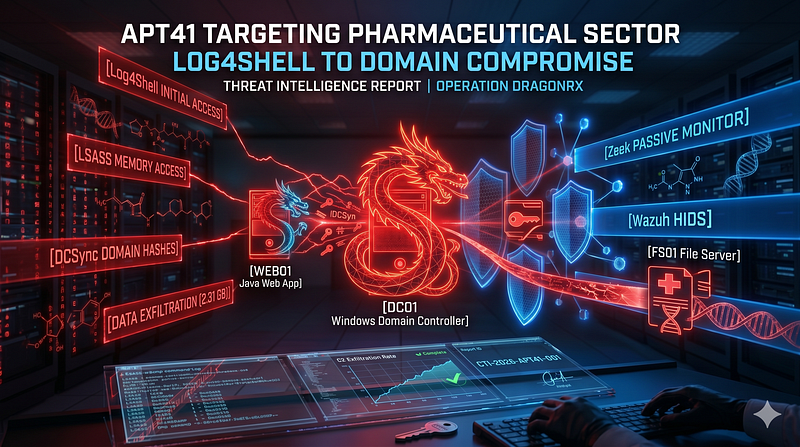
CISA · curated primary-source mappingAPT41 Targeting Pharmaceutical Sector: Log4Shell to Domain Compromise
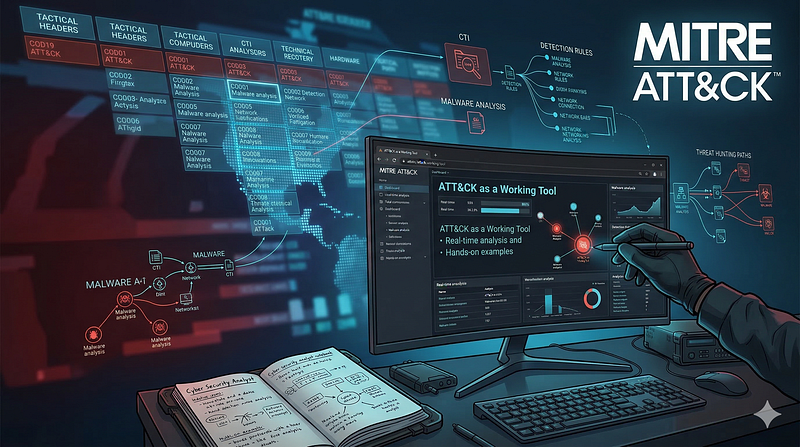
1200km CTI repository · explicit report mentionATT&CK as a Working Tool: Theory and Hands-On Practical Usage
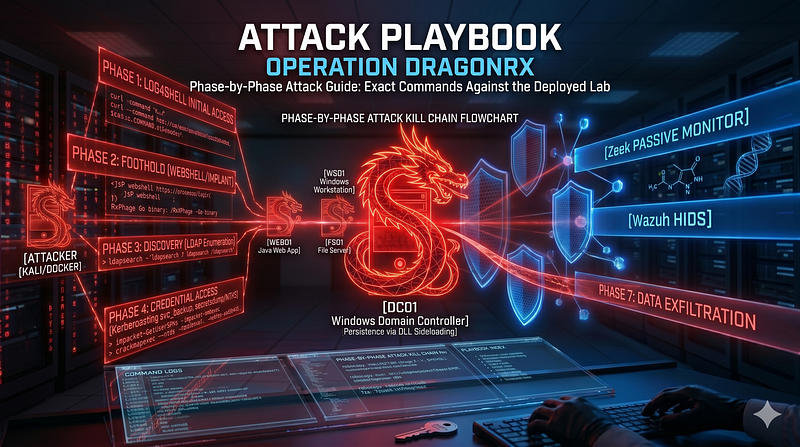
1200km CTI repository · explicit report mentionAttack Playbook — Operation DragonRx
1200km CTI repository · explicit report mentionCTI Research: Sandworm / APT44
1200km CTI repository · explicit report mentionCTI Research: Sandworm / APT44
1200km CTI repository · explicit report mentionOperation DragonRx — APT41 Full Attack Simulation
1200km CTI repository · explicit report mentionOperation DragonRx: Simulating an APT41 Attack End-to-End — From Log4Shell to DFIR and Malware Analysis
1200km CTI repository · explicit report mentionAPT41 Targeting Pharmaceutical Sector Log4Shell to Domain Compromise
1200km Medium · authored report mentionATT CK as a Working Tool Theory and Hands On Practical Usage
1200km Medium · authored report mentionAttack Playbook Operation DragonRx
1200km Medium · authored report mentionCTI Research Sandworm APT44
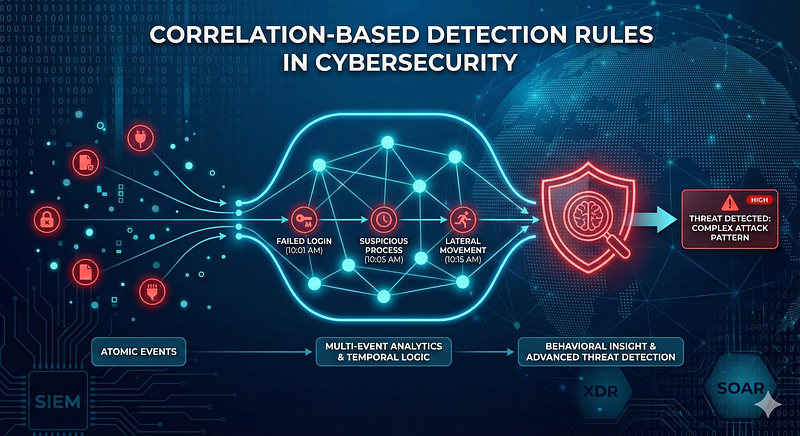
1200km Medium · authored report mentionCorrelation Based Detection Rules in Cybersecurity From Atomic Events to Behavioral Insight
1200km Medium · authored report mentionOperation DragonRx Simulating an APT41 Attack End to End From Log4Shell to DFIR and Malware
1200km Medium · authored report mention
Cyber Knowledge context
Use these routes to move from the ATT&CK behavior into explanation, implementation, evidence handling, validation, and defensive operations. Relevance is generated from explicit identifiers/names and governed topic mappings; it is not attribution evidence.
AI Security · Governed topic match · 51/100Governance, risk, assurance, transparency, and human factors
AI Security · Governed topic match · 51/100Incident declaration, triage, scope, and hypotheses
Digital Forensics & Incident Response (DFIR) · Governed topic match · 42/100Post-incident learning and controlled AI/RAG/MCP assistance
Digital Forensics & Incident Response (DFIR) · Governed topic match · 42/100Governance, organizational context, and accountable authority
Governance, Risk & Compliance (GRC) · Governed topic match · 42/100Scenario-based cyber risk assessment and treatment
Governance, Risk & Compliance (GRC) · Governed topic match · 42/100Privacy engineering and data governance
Governance, Risk & Compliance (GRC) · Governed topic match · 42/100Operational resilience, continuity, crisis, and incident governance
Governance, Risk & Compliance (GRC) · Governed topic match · 42/100Vulnerability handling, remediation, disclosure, and learning
Secure Code & Application Security · Governed topic match · 30/100Linux and macOS endpoint forensics
Digital Forensics & Incident Response (DFIR) · Tactic learning route · 24/100Policy architecture, standards, procedures, and exceptions
Governance, Risk & Compliance (GRC) · Tactic learning route · 24/100Module 6 — Alert triage, investigation, and escalation
Blue Team & Defensive Security · Tactic learning route · 24/100
MITRE mitigations
Data Backup involves taking and securely storing backups of data from end-user systems and critical servers. It ensures that data remains available in the event of system compromise, ransomware attacks, or other disruptions. Backup processes should include hardening backup systems, implementing secure storage solutions, and keeping backups isolated from the corporate network to prevent compromise during active incidents. This mitigation can be implemented through the following measures: Regular Backup Scheduling: - Use Case: Ensure timely and consistent backups of critical data. - Implementation: Schedule daily incremental backups and weekly full backups for all critical servers and systems. Immutable Backups: - Use Case: Protect backups from modification or deletion, even by attackers. - Implementation: Use write-once-read-many (WORM) storage for backups, preventing ransomware from enc…
MITRE mitigation sourceMITRE detection strategies and analytics
- AN0602 · Analytic 0602 — High-frequency file write operations using uncommon extensions, followed by ransom note creation, registry tampering, or shadow copy deletion. Often uses CLI tools like vssadmin, wbadmin, cipher, or PowerShell.
- AN0603 · Analytic 0603 — Encryption via custom or open-source tools (e.g., openssl, gpg, aescrypt) recursively targeting user or system directories. Also includes overwrite of existing data and ransom note drops.
- AN0604 · Analytic 0604 — Userland or kernel-level ransomware encrypting user files (Documents, Desktop) using `srm`, `gpg`, or compiled payloads. Often correlated with ransom note creation in multiple directories.
- AN0605 · Analytic 0605 — Ransomware encrypts .vmdk, .vmx, .log, or VM config files in VMFS datastores. May rename to .locked or delete/overwrite with encrypted versions. Often correlates with shell commands run through `dcui`, SSH, or vSphere.
- AN0606 · Analytic 0606 — Encryption of cloud storage objects (e.g., S3 buckets) via Server-Side Encryption (SSE-C) or by replacing objects with encrypted variants. May include API patterns like PutObject with SSE-C headers.
Related sector research
Editorial reading routes, not additional MITRE relationships or proof of an actor's involvement in a particular incident.
- Cyberattacks on Big Pharma and Its Ecosystem — MITRE NotPetya mapping and separately labeled analytical mappings of victim-confirmed encryption. Evidence cutoff: 2026-09-25.
Continue the investigation
Attack tools, simulations and detection rules
Follow explicit source relationships into the reference modules. Linked procedures and detectors are not claims of live validation or actor attribution.
- T1486 Data Encrypted for Impact simulation — Exact active technique ID
- T1486 detection rules — Exact active technique ID; not actor-specific detector coverage