
Multi-Factor Authentication (MFA) enhances security by requiring users to provide at least two forms of verification to prove their identity before granting access. These factors typically include: - *Something you know*: Passwords, PINs. - *Something you have*: Physical tokens, smartphone authenticator apps. - *Something you are*: Biometric data such as fingerprints, facial recognition, or retinal scans. Implementing MFA across all critical systems and services ensures robust protection against account takeover and unauthorized access. This mitigation can be implemented through the following measures: Identity and Access Management (IAM): - Use IAM solutions like Azure Active Directory, Okta, or AWS IAM to enforce MFA policies for all user logins, especially for privileged roles. - Enable conditional access policies to enforce MFA for risky sign-ins (e.g., unfamiliar devices, geolocati…
MITRE mitigation sourceAdversaryGraph public intelligence page
This page is part of Threat Matrix, the public browser workspace for the main AdversaryGraph platform. Use it for ATT&CK pivots, actor and technique context, similarity leads, detection coverage review, and analyst-ready investigation paths.
Validation disclaimer: TTP overlap, actor similarity, generated summaries, and coverage findings are investigation leads, not attribution proof or operational validation without analyst review.
Main AdversaryGraph project Documentation Malware Analysis GitHub
Data Destruction
Adversaries may destroy data and files on specific systems or in large numbers on a network to interrupt availability to systems, services, and network resources. Data destruction is likely to render stored data irrecoverable by forensic techniques through overwriting files or data on local and remote drives.(Citation: Symantec Shamoon 2012)(Citation: FireEye Shamoon Nov 2016)(Citation: Palo Alto Shamoon Nov 2016)(Citation: Kaspersky StoneDrill 2017)(Citation: Unit 42 Shamoon3 2018)(Citation: Talos Olympic Destroyer 2018) Common operating system file deletion commands such as <code>del</code> and <code>rm</code> often only remove pointers to files without wiping the contents of the files themselves, making the files recoverable by proper forensic methodology. This behavior is distinct from [Disk Content Wipe](https://attack.mitre.org/techniques/T1561/001) and [Disk Structure Wipe](https://attack.mitre.org/techniques/T1561/002) because individual files are destroyed rather than sections of a storage disk or the disk's logical structure. Adversaries may attempt to overwrite files and directories with randomly generated data to make it irrecoverable.(Citation: Kaspersky StoneDrill 2017)(Citation: Unit 42 Shamoon3 2018) In some cases politically oriented image files have been used to overwrite data.(Citation: FireEye Shamoon Nov 2016)(Citation: Palo Alto Shamoon Nov 2016)(Citation: Kaspersky StoneDrill 2017) To maximize impact on the target organization in operations where network-wide availability interruption is the goal, malware designed for destroying data may have worm-li…
Open detection, hunting, mitigation, and evidence workspace
Detection logic
Use process monitoring to monitor the execution and command-line parameters of binaries that could be involved in data destruction activity, such as SDelete. Monitor for the creation of suspicious files as well as high unusual file modification activity. In particular, look for large quantities of file modifications in user directories and under C:\Windows\System32\. In cloud environments, the occurrence of anomalous high-volume deletion events, such as the DeleteDBCluster and DeleteGlobalCluster events in AWS, or a high quantity of data deletion events, such as DeleteBucket, within a short period of time may indicate suspicious activity.
Observed actors
Correlated CTI and IR reports
MITRE ATT&CK · direct source mappingAnalyzing Iran-nexus TTP evolution in 2026
Push Security · direct source mappingHamas-affiliated Threat Actor WIRTE Continues its Middle East Operations and Moves to Disruptive Activity
Check Point Research · direct source mappingCTI Research: Handala Hack Group aka Handala Hack Team
Andrey Pautov · direct source mappingIranian State Actors Conduct Cyber Operations Against the Government of Albania
CISA · curated primary-source mappingAPT39 (Chafer / Remix Kitten)
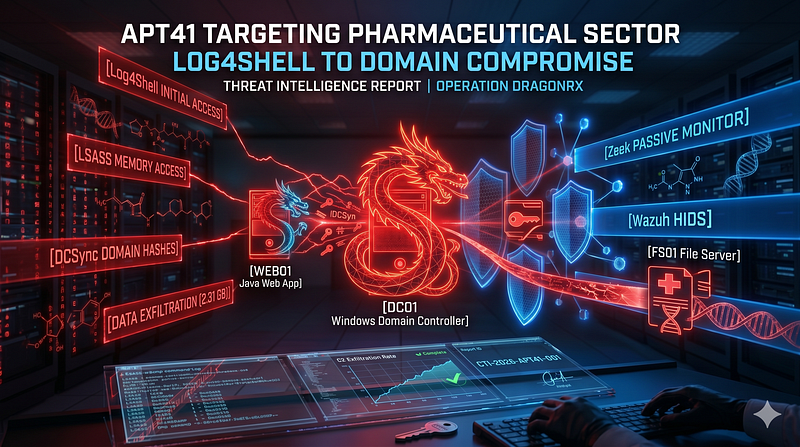
Israel Threat Actors CTI · explicit report mentionAPT41 Targeting Pharmaceutical Sector: Log4Shell to Domain Compromise
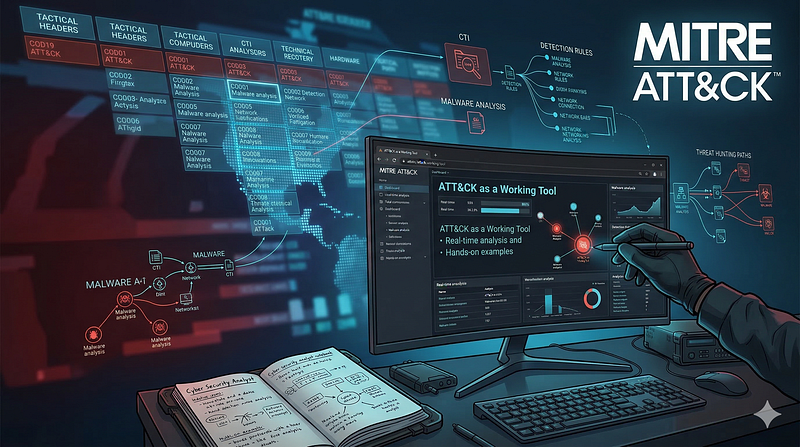
1200km CTI repository · explicit report mentionATT&CK as a Working Tool: Theory and Hands-On Practical Usage
1200km CTI repository · explicit report mentionCTI Research: Handala Hack Group (aka Handala Hack Team)
1200km CTI repository · explicit report mentionCTI Research: Handala Hack Group (aka Handala Hack Team)
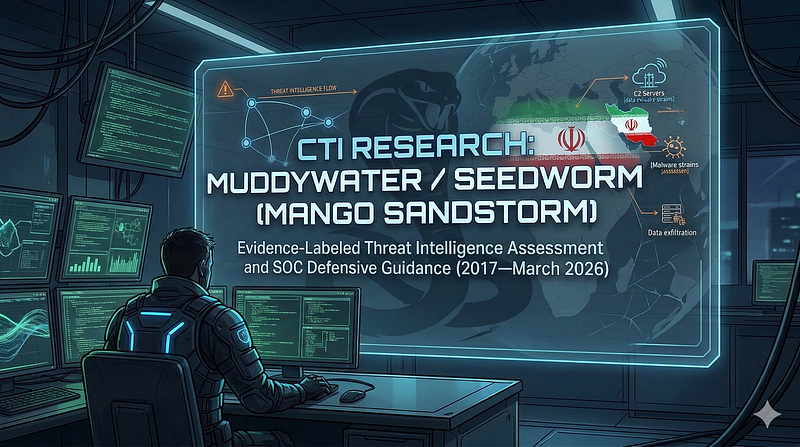
1200km CTI repository · explicit report mentionCTI Research: MuddyWater / Seedworm (Mango Sandstorm)
1200km CTI repository · explicit report mentionCTI Research: MuddyWater / Seedworm (Mango Sandstorm)
1200km CTI repository · explicit report mentionCTI Research: Sandworm / APT44
1200km CTI repository · explicit report mentionCTI Research: Sandworm / APT44
1200km CTI repository · explicit report mentionCyber Threat Intelligence Dossier: Iranian and Hamas-Aligned Operations Targeting Israeli and Allied Ecosystems (2023-2026)
Israel Threat Actors CTI · explicit report mentionDefensive CTI Research on Threats to Israeli Government and Public-Sector Environments
Israel Threat Actors CTI · explicit report mentionDefensive Cyber Threat Intelligence Report: Israeli Critical Infrastructure and Geopolitical Escalation (2024-2026)
Israel Threat Actors CTI · explicit report mentionDetection Guide — Operation DragonRx
1200km CTI repository · explicit report mentionOperation DragonRx — APT41 Full Attack Simulation
1200km CTI repository · explicit report mentionOperation DragonRx: Simulating an APT41 Attack End-to-End — From Log4Shell to DFIR and Malware Analysis
1200km CTI repository · explicit report mentionWorked Cases
Israel Threat Actors CTI · explicit report mentionAPT41 Targeting Pharmaceutical Sector Log4Shell to Domain Compromise
1200km Medium · authored report mentionATT CK as a Working Tool Theory and Hands On Practical Usage
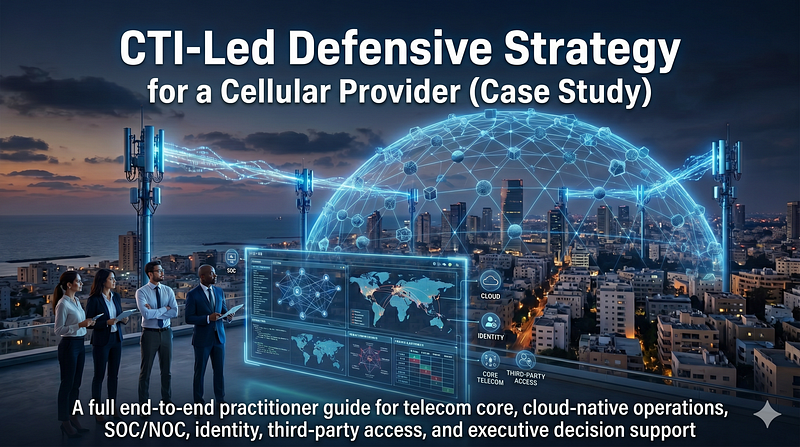
1200km Medium · authored report mentionCTI Led Defensive Strategy for a Cellular Provider Case Study
1200km Medium · authored report mentionCTI Research Handala Hack Group aka Handala Hack Team
1200km Medium · authored report mentionCTI Research MuddyWater Seedworm Mango Sandstorm
1200km Medium · authored report mentionCTI Research Sandworm APT44
1200km Medium · authored report mentionOperation DragonRx Simulating an APT41 Attack End to End From Log4Shell to DFIR and Malware
1200km Medium · authored report mention
Cyber Knowledge context
Use these routes to move from the ATT&CK behavior into explanation, implementation, evidence handling, validation, and defensive operations. Relevance is generated from explicit identifiers/names and governed topic mappings; it is not attribution evidence.
Red Team & Offensive Security · Exact technique name · 92/100Memory forensics and runtime reconstruction
Digital Forensics & Incident Response (DFIR) · Governed topic match · 48/100Third-party, service-provider, and software supply-chain risk
Governance, Risk & Compliance (GRC) · Governed topic match · 42/100Linux and macOS endpoint forensics
Digital Forensics & Incident Response (DFIR) · Tactic learning route · 24/100Policy architecture, standards, procedures, and exceptions
Governance, Risk & Compliance (GRC) · Tactic learning route · 24/100Module 6 — Alert triage, investigation, and escalation
Blue Team & Defensive Security · Tactic learning route · 24/100
MITRE mitigations
Data Backup involves taking and securely storing backups of data from end-user systems and critical servers. It ensures that data remains available in the event of system compromise, ransomware attacks, or other disruptions. Backup processes should include hardening backup systems, implementing secure storage solutions, and keeping backups isolated from the corporate network to prevent compromise during active incidents. This mitigation can be implemented through the following measures: Regular Backup Scheduling: - Use Case: Ensure timely and consistent backups of critical data. - Implementation: Schedule daily incremental backups and weekly full backups for all critical servers and systems. Immutable Backups: - Use Case: Protect backups from modification or deletion, even by attackers. - Implementation: Use write-once-read-many (WORM) storage for backups, preventing ransomware from enc…
MITRE mitigation sourceUser Account Management involves implementing and enforcing policies for the lifecycle of user accounts, including creation, modification, and deactivation. Proper account management reduces the attack surface by limiting unauthorized access, managing account privileges, and ensuring accounts are used according to organizational policies. This mitigation can be implemented through the following measures: Enforcing the Principle of Least Privilege - Implementation: Assign users only the minimum permissions required to perform their job functions. Regularly audit accounts to ensure no excess permissions are granted. - Use Case: Reduces the risk of privilege escalation by ensuring accounts cannot perform unauthorized actions. Implementing Strong Password Policies - Implementation: Enforce password complexity requirements (e.g., length, character types). Require password expiration every 90…
MITRE mitigation sourceMITRE detection strategies and analytics
- AN0411 · Analytic 0411 — Adversary spawns command-line tools (e.g., del, cipher /w, SDelete) or scripts to recursively delete or overwrite user/system files. This may be correlated with abnormal file IO activity, registry writes, or tampering in critical system directories.
- AN0412 · Analytic 0412 — Massive recursive deletions or overwrites via `rm -rf`, `shred`, `dd`, or wiper binaries. May include unlink syscalls, deletion of known config/data paths, or sequential overwrite patterns.
- AN0413 · Analytic 0413 — Destruction via `rm -rf`, overwrite with `dd` or `srm`, often executed by script in /tmp or /private/tmp, may also involve file overwrite to political or decoy image data.
- AN0414 · Analytic 0414 — Adversary deletes critical infrastructure: EC2 instances, S3 buckets, snapshots, or volumes using elevated IAM credentials. Frequently includes batch API calls with `Delete*` or `TerminateInstances`.
- AN0415 · Analytic 0415 — Adversary destroys virtual disks (VMDK), images, or VMs by invoking `vim-cmd`, deleting datastore contents, or purging snapshots.
- AN0416 · Analytic 0416 — Container process executes destructive file operations inside volume mounts or host paths. Includes `rm -rf /mnt/volumes/`, container breakout followed by host deletion attempts.
Continue the investigation
Attack tools, simulations and detection rules
Follow explicit source relationships into the reference modules. Linked procedures and detectors are not claims of live validation or actor attribution.
- T1485 Data Destruction simulation — Exact active technique ID
- T1485 detection rules — Exact active technique ID; not actor-specific detector coverage