Privileged Account Management focuses on implementing policies, controls, and tools to securely manage privileged accounts (e.g., SYSTEM, root, or administrative accounts). This includes restricting access, limiting the scope of permissions, monitoring privileged account usage, and ensuring accountability through logging and auditing.This mitigation can be implemented through the following measures: Account Permissions and Roles: - Implement RBAC and least privilege principles to allocate permissions securely. - Use tools like Active Directory Group Policies to enforce access restrictions. Credential Security: - Deploy password vaulting tools like CyberArk, HashiCorp Vault, or KeePass for secure storage and rotation of credentials. - Enforce password policies for complexity, uniqueness, and expiration using tools like Microsoft Group Policy Objects (GPO). Multi-Factor Authentication (MF…
MITRE mitigation sourceAdversaryGraph public intelligence page
This page is part of Threat Matrix, the public browser workspace for the main AdversaryGraph platform. Use it for ATT&CK pivots, actor and technique context, similarity leads, detection coverage review, and analyst-ready investigation paths.
Validation disclaimer: TTP overlap, actor similarity, generated summaries, and coverage findings are investigation leads, not attribution proof or operational validation without analyst review.
Main AdversaryGraph project Documentation Malware Analysis GitHub
Process Injection
Adversaries may inject code into processes in order to evade process-based defenses as well as possibly elevate privileges. Process injection is a method of executing arbitrary code in the address space of a separate live process. Running code in the context of another process may allow access to the process's memory, system/network resources, and possibly elevated privileges. Execution via process injection may also evade detection from security products since the execution is masked under a legitimate process. There are many different ways to inject code into a process, many of which abuse legitimate functionalities. These implementations exist for every major OS but are typically platform specific. More sophisticated samples may perform multiple process injections to segment modules and further evade detection, utilizing named pipes or other inter-process communication (IPC) mechanisms as a communication channel.
Open detection, hunting, mitigation, and evidence workspace
Detection logic
Monitoring Windows API calls indicative of the various types of code injection may generate a significant amount of data and may not be directly useful for defense unless collected under specific circumstances for known bad sequences of calls, since benign use of API functions may be common and difficult to distinguish from malicious behavior. Windows API calls such as CreateRemoteThread, SuspendThread/SetThreadContext/ResumeThread, QueueUserAPC/NtQueueApcThread, and those that can be used to modify memory within another process, such as VirtualAllocEx/WriteProcessMemory, may be used for this technique. Monitor DLL/PE file events, specifically creation of these binary files as well as the loading of DLLs into processes. Look for DLLs that are not recognized or not normally loaded into a process. Monitoring for Linux specific calls such as the ptrace system call should not generate large amounts of data due to their specialized nature, and can be a very effective method to detect some of the common process injection methods. Monitor for named pipe creation and connection events (Event IDs 17 and 18) for possible indicators of infected processes with external modules. Analyze process behavior to determine if a process is performing actions it usually does not, such as opening network connections, reading files, or other suspicious actions that could relate to post-compromise behavior.
Observed actors
Correlated CTI and IR reports
1200km CTI repository · explicit report mentionCTI Research: MuddyWater / Seedworm (Mango Sandstorm)
1200km CTI repository · explicit report mentionCTI Research: MuddyWater / Seedworm (Mango Sandstorm)
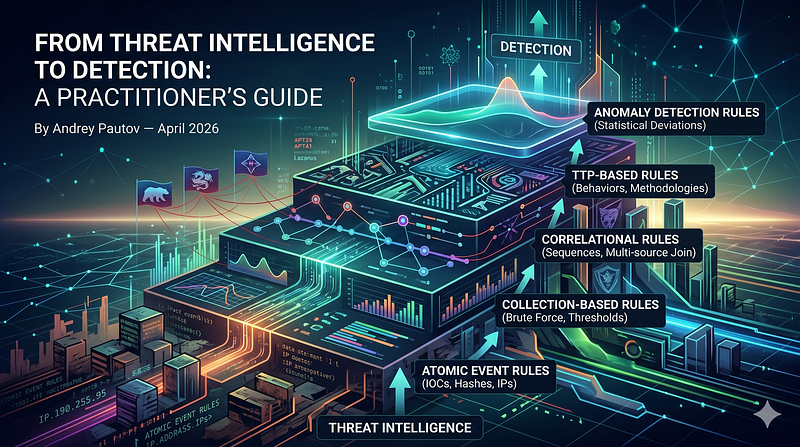
1200km CTI repository · explicit report mentionFrom Threat Intelligence to Detection: A Practitioner's Guide
1200km CTI repository · explicit report mentionATT CK as a Working Tool Theory and Hands On Practical Usage
1200km Medium · authored report mentionCTI Research MuddyWater Seedworm Mango Sandstorm
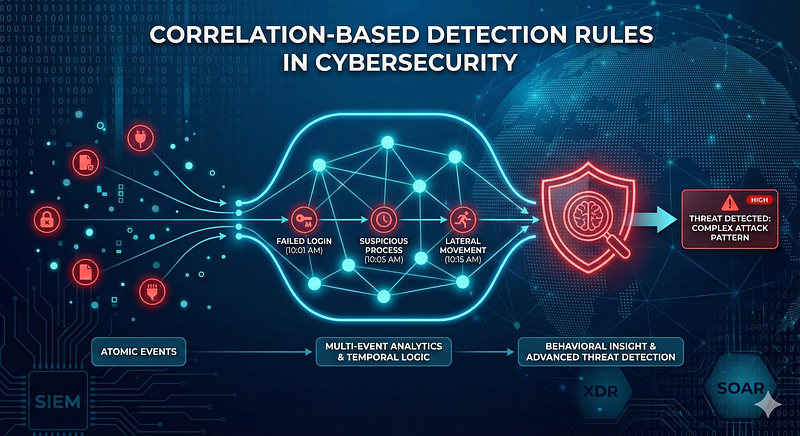
1200km Medium · authored report mentionCorrelation Based Detection Rules in Cybersecurity From Atomic Events to Behavioral Insight
1200km Medium · authored report mentionFrom Threat Intelligence to Detection A Practitioner s Guide
1200km Medium · authored report mention
Cyber Knowledge context
Use these routes to move from the ATT&CK behavior into explanation, implementation, evidence handling, validation, and defensive operations. Relevance is generated from explicit identifiers/names and governed topic mappings; it is not attribution evidence.
Vulnerability Research & Exploit Development · Governed topic match · 60/100Static triage: strings, imports, resources, and capabilities
Malware Analysis & Reverse Engineering · Governed topic match · 60/100Memory forensics, injection, and resident behavior
Malware Analysis & Reverse Engineering · Governed topic match · 60/100Dynamic analysis, debugging, and tracing
Vulnerability Research & Exploit Development · Governed topic match · 51/100Binary formats, ABI, loaders, and mitigations
Vulnerability Research & Exploit Development · Governed topic match · 48/100Fuzzing engineering and crash triage
Vulnerability Research & Exploit Development · Governed topic match · 39/100Controlled dynamic behavior and differential observation
Malware Analysis & Reverse Engineering · Tactic learning route · 24/100Module 4 — Detection engineering and detection as code
Blue Team & Defensive Security · Tactic learning route · 24/100Disk, file-system, and persistence forensics
Digital Forensics & Incident Response (DFIR) · Tactic learning route · 24/100Module 5 — Cloud, containers, and Kubernetes
Red Team & Offensive Security · Tactic learning route · 24/100Network, edge, service communication, hybrid access, and zero trust
Cloud Security · Tactic learning route · 24/100
MITRE mitigations
Behavior Prevention on Endpoint refers to the use of technologies and strategies to detect and block potentially malicious activities by analyzing the behavior of processes, files, API calls, and other endpoint events. Rather than relying solely on known signatures, this approach leverages heuristics, machine learning, and real-time monitoring to identify anomalous patterns indicative of an attack. This mitigation can be implemented through the following measures: Suspicious Process Behavior: - Implementation: Use Endpoint Detection and Response (EDR) tools to monitor and block processes exhibiting unusual behavior, such as privilege escalation attempts. - Use Case: An attacker uses a known vulnerability to spawn a privileged process from a user-level application. The endpoint tool detects the abnormal parent-child process relationship and blocks the action. Unauthorized File Access: -…
MITRE mitigation sourceMITRE detection strategies and analytics
- AN1399 · Analytic 1399 — Detects process injection by correlating memory manipulation API calls (e.g., VirtualAllocEx, WriteProcessMemory), suspicious thread creation (e.g., CreateRemoteThread), and unusual DLL loads within another process's context.
- AN1400 · Analytic 1400 — Detects ptrace- or memfd-based process injection through audit logs capturing system calls (e.g., ptrace, mmap) targeting running processes along with suspicious file descriptors or memory writes.
- AN1401 · Analytic 1401 — Detects memory-based injection by monitoring `task_for_pid`, `mach_vm_write`, and dylib injection patterns through `DYLD_INSERT_LIBRARIES` or manual memory mapping.
Continue the investigation
Attack tools, simulations and detection rules
Follow explicit source relationships into the reference modules. Linked procedures and detectors are not claims of live validation or actor attribution.
- T1055 Process Injection simulation — Exact active technique ID
- T1055 detection rules — Exact active technique ID; not actor-specific detector coverage