- AN1061 · Analytic 1061 — Unauthorized or anomalous loading of kernel-mode drivers or DLLs, concealed services, or abnormal modification of boot components indicative of rootkit activity.
- AN1062 · Analytic 1062 — Abnormal loading of kernel modules, direct tampering with /dev, /proc, or LD_PRELOAD behaviors hiding processes or files.
- AN1063 · Analytic 1063 — Execution of unsigned kernel extensions (KEXTs), tampering with LaunchDaemons, or userspace hooks into system libraries.
AdversaryGraph public intelligence page
This page is part of Threat Matrix, the public browser workspace for the main AdversaryGraph platform. Use it for ATT&CK pivots, actor and technique context, similarity leads, detection coverage review, and analyst-ready investigation paths.
Validation disclaimer: TTP overlap, actor similarity, generated summaries, and coverage findings are investigation leads, not attribution proof or operational validation without analyst review.
Main AdversaryGraph project Documentation Malware Analysis GitHub
Rootkit
Adversaries may use rootkits to hide the presence of programs, files, network connections, services, drivers, and other system components. Rootkits are programs that hide the existence of malware by intercepting/hooking and modifying operating system API calls that supply system information. (Citation: Symantec Windows Rootkits) Rootkits or rootkit enabling functionality may reside at the user or kernel level in the operating system or lower, to include a hypervisor or [System Firmware](https://attack.mitre.org/techniques/T1542/001). (Citation: Wikipedia Rootkit) Rootkits have been seen for Windows, Linux, and Mac OS X systems. (Citation: CrowdStrike Linux Rootkit) (Citation: BlackHat Mac OSX Rootkit) Rootkits that reside or modify boot sectors are known as [Bootkit](https://attack.mitre.org/techniques/T1542/003)s and specifically target the boot process of the operating system.
Open detection, hunting, mitigation, and evidence workspace
Detection logic
Some rootkit protections may be built into anti-virus or operating system software. There are dedicated rootkit detection tools that look for specific types of rootkit behavior. Monitor for the existence of unrecognized DLLs, devices, services, and changes to the MBR.
Observed actors
Correlated CTI and IR reports
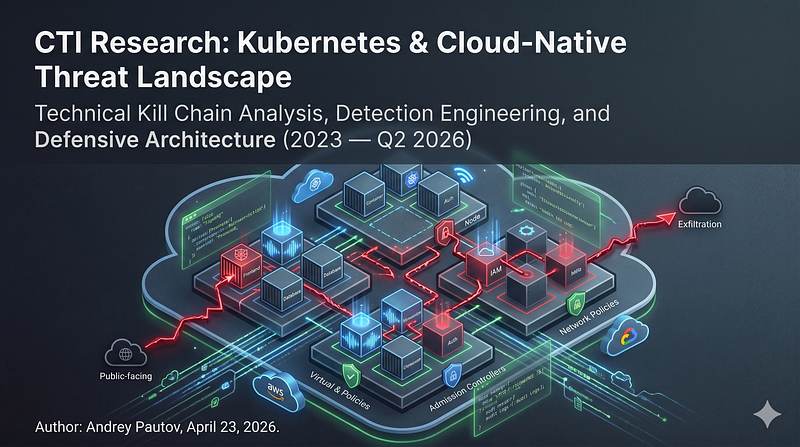
CTI Research: Kubernetes & Cloud-Native Threat Landscape
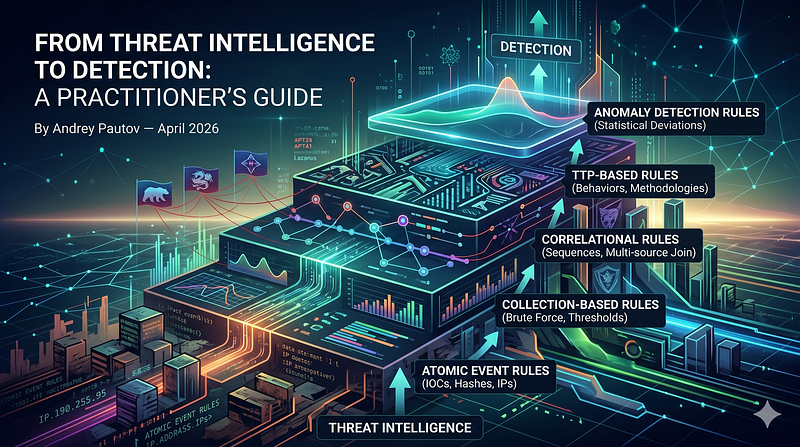
1200km CTI repository · explicit report mentionFrom Threat Intelligence to Detection: A Practitioner's Guide
1200km CTI repository · explicit report mentionCTI Research Kubernetes Cloud Native Threat Landscape
1200km Medium · authored report mentionFrom Threat Intelligence to Detection A Practitioner s Guide
1200km Medium · authored report mention
1200km CTI repository · explicit report mentionFrom Threat Intelligence to Detection: A Practitioner's Guide
1200km CTI repository · explicit report mentionCTI Research Kubernetes Cloud Native Threat Landscape
1200km Medium · authored report mentionFrom Threat Intelligence to Detection A Practitioner s Guide
1200km Medium · authored report mention
Cyber Knowledge context
Use these routes to move from the ATT&CK behavior into explanation, implementation, evidence handling, validation, and defensive operations. Relevance is generated from explicit identifiers/names and governed topic mappings; it is not attribution evidence.
Controlled dynamic behavior and differential observation
Malware Analysis & Reverse Engineering · Tactic learning route · 24/100Module 4 — Detection engineering and detection as code
Blue Team & Defensive Security · Tactic learning route · 24/100Disk, file-system, and persistence forensics
Digital Forensics & Incident Response (DFIR) · Tactic learning route · 24/100
Malware Analysis & Reverse Engineering · Tactic learning route · 24/100Module 4 — Detection engineering and detection as code
Blue Team & Defensive Security · Tactic learning route · 24/100Disk, file-system, and persistence forensics
Digital Forensics & Incident Response (DFIR) · Tactic learning route · 24/100
MITRE mitigations
No ATT&CK mitigation relationship is published for this technique. Apply risk-based controls and verify scope.
MITRE detection strategies and analytics
Continue the investigation
Attack tools, simulations and detection rules
Follow explicit source relationships into the reference modules. Linked procedures and detectors are not claims of live validation or actor attribution.
- T1014 Rootkit simulation — Exact active technique ID
- T1014 detection rules — Exact active technique ID; not actor-specific detector coverage