Data Loss Prevention (DLP) involves implementing strategies and technologies to identify, categorize, monitor, and control the movement of sensitive data within an organization. This includes protecting data formats indicative of Personally Identifiable Information (PII), intellectual property, or financial data from unauthorized access, transmission, or exfiltration. DLP solutions integrate with network, endpoint, and cloud platforms to enforce security policies and prevent accidental or malicious data leaks. (Citation: PurpleSec Data Loss Prevention) This mitigation can be implemented through the following measures: Sensitive Data Categorization: - Use Case: Identify and classify data based on sensitivity (e.g., PII, financial data, trade secrets). - Implementation: Use DLP solutions to scan and tag files containing sensitive information using predefined patterns, such as Social Secur…
MITRE mitigation sourceAdversaryGraph public intelligence page
This page is part of Threat Matrix, the public browser workspace for the main AdversaryGraph platform. Use it for ATT&CK pivots, actor and technique context, similarity leads, detection coverage review, and analyst-ready investigation paths.
Validation disclaimer: TTP overlap, actor similarity, generated summaries, and coverage findings are investigation leads, not attribution proof or operational validation without analyst review.
Main AdversaryGraph project Documentation Malware Analysis GitHub
Data from Local System
Adversaries may search local system sources, such as file systems, configuration files, local databases, virtual machine files, or process memory, to find files of interest and sensitive data prior to Exfiltration. Adversaries may do this using a [Command and Scripting Interpreter](https://attack.mitre.org/techniques/T1059), such as [cmd](https://attack.mitre.org/software/S0106) as well as a [Network Device CLI](https://attack.mitre.org/techniques/T1059/008), which have functionality to interact with the file system to gather information.(Citation: show_run_config_cmd_cisco) Adversaries may also use [Automated Collection](https://attack.mitre.org/techniques/T1119) on the local system.
Open detection, hunting, mitigation, and evidence workspace
Detection logic
Monitor processes and command-line arguments for actions that could be taken to collect files from a system. Remote access tools with built-in features may interact directly with the Windows API to gather data. Further, Network Device CLI commands may also be used to collect files such as configuration files with built-in features native to the network device platform. Monitor CLI activity for unexpected or unauthorized use commands being run by non-standard users from non-standard locations. Data may also be acquired through Windows system management tools such as Windows Management Instrumentation and PowerShell. For network infrastructure devices, collect AAA logging to monitor `show` commands that view configuration files.
Observed actors
G0001Ke3chang
G0004APT1
G0006APT28
G0007Turla
G0010APT29
G0016APT3
G0022Threat Group-3390
G0027Lazarus Group
G0032Sandworm Team
G0034Dragonfly
G0035FIN6
G0037Stealth Falcon
G0038Patchwork
G0040menuPass
G0045FIN7
G0046Gamaredon Group
G0047OilRig
G0049Magic Hound
G0059BRONZE BUTLER
G0060APT37
G0067Dark Caracal
G0070APT38
G0082APT39
G0087GALLIUM
G0093Kimsuky
G0094APT41
G0096Inception
G0100Wizard Spider
G0102Fox Kitten
G0117Windigo
G0124HAFNIUM
G0125Andariel
G0138Aquatic Panda
G0143Ember Bear
G1003LAPSUS$
G1004CURIUM
G1012LuminousMoth
G1014FIN13
G1016Volt Typhoon
G1017ToddyCat
G1022Agrius
G1030RedCurl
G1039Salt Typhoon
G1045MirrorFace
G1054VOID MANTICORE
G1055TeamPCP
G1056
Correlated CTI and IR reports
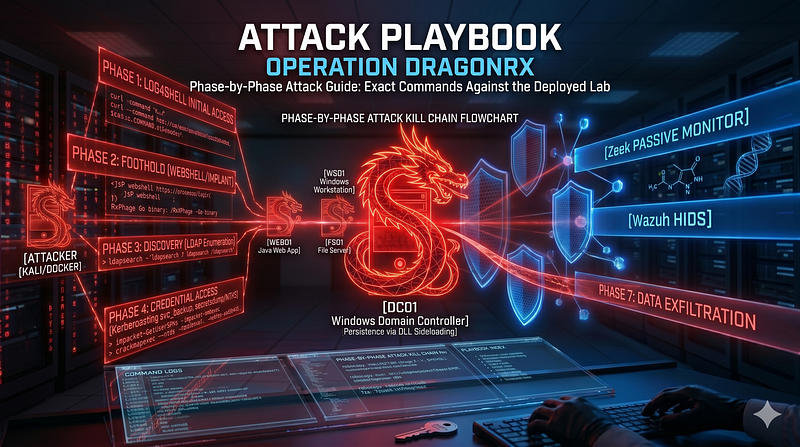
1200km CTI repository · explicit report mentionAttack Playbook — Operation DragonRx
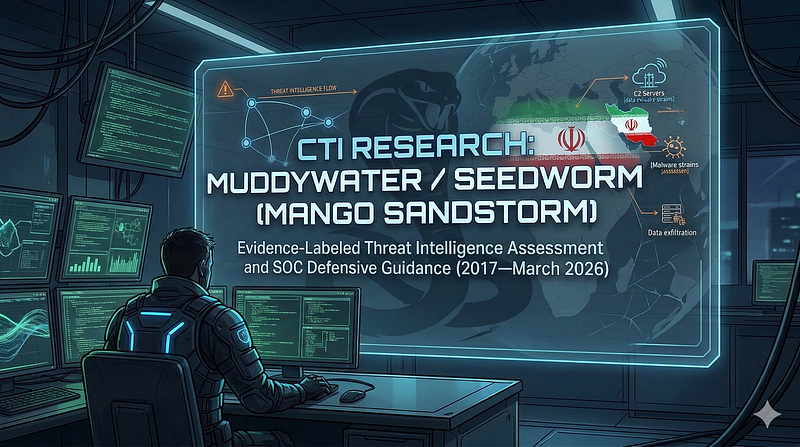
1200km CTI repository · explicit report mentionCTI Research: MuddyWater / Seedworm (Mango Sandstorm)
1200km CTI repository · explicit report mentionCTI Research: MuddyWater / Seedworm (Mango Sandstorm)
1200km CTI repository · explicit report mentionOperation DragonRx — APT41 Full Attack Simulation
1200km CTI repository · explicit report mentionOperation DragonRx: Simulating an APT41 Attack End-to-End — From Log4Shell to DFIR and Malware Analysis
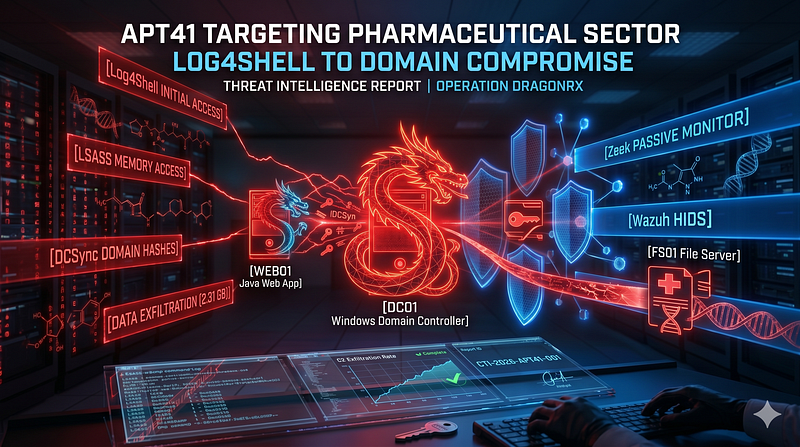
1200km CTI repository · explicit report mentionAPT41 Targeting Pharmaceutical Sector Log4Shell to Domain Compromise
1200km Medium · authored report mentionAttack Playbook Operation DragonRx
1200km Medium · authored report mentionCTI Research MuddyWater Seedworm Mango Sandstorm
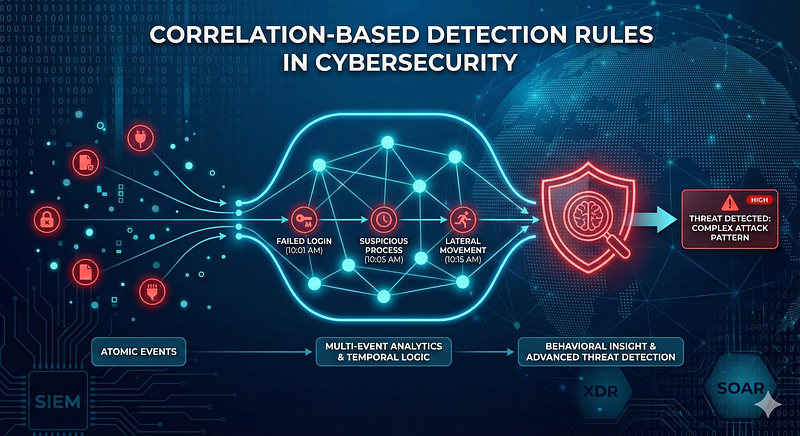
1200km Medium · authored report mentionCorrelation Based Detection Rules in Cybersecurity From Atomic Events to Behavioral Insight
1200km Medium · authored report mentionOperation DragonRx Simulating an APT41 Attack End to End From Log4Shell to DFIR and Malware
1200km Medium · authored report mention
Cyber Knowledge context
Use these routes to move from the ATT&CK behavior into explanation, implementation, evidence handling, validation, and defensive operations. Relevance is generated from explicit identifiers/names and governed topic mappings; it is not attribution evidence.
Digital Forensics & Incident Response (DFIR) · Governed topic match · 75/100Timeline reconstruction, ATT CK mapping, CTI, and confidence
Digital Forensics & Incident Response (DFIR) · Governed topic match · 75/100Endpoint live response and volatile acquisition
Digital Forensics & Incident Response (DFIR) · Governed topic match · 63/100AI-assisted OSINT with bounded tools, citations, and human review
OSINT & Reconnaissance · Governed topic match · 57/100Scripts, documents, shortcuts, and fileless chains
Malware Analysis & Reverse Engineering · Governed topic match · 54/100Training data, ingestion, retrieval, RAG, and knowledge integrity
AI Security · Governed topic match · 54/100Agents, tools, plugins, browsers, and MCP security
AI Security · Governed topic match · 54/100Identity, authorization, tenancy, and human approval
AI Security · Governed topic match · 54/100AI red teaming, evaluation, and reproducible security testing
AI Security · Governed topic match · 54/100Dependencies, source control, builds, artifacts, and supply-chain assurance
Secure Code & Application Security · Governed topic match · 51/100Memory forensics and runtime reconstruction
Digital Forensics & Incident Response (DFIR) · Governed topic match · 51/100Threat modeling and secure architecture
Secure Code & Application Security · Governed topic match · 42/100
MITRE mitigations
MITRE detection strategies and analytics
- AN1070 · Analytic 1070 — Adversaries collecting local files via PowerShell, WMI, or direct file API calls often include recursive file listings, targeted file reads, and temporary file staging.
- AN1071 · Analytic 1071 — Adversaries using bash scripts or tools to recursively enumerate user home directories, config files, or SSH keys.
- AN1072 · Analytic 1072 — Adversary use of bash/zsh or AppleScript to locate files and exfil targets like user keychains or documents.
- AN1073 · Analytic 1073 — Collection of device configuration via CLI commands (e.g., `show running-config`, `copy flash`, `more`), often followed by TFTP/SCP transfers.
- AN1074 · Analytic 1074 — Adversaries accessing datastore or configuration files via `vim-cmd`, `esxcli`, or SCP to extract logs, VMs, or host configurations.
Continue the investigation
Attack tools, simulations and detection rules
Follow explicit source relationships into the reference modules. Linked procedures and detectors are not claims of live validation or actor attribution.
- T1005 Data from Local System simulation — Exact active technique ID
- T1005 detection rules — Exact active technique ID; not actor-specific detector coverage