Operating System Configuration involves adjusting system settings and hardening the default configurations of an operating system (OS) to mitigate adversary exploitation and prevent abuse of system functionality. Proper OS configurations address security vulnerabilities, limit attack surfaces, and ensure robust defense against a wide range of techniques. This mitigation can be implemented through the following measures: Disable Unused Features: - Turn off SMBv1, LLMNR, and NetBIOS where not needed. - Disable remote registry and unnecessary services. Enforce OS-level Protections: - Enable Data Execution Prevention (DEP), Address Space Layout Randomization (ASLR), and Control Flow Guard (CFG) on Windows. - Use AppArmor or SELinux on Linux for mandatory access controls. Secure Access Settings: - Enable User Account Control (UAC) for Windows. - Restrict root/sudo access on Linux/macOS and e…
MITRE mitigation sourceAdversaryGraph public intelligence page
This page is part of Threat Matrix, the public browser workspace for the main AdversaryGraph platform. Use it for ATT&CK pivots, actor and technique context, similarity leads, detection coverage review, and analyst-ready investigation paths.
Validation disclaimer: TTP overlap, actor similarity, generated summaries, and coverage findings are investigation leads, not attribution proof or operational validation without analyst review.
Main AdversaryGraph project Documentation Malware Analysis GitHub
Domain Account
Adversaries may attempt to get a listing of domain accounts. This information can help adversaries determine which domain accounts exist to aid in follow-on behavior such as targeting specific accounts which possess particular privileges. Commands such as net user /domain and net group /domain of the Net utility, dscacheutil -q group on macOS, and ldapsearch on Linux can list domain users and groups. PowerShell cmdlets including Get-ADUser and Get-ADGroupMember may enumerate members of Active Directory groups.
Open detection, hunting, mitigation, and evidence workspace
Detection logic
System and network discovery techniques normally occur throughout an operation as an adversary learns the environment. Data and events should not be viewed in isolation, but as part of a chain of behavior that could lead to other activities, such as Lateral Movement, based on the information obtained. Monitor processes and command-line arguments for actions that could be taken to gather system and network information. Remote access tools with built-in features may interact directly with the Windows API to gather information. Information may also be acquired through Windows system management tools such as Windows Management Instrumentation and PowerShell.
Observed actors
G1017APT41
G0096Dragonfly
G0035menuPass
G0045MuddyWater
G0069FIN6
G0037Sandworm Team
G0034Scattered Spider
G1015OilRig
G0049Ke3chang
G0004Turla
G0010Poseidon Group
G0033RedCurl
G1039APT29
G0016Chimera
G0114BRONZE BUTLER
G0060ToddyCat
G1022Fox Kitten
G0117Lazarus Group
G0032INC Ransom
G1032LAPSUS$
G1004Wizard Spider
G0102FIN13
G1016
Correlated CTI and IR reports
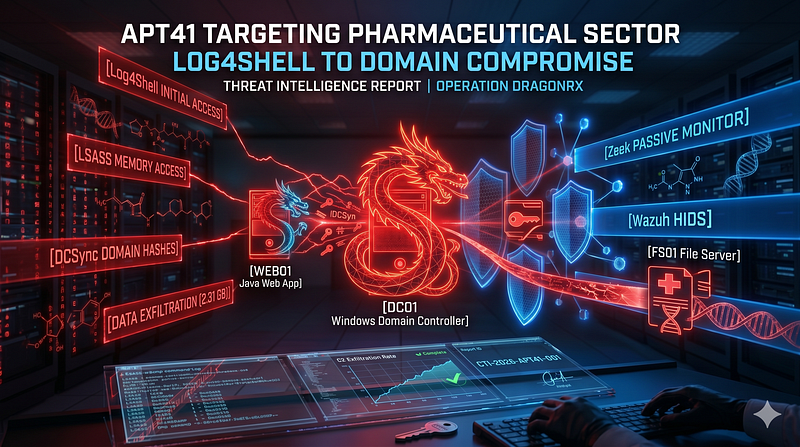
Israel Threat Actors CTI · explicit report mentionAPT41 Targeting Pharmaceutical Sector: Log4Shell to Domain Compromise
1200km CTI repository · explicit report mentionATT&CK as a Working Tool: Theory and Hands-On Practical Usage
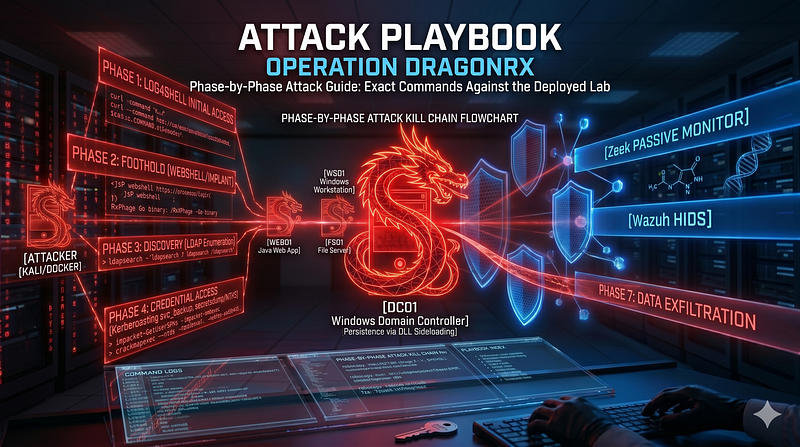
1200km CTI repository · explicit report mentionAttack Playbook — Operation DragonRx
1200km CTI repository · explicit report mentionOperation DragonRx — APT41 Full Attack Simulation
1200km CTI repository · explicit report mentionOperation DragonRx: Simulating an APT41 Attack End-to-End — From Log4Shell to DFIR and Malware Analysis
1200km CTI repository · explicit report mentionAPT41 Targeting Pharmaceutical Sector Log4Shell to Domain Compromise
1200km Medium · authored report mentionATT CK as a Working Tool Theory and Hands On Practical Usage
1200km Medium · authored report mentionAttack Playbook Operation DragonRx
1200km Medium · authored report mentionOperation DragonRx Simulating an APT41 Attack End to End From Log4Shell to DFIR and Malware
1200km Medium · authored report mention
Cyber Knowledge context
Use these routes to move from the ATT&CK behavior into explanation, implementation, evidence handling, validation, and defensive operations. Relevance is generated from explicit identifiers/names and governed topic mappings; it is not attribution evidence.
OSINT & Reconnaissance · Governed topic match · 60/100People, organizations, brands, suppliers, and relationship research
OSINT & Reconnaissance · Governed topic match · 60/100Module 8 — Network defense, protocol analysis, and NDR
Blue Team & Defensive Security · Governed topic match · 42/100Automation, APIs, entity graphs, normalization, and data engineering
OSINT & Reconnaissance · Governed topic match · 39/100Internet exposure, service indexes, and infrastructure search
OSINT & Reconnaissance · Tactic learning route · 24/100Module 5 — Cloud, containers, and Kubernetes
Red Team & Offensive Security · Tactic learning route · 24/100Data classification, storage, cryptography, keys, backup, and deletion
Cloud Security · Tactic learning route · 24/100
MITRE mitigations
MITRE detection strategies and analytics
- AN0363 · Analytic 0363 — Adversary enumeration of domain accounts using net.exe, PowerShell, WMI, or LDAP queries from non-domain controllers or non-admin endpoints.
- AN0364 · Analytic 0364 — Domain account enumeration using ldapsearch, samba tools (e.g., 'wbinfo -u'), or winbindd lookups.
- AN0365 · Analytic 0365 — Domain group and user enumeration via dscl or dscacheutil, or queries to directory services from non-admin endpoints.