Privileged Account Management focuses on implementing policies, controls, and tools to securely manage privileged accounts (e.g., SYSTEM, root, or administrative accounts). This includes restricting access, limiting the scope of permissions, monitoring privileged account usage, and ensuring accountability through logging and auditing.This mitigation can be implemented through the following measures: Account Permissions and Roles: - Implement RBAC and least privilege principles to allocate permissions securely. - Use tools like Active Directory Group Policies to enforce access restrictions. Credential Security: - Deploy password vaulting tools like CyberArk, HashiCorp Vault, or KeePass for secure storage and rotation of credentials. - Enforce password policies for complexity, uniqueness, and expiration using tools like Microsoft Group Policy Objects (GPO). Multi-Factor Authentication (MF…
MITRE mitigation sourceAdversaryGraph public intelligence page
This page is part of Threat Matrix, the public browser workspace for the main AdversaryGraph platform. Use it for ATT&CK pivots, actor and technique context, similarity leads, detection coverage review, and analyst-ready investigation paths.
Validation disclaimer: TTP overlap, actor similarity, generated summaries, and coverage findings are investigation leads, not attribution proof or operational validation without analyst review.
Main AdversaryGraph project Documentation Malware Analysis GitHub
Local Accounts
Adversaries may obtain and abuse credentials of a local account as a means of gaining Initial Access, Persistence, Privilege Escalation, or Defense Evasion. Local accounts are those configured by an organization for use by users, remote support, services, or for administration on a single system or service. Local Accounts may also be abused to elevate privileges and harvest credentials through [OS Credential Dumping](https://attack.mitre.org/techniques/T1003). Password reuse may allow the abuse of local accounts across a set of machines on a network for the purposes of Privilege Escalation and Lateral Movement.
Open detection, hunting, mitigation, and evidence workspace
Detection logic
Perform regular audits of local system accounts to detect accounts that may have been created by an adversary for persistence. Look for suspicious account behavior, such as accounts logged in at odd times or outside of business hours.
Observed actors
Correlated CTI and IR reports
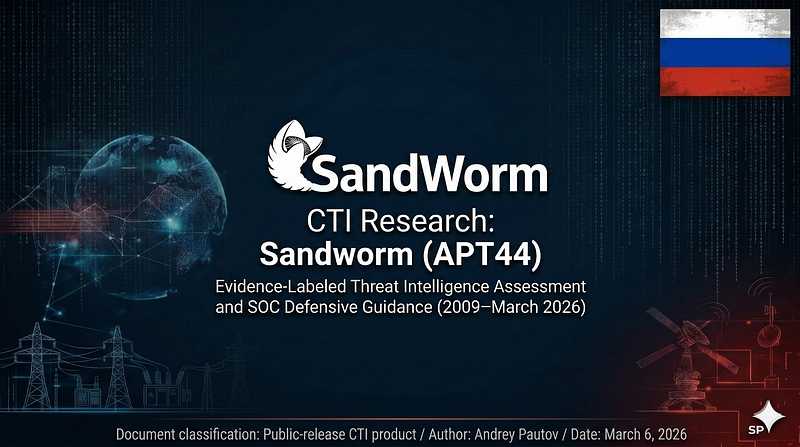
1200km CTI repository · explicit report mentionCTI Research: Sandworm / APT44
1200km CTI repository · explicit report mentionCTI Research: Sandworm / APT44
1200km CTI repository · explicit report mentionExecutive Summary
Israel Threat Actors CTI · explicit report mentionPioneer Kitten (Fox Kitten, Lemon Sandstorm, UNC757) – Actor Deep Research
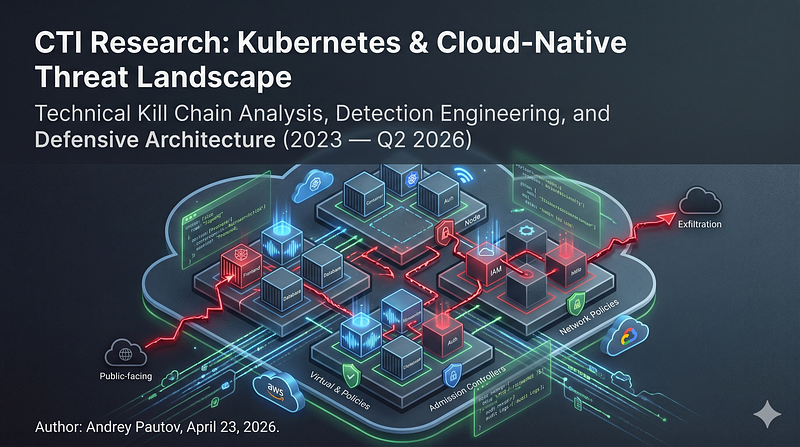
Israel Threat Actors CTI · explicit report mentionCTI Research Kubernetes Cloud Native Threat Landscape
1200km Medium · authored report mentionCTI Research Sandworm APT44
1200km Medium · authored report mention
Cyber Knowledge context
Use these routes to move from the ATT&CK behavior into explanation, implementation, evidence handling, validation, and defensive operations. Relevance is generated from explicit identifiers/names and governed topic mappings; it is not attribution evidence.
Red Team & Offensive Security · Governed topic match · 60/100Mobile and Android vulnerability research
Vulnerability Research & Exploit Development · Governed topic match · 60/100Human, workload, pipeline, and emergency identity
Cloud Security · Governed topic match · 60/100Controlled dynamic behavior and differential observation
Malware Analysis & Reverse Engineering · Tactic learning route · 24/100Module 4 — Detection engineering and detection as code
Blue Team & Defensive Security · Tactic learning route · 24/100Disk, file-system, and persistence forensics
Digital Forensics & Incident Response (DFIR) · Tactic learning route · 24/100Module 5 — Cloud, containers, and Kubernetes
Red Team & Offensive Security · Tactic learning route · 24/100Binary formats, ABI, loaders, and mitigations
Vulnerability Research & Exploit Development · Tactic learning route · 24/100Network, edge, service communication, hybrid access, and zero trust
Cloud Security · Tactic learning route · 24/100Module 4 — Web applications and APIs
Red Team & Offensive Security · Tactic learning route · 24/100Module 3 — Telemetry and logging architecture
Blue Team & Defensive Security · Tactic learning route · 24/100Threat modeling and secure architecture
Secure Code & Application Security · Tactic learning route · 24/100
MITRE mitigations
Multi-Factor Authentication (MFA) enhances security by requiring users to provide at least two forms of verification to prove their identity before granting access. These factors typically include: - *Something you know*: Passwords, PINs. - *Something you have*: Physical tokens, smartphone authenticator apps. - *Something you are*: Biometric data such as fingerprints, facial recognition, or retinal scans. Implementing MFA across all critical systems and services ensures robust protection against account takeover and unauthorized access. This mitigation can be implemented through the following measures: Identity and Access Management (IAM): - Use IAM solutions like Azure Active Directory, Okta, or AWS IAM to enforce MFA policies for all user logins, especially for privileged roles. - Enable conditional access policies to enforce MFA for risky sign-ins (e.g., unfamiliar devices, geolocati…
MITRE mitigation sourceSet and enforce secure password policies for accounts to reduce the likelihood of unauthorized access. Strong password policies include enforcing password complexity, requiring regular password changes, and preventing password reuse. This mitigation can be implemented through the following measures: Windows Systems: - Use Group Policy Management Console (GPMC) to configure: - Minimum password length (e.g., 12+ characters). - Password complexity requirements. - Password history (e.g., disallow last 24 passwords). - Account lockout duration and thresholds. Linux Systems: - Configure Pluggable Authentication Modules (PAM): - Use `pam_pwquality` to enforce complexity and length requirements. - Implement `pam_tally2` or `pam_faillock` for account lockouts. - Use `pwunconv` to disable password reuse. Password Managers: - Enforce usage of enterprise password managers (e.g., Bitwarden, 1Passwor…
MITRE mitigation sourceUser Account Management involves implementing and enforcing policies for the lifecycle of user accounts, including creation, modification, and deactivation. Proper account management reduces the attack surface by limiting unauthorized access, managing account privileges, and ensuring accounts are used according to organizational policies. This mitigation can be implemented through the following measures: Enforcing the Principle of Least Privilege - Implementation: Assign users only the minimum permissions required to perform their job functions. Regularly audit accounts to ensure no excess permissions are granted. - Use Case: Reduces the risk of privilege escalation by ensuring accounts cannot perform unauthorized actions. Implementing Strong Password Policies - Implementation: Enforce password complexity requirements (e.g., length, character types). Require password expiration every 90…
MITRE mitigation sourceMITRE detection strategies and analytics
- AN1137 · Analytic 1137 — Detects anomalous usage of local accounts to log into a system, especially accounts not typically used interactively or outside business hours.
- AN1138 · Analytic 1138 — Detects interactive or service logins from local accounts outside expected operational context or at anomalous times.
- AN1139 · Analytic 1139 — Detects abnormal or rare logins via local accounts through system or remote mechanisms such as SSH.
Related sector research
Editorial reading routes, not additional MITRE relationships or proof of an actor's involvement in a particular incident.
- Cyberattacks on Big Pharma and Its Ecosystem — MITRE NotPetya acquired local-account use. Evidence cutoff: 2026-09-25.
Continue the investigation
Attack tools, simulations and detection rules
Follow explicit source relationships into the reference modules. Linked procedures and detectors are not claims of live validation or actor attribution.
- T1078.003 Local Accounts simulation — Exact active technique ID
- T1078.003 detection rules — Exact active technique ID; not actor-specific detector coverage