Use intrusion detection signatures to block traffic at network boundaries.
MITRE mitigation sourceAdversaryGraph public intelligence page
This page is part of Threat Matrix, the public browser workspace for the main AdversaryGraph platform. Use it for ATT&CK pivots, actor and technique context, similarity leads, detection coverage review, and analyst-ready investigation paths.
Validation disclaimer: TTP overlap, actor similarity, generated summaries, and coverage findings are investigation leads, not attribution proof or operational validation without analyst review.
Main AdversaryGraph project Documentation Malware Analysis GitHub
Web Protocols
Adversaries may communicate using application layer protocols associated with web traffic to avoid detection/network filtering by blending in with existing traffic. Commands to the remote system, and often the results of those commands, will be embedded within the protocol traffic between the client and server. Protocols such as HTTP/S(Citation: CrowdStrike Putter Panda) and WebSocket(Citation: Brazking-Websockets) that carry web traffic may be very common in environments. HTTP/S packets have many fields and headers in which data can be concealed. An adversary may abuse these protocols to communicate with systems under their control within a victim network while also mimicking normal, expected traffic.
Open detection, hunting, mitigation, and evidence workspace
Detection logic
Analyze network data for uncommon data flows (e.g., a client sending significantly more data than it receives from a server). Processes utilizing the network that do not normally have network communication or have never been seen before are suspicious. Analyze packet contents to detect application layer protocols that do not follow the expected protocol standards regarding syntax, structure, or any other variable adversaries could leverage to conceal data. Monitor for web traffic to/from known-bad or suspicious domains.
Observed actors
Ke3chang
G0004APT28
G0007Turla
G0010APT18
G0026Threat Group-3390
G0027Lazarus Group
G0032Sandworm Team
G0034Stealth Falcon
G0038Gamaredon Group
G0047OilRig
G0049APT32
G0050Magic Hound
G0059BRONZE BUTLER
G0060FIN8
G0061APT33
G0064APT37
G0067MuddyWater
G0069Dark Caracal
G0070Orangeworm
G0071APT19
G0073Rancor
G0075Cobalt Group
G0080Tropic Trooper
G0081APT38
G0082SilverTerrier
G0083FIN4
G0085APT39
G0087WIRTE
G0090TA505
G0092Kimsuky
G0094APT41
G0096Inception
G0100Wizard Spider
G0102Rocke
G0106Windshift
G0112Chimera
G0114Sidewinder
G0121HAFNIUM
G0125Higaisa
G0126TA551
G0127Mustang Panda
G0129TeamTNT
G0139Confucius
G0142BITTER
G1002Metador
G1013LuminousMoth
G1014FIN13
G1016Daggerfly
G1034Winter Vivern
G1035Moonstone Sleet
G1036RedCurl
G1039Sea Turtle
G1041RedEcho
G1042BlackByte
G1043APT42
G1044Salt Typhoon
G1045Medusa Group
G1051VOID MANTICORE
G1055
Correlated CTI and IR reports
Bad Karma No Justice: Void Manticore Destructive Activities in Israel
Check Point Research · direct source mappingAPT39 (Chafer / Remix Kitten)
Israel Threat Actors CTI · explicit report mentionAPT41 Targeting Pharmaceutical Sector: Log4Shell to Domain Compromise
1200km CTI repository · explicit report mentionATT&CK as a Working Tool: Theory and Hands-On Practical Usage
1200km CTI repository · explicit report mentionCTI Research: MuddyWater / Seedworm (Mango Sandstorm)
1200km CTI repository · explicit report mentionCTI Research: MuddyWater / Seedworm (Mango Sandstorm)
1200km CTI repository · explicit report mentionCTI Research: Sandworm / APT44
1200km CTI repository · explicit report mentionCTI Research: Sandworm / APT44
1200km CTI repository · explicit report mentionExecutive Summary
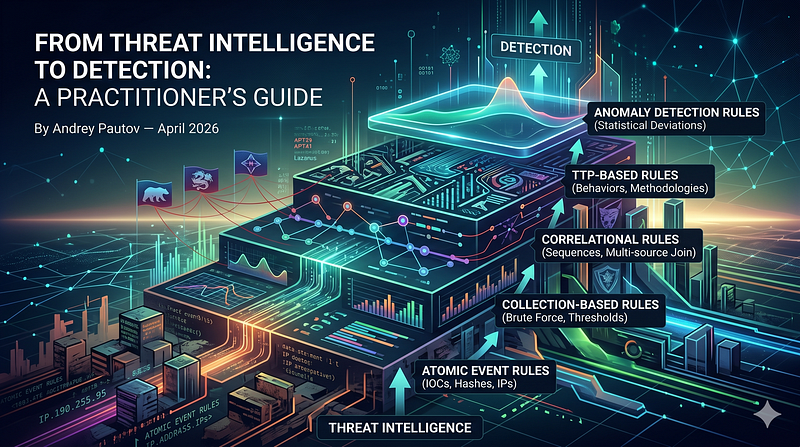
Israel Threat Actors CTI · explicit report mentionFrom Threat Intelligence to Detection: A Practitioner's Guide
1200km CTI repository · explicit report mentionIOC Tables — MuddyWater / Seedworm (Mango Sandstorm)
1200km CTI repository · explicit report mentionOperation DragonRx — APT41 Full Attack Simulation
1200km CTI repository · explicit report mentionOperation DragonRx: Simulating an APT41 Attack End-to-End — From Log4Shell to DFIR and Malware Analysis
1200km CTI repository · explicit report mentionATT CK as a Working Tool Theory and Hands On Practical Usage
1200km Medium · authored report mentionCTI Research MuddyWater Seedworm Mango Sandstorm
1200km Medium · authored report mentionCTI Research Sandworm APT44
1200km Medium · authored report mentionFrom Threat Intelligence to Detection A Practitioner s Guide
1200km Medium · authored report mention
Cyber Knowledge context
Use these routes to move from the ATT&CK behavior into explanation, implementation, evidence handling, validation, and defensive operations. Relevance is generated from explicit identifiers/names and governed topic mappings; it is not attribution evidence.
Module 6 — The Threat Actor Landscape
Cyber Threat Intelligence (CTI) · Tactic learning route · 24/100Disassembly, decompilation, and code-led analysis
Malware Analysis & Reverse Engineering · Tactic learning route · 24/100Module 5 — Threat hunting
Blue Team & Defensive Security · Tactic learning route · 24/100
MITRE mitigations
Employ network appliances and endpoint software to filter ingress, egress, and lateral network traffic. This includes protocol-based filtering, enforcing firewall rules, and blocking or restricting traffic based on predefined conditions to limit adversary movement and data exfiltration. This mitigation can be implemented through the following measures: Ingress Traffic Filtering: - Use Case: Configure network firewalls to allow traffic only from authorized IP addresses to public-facing servers. - Implementation: Limit SSH (port 22) and RDP (port 3389) traffic to specific IP ranges. Egress Traffic Filtering: - Use Case: Use firewalls or endpoint security software to block unauthorized outbound traffic to prevent data exfiltration and command-and-control (C2) communications. - Implementation: Block outbound traffic to known malicious IPs or regions where communication is unexpected. Protoc…
MITRE mitigation sourceMITRE detection strategies and analytics
- AN0075 · Analytic 0075 — Detects unexpected or high-volume HTTP/S/WebSocket communication from suspicious processes (e.g., PowerShell, rundll32) using uncommon user agents or mimicking browser traffic to unusual domains or IPs.
- AN0076 · Analytic 0076 — Detects curl, wget, Python requests, or custom HTTP clients communicating over non-standard ports, with repetitive or beacon-like patterns or POST-heavy behavior to rare domains.
- AN0077 · Analytic 0077 — Detects applications such as Automator, AppleScript, or LaunchDaemons invoking HTTP/S traffic to non-standard domains or using suspicious headers (e.g., Base64 in URIs or cookie fields).
- AN0078 · Analytic 0078 — Detects HTTP or HTTPS communication initiated by shell-based scripts or management daemons, especially those reaching public IPs over ports 80/443 using embedded curl or wget.
- AN0079 · Analytic 0079 — Detects Web protocol misuse such as encoded HTTP headers, WebSocket upgrade requests with abnormal payloads, or TLS handshake anomalies suggesting embedded C2 channels.
Continue the investigation
Attack tools, simulations and detection rules
Follow explicit source relationships into the reference modules. Linked procedures and detectors are not claims of live validation or actor attribution.
- T1071.001 Web Protocols simulation — Exact active technique ID
- T1071.001 detection rules — Exact active technique ID; not actor-specific detector coverage