Exfiltration Over Unencrypted Non-C2 Protocol
Adversaries may steal data by exfiltrating it over an un-encrypted network protocol other than that of the existing command and control channel. The data may also be sent to an alternate network location from the main command and control server. Adversaries may opt to obfuscate this data, without the use of encryption, within network protocols that are natively unencrypted (such as HTTP, FTP, or DNS). This may include custom or publicly available encoding/compression algorithms (such as base64) as well as embedding data within protocol headers and fields.
Open detection, hunting, mitigation, and evidence workspace
Detection logic
Analyze network data for uncommon data flows (e.g., a client sending significantly more data than it receives from a server). Processes utilizing the network that do not normally have network communication or have never been seen before are suspicious. Analyze packet contents to detect communications that do not follow the expected protocol behavior for the port that is being used. For network infrastructure devices, collect AAA logging to monitor for `copy` commands being run to exfiltrate configuration files to non-standard destinations over unencrypted protocols such as TFTP.
Observed actors
Correlated CTI and IR reports
1200km CTI repository · explicit report mentionAttack Playbook — Operation DragonRx
1200km CTI repository · explicit report mentionOperation DragonRx: Simulating an APT41 Attack End-to-End — From Log4Shell to DFIR and Malware Analysis
1200km CTI repository · explicit report mentionAPT41 Targeting Pharmaceutical Sector Log4Shell to Domain Compromise
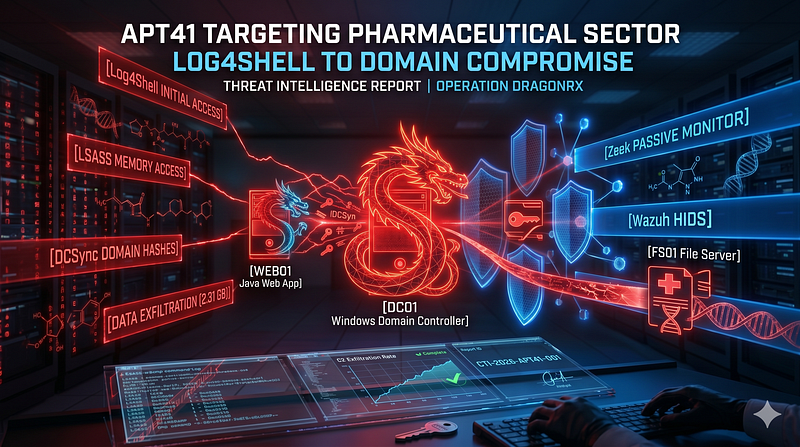
1200km Medium · authored report mentionAttack Playbook Operation DragonRx
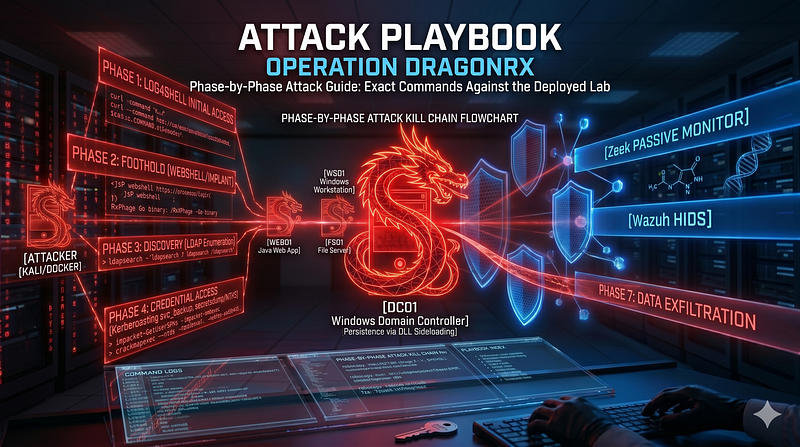
1200km Medium · authored report mention