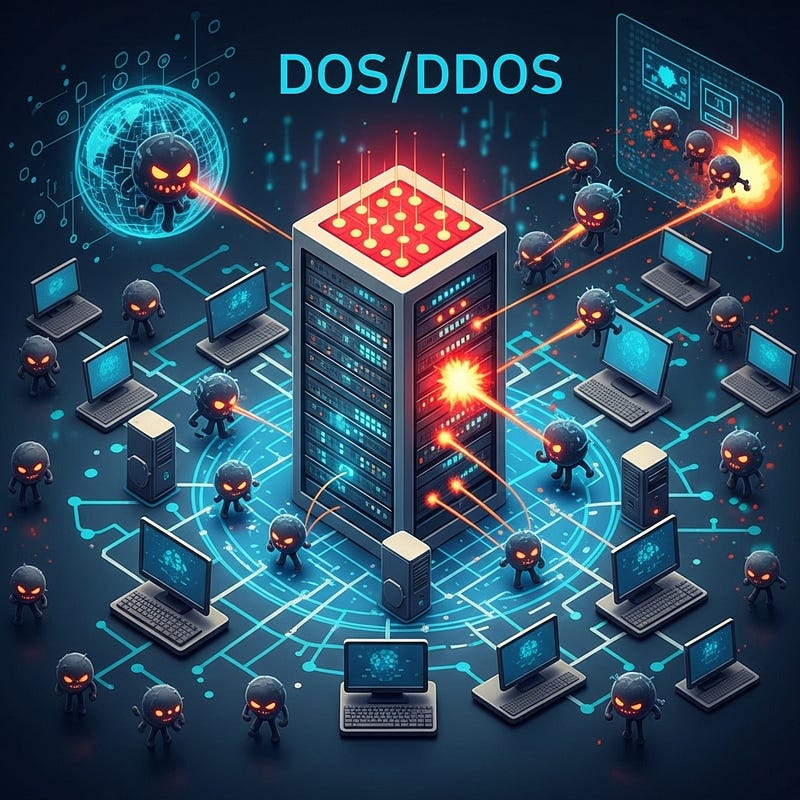
Employ network appliances and endpoint software to filter ingress, egress, and lateral network traffic. This includes protocol-based filtering, enforcing firewall rules, and blocking or restricting traffic based on predefined conditions to limit adversary movement and data exfiltration. This mitigation can be implemented through the following measures: Ingress Traffic Filtering: - Use Case: Configure network firewalls to allow traffic only from authorized IP addresses to public-facing servers. - Implementation: Limit SSH (port 22) and RDP (port 3389) traffic to specific IP ranges. Egress Traffic Filtering: - Use Case: Use firewalls or endpoint security software to block unauthorized outbound traffic to prevent data exfiltration and command-and-control (C2) communications. - Implementation: Block outbound traffic to known malicious IPs or regions where communication is unexpected. Protoc…
MITRE mitigation sourceAdversaryGraph public intelligence page
This page is part of Threat Matrix, the public browser workspace for the main AdversaryGraph platform. Use it for ATT&CK pivots, actor and technique context, similarity leads, detection coverage review, and analyst-ready investigation paths.
Validation disclaimer: TTP overlap, actor similarity, generated summaries, and coverage findings are investigation leads, not attribution proof or operational validation without analyst review.
Main AdversaryGraph project Documentation Malware Analysis GitHub
Application or System Exploitation
Adversaries may exploit software vulnerabilities that can cause an application or system to crash and deny availability to users. (Citation: Sucuri BIND9 August 2015) Some systems may automatically restart critical applications and services when crashes occur, but they can likely be re-exploited to cause a persistent denial of service (DoS) condition. Adversaries may exploit known or zero-day vulnerabilities to crash applications and/or systems, which may also lead to dependent applications and/or systems to be in a DoS condition. Crashed or restarted applications or systems may also have other effects such as [Data Destruction](https://attack.mitre.org/techniques/T1485), [Firmware Corruption](https://attack.mitre.org/techniques/T1495), [Service Stop](https://attack.mitre.org/techniques/T1489) etc. which may further cause a DoS condition and deny availability to critical information, applications and/or systems.
Open detection, hunting, mitigation, and evidence workspace
Detection logic
Attacks targeting web applications may generate logs in the web server, application server, and/or database server that can be used to identify the type of attack. Externally monitor the availability of services that may be targeted by an Endpoint DoS.
Observed actors
No current Enterprise group relationship is published in this bundle.
Correlated CTI and IR reports
Cyber Knowledge context
Use these routes to move from the ATT&CK behavior into explanation, implementation, evidence handling, validation, and defensive operations. Relevance is generated from explicit identifiers/names and governed topic mappings; it is not attribution evidence.
Vulnerability Research & Exploit Development · Governed topic match · 54/100AI security foundations and threat landscape
AI Security · Governed topic match · 51/100Architecture, assets, trust boundaries, and AI threat modeling
AI Security · Governed topic match · 51/100Identity, authorization, tenancy, and human approval
AI Security · Governed topic match · 51/100Frameworks, profiles, baselines, and crosswalk discipline
Governance, Risk & Compliance (GRC) · Governed topic match · 42/100Policy architecture, standards, procedures, and exceptions
Governance, Risk & Compliance (GRC) · Governed topic match · 42/100Privacy engineering and data governance
Governance, Risk & Compliance (GRC) · Governed topic match · 42/100Linux and macOS endpoint forensics
Digital Forensics & Incident Response (DFIR) · Tactic learning route · 24/100Module 6 — Alert triage, investigation, and escalation
Blue Team & Defensive Security · Tactic learning route · 24/100
MITRE mitigations
MITRE detection strategies and analytics
- AN0850 · Analytic 0850 — Exploitation of system or application vulnerability (e.g., CVE-based exploit) followed by service crash, restart, or repeated failure within a short time frame, impacting application/system availability.
- AN0851 · Analytic 0851 — User or remote input triggers application crash or segmentation fault (e.g., SIGSEGV) with service recovery attempts, observed via audit logs and systemd journaling.
- AN0852 · Analytic 0852 — Application crash or repeated restart cycle triggered by malformed input or exploit file, observed via unified logs and process crash monitoring.
- AN0853 · Analytic 0853 — Cloud workload exploitation leads to repeated container, service, or VM termination/restart, typically associated with CVE-based crash triggers or fuzzed payloads.
Continue the investigation
Attack tools, simulations and detection rules
Follow explicit source relationships into the reference modules. Linked procedures and detectors are not claims of live validation or actor attribution.
- T1499.004 Application or System Exploitation simulation — Exact active technique ID
- T1499.004 detection rules — Exact active technique ID; not actor-specific detector coverage