Employ network appliances and endpoint software to filter ingress, egress, and lateral network traffic. This includes protocol-based filtering, enforcing firewall rules, and blocking or restricting traffic based on predefined conditions to limit adversary movement and data exfiltration. This mitigation can be implemented through the following measures: Ingress Traffic Filtering: - Use Case: Configure network firewalls to allow traffic only from authorized IP addresses to public-facing servers. - Implementation: Limit SSH (port 22) and RDP (port 3389) traffic to specific IP ranges. Egress Traffic Filtering: - Use Case: Use firewalls or endpoint security software to block unauthorized outbound traffic to prevent data exfiltration and command-and-control (C2) communications. - Implementation: Block outbound traffic to known malicious IPs or regions where communication is unexpected. Protoc…
MITRE mitigation sourceAdversaryGraph public intelligence page
This page is part of Threat Matrix, the public browser workspace for the main AdversaryGraph platform. Use it for ATT&CK pivots, actor and technique context, similarity leads, detection coverage review, and analyst-ready investigation paths.
Validation disclaimer: TTP overlap, actor similarity, generated summaries, and coverage findings are investigation leads, not attribution proof or operational validation without analyst review.
Main AdversaryGraph project Documentation Malware Analysis GitHub
OS Exhaustion Flood
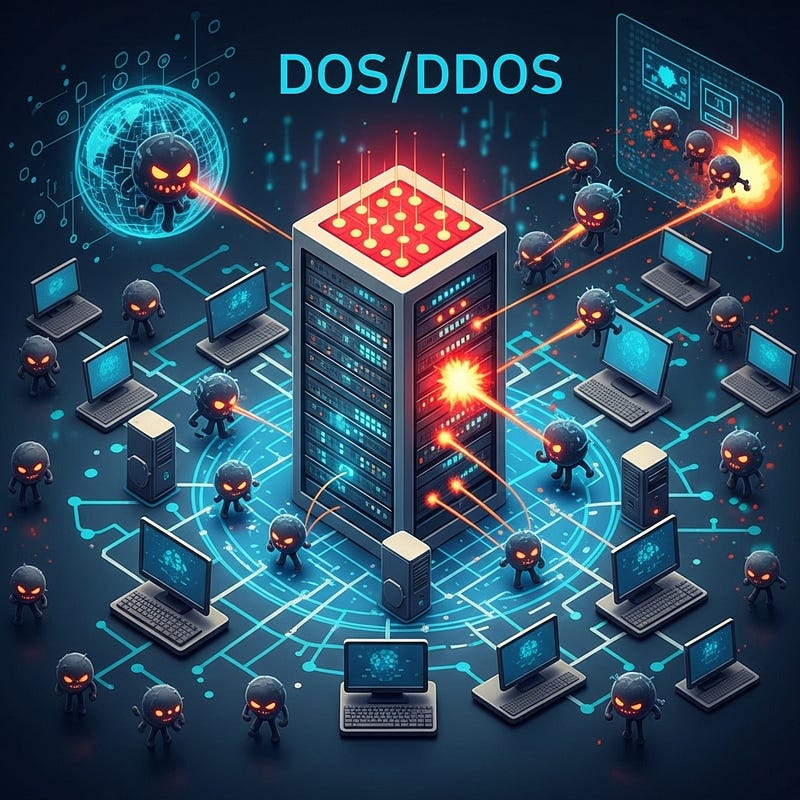
Adversaries may launch a denial of service (DoS) attack targeting an endpoint's operating system (OS). A system's OS is responsible for managing the finite resources as well as preventing the entire system from being overwhelmed by excessive demands on its capacity. These attacks do not need to exhaust the actual resources on a system; the attacks may simply exhaust the limits and available resources that an OS self-imposes. Different ways to achieve this exist, including TCP state-exhaustion attacks such as SYN floods and ACK floods.(Citation: Arbor AnnualDoSreport Jan 2018) With SYN floods, excessive amounts of SYN packets are sent, but the 3-way TCP handshake is never completed. Because each OS has a maximum number of concurrent TCP connections that it will allow, this can quickly exhaust the ability of the system to receive new requests for TCP connections, thus preventing access to any TCP service provided by the server.(Citation: Cloudflare SynFlood) ACK floods leverage the stateful nature of the TCP protocol. A flood of ACK packets are sent to the target. This forces the OS to search its state table for a related TCP connection that has already been established. Because the ACK packets are for connections that do not exist, the OS will have to search the entire state table to confirm that no match exists. When it is necessary to do this for a large flood of packets, the computational requirements can cause the server to become sluggish and/or unresponsive, due to the work it must do to eliminate the rogue ACK packets. This greatly reduces the resources available for…
Open detection, hunting, mitigation, and evidence workspace
Detection logic
Detection of Endpoint DoS can sometimes be achieved before the effect is sufficient to cause significant impact to the availability of the service, but such response time typically requires very aggressive monitoring and responsiveness. Typical network throughput monitoring tools such as netflow, SNMP, and custom scripts can be used to detect sudden increases in circuit utilization. Real-time, automated, and qualitative study of the network traffic can identify a sudden surge in one type of protocol can be used to detect an attack as it starts.
Observed actors
No current Enterprise group relationship is published in this bundle.
Correlated CTI and IR reports
Cyber Knowledge context
Use these routes to move from the ATT&CK behavior into explanation, implementation, evidence handling, validation, and defensive operations. Relevance is generated from explicit identifiers/names and governed topic mappings; it is not attribution evidence.
Digital Forensics & Incident Response (DFIR) · Tactic learning route · 24/100Policy architecture, standards, procedures, and exceptions
Governance, Risk & Compliance (GRC) · Tactic learning route · 24/100Module 6 — Alert triage, investigation, and escalation
Blue Team & Defensive Security · Tactic learning route · 24/100
MITRE mitigations
MITRE detection strategies and analytics
- AN1012 · Analytic 1012 — Burst of incomplete TCP handshakes (e.g., SYN floods) or uncorrelated ACK packets targeting the state table resulting in OS resource exhaustion.
- AN1013 · Analytic 1013 — Flood of spoofed SYN or ACK packets causing exhaustion of OS TCP state table, potentially via user-space utilities or kernel-level DoS agents.
- AN1014 · Analytic 1014 — Adversary tool/script issuing mass SYN/ACK floods that degrade OS responsiveness and interrupt service response on macOS endpoints.
Continue the investigation
Attack tools, simulations and detection rules
Follow explicit source relationships into the reference modules. Linked procedures and detectors are not claims of live validation or actor attribution.
- T1499.001 OS Exhaustion Flood simulation — Exact active technique ID
- T1499.001 detection rules — Exact active technique ID; not actor-specific detector coverage