Employ network appliances and endpoint software to filter ingress, egress, and lateral network traffic. This includes protocol-based filtering, enforcing firewall rules, and blocking or restricting traffic based on predefined conditions to limit adversary movement and data exfiltration. This mitigation can be implemented through the following measures: Ingress Traffic Filtering: - Use Case: Configure network firewalls to allow traffic only from authorized IP addresses to public-facing servers. - Implementation: Limit SSH (port 22) and RDP (port 3389) traffic to specific IP ranges. Egress Traffic Filtering: - Use Case: Use firewalls or endpoint security software to block unauthorized outbound traffic to prevent data exfiltration and command-and-control (C2) communications. - Implementation: Block outbound traffic to known malicious IPs or regions where communication is unexpected. Protoc…
MITRE mitigation sourceAdversaryGraph public intelligence page
This page is part of Threat Matrix, the public browser workspace for the main AdversaryGraph platform. Use it for ATT&CK pivots, actor and technique context, similarity leads, detection coverage review, and analyst-ready investigation paths.
Validation disclaimer: TTP overlap, actor similarity, generated summaries, and coverage findings are investigation leads, not attribution proof or operational validation without analyst review.
Main AdversaryGraph project Documentation Malware Analysis GitHub
Reflection Amplification
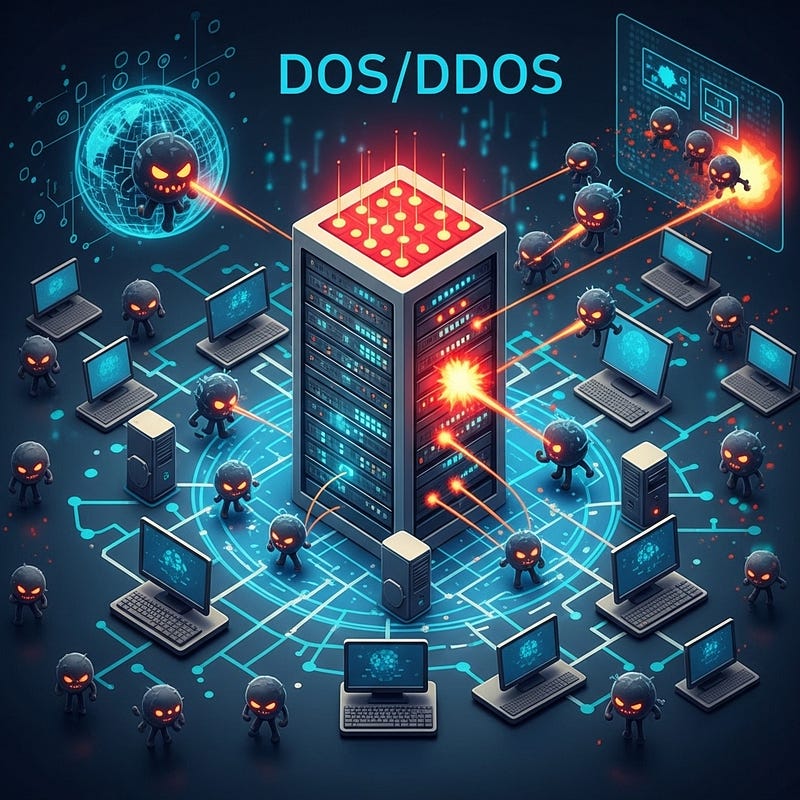
Adversaries may attempt to cause a denial of service (DoS) by reflecting a high-volume of network traffic to a target. This type of Network DoS takes advantage of a third-party server intermediary that hosts and will respond to a given spoofed source IP address. This third-party server is commonly termed a reflector. An adversary accomplishes a reflection attack by sending packets to reflectors with the spoofed address of the victim. Similar to Direct Network Floods, more than one system may be used to conduct the attack, or a botnet may be used. Likewise, one or more reflectors may be used to focus traffic on the target. This Network DoS attack may also reduce the availability and functionality of the targeted system(s) and network. Reflection attacks often take advantage of protocols with larger responses than requests in order to amplify their traffic, commonly known as a Reflection Amplification attack. Adversaries may be able to generate an increase in volume of attack traffic that is several orders of magnitude greater than the requests sent to the amplifiers. The extent of this increase will depending upon many variables, such as the protocol in question, the technique used, and the amplifying servers that actually produce the amplification in attack volume. Two prominent protocols that have enabled Reflection Amplification Floods are DNS and NTP, though the use of several others in the wild have been documented. In particular, the memcache protocol showed itself to be a powerful protocol, with amplification sizes up to 51,200 times the requesting packet.
Open detection, hunting, mitigation, and evidence workspace
Detection logic
Detection of reflection amplification can sometimes be achieved before the traffic volume is sufficient to cause impact to the availability of the service, but such response time typically requires very aggressive monitoring and responsiveness or services provided by an upstream network service provider. Typical network throughput monitoring tools such as netflow, SNMP, and custom scripts can be used to detect sudden increases in network or service utilization. Real-time, automated, and qualitative study of the network traffic can identify a sudden surge in one type of protocol can be used to detect a reflection amplification DoS event as it starts. Often, the lead time may be small and the indicator of an event availability of the network or service drops. The analysis tools mentioned can then be used to determine the type of DoS causing the outage and help with remediation.
Observed actors
Correlated CTI and IR reports
Cyber Knowledge context
Use these routes to move from the ATT&CK behavior into explanation, implementation, evidence handling, validation, and defensive operations. Relevance is generated from explicit identifiers/names and governed topic mappings; it is not attribution evidence.
Digital Forensics & Incident Response (DFIR) · Tactic learning route · 24/100Policy architecture, standards, procedures, and exceptions
Governance, Risk & Compliance (GRC) · Tactic learning route · 24/100Module 6 — Alert triage, investigation, and escalation
Blue Team & Defensive Security · Tactic learning route · 24/100
MITRE mitigations
MITRE detection strategies and analytics
- AN1140 · Analytic 1140 — Outbound spoofed traffic to known amplification protocols (e.g., DNS, NTP, Memcached) combined with abnormal network traffic volume targeting remote reflectors, resulting in disproportionate traffic returned to a victim
- AN1141 · Analytic 1141 — Spoofed outbound packets sent to amplification services from command-line tools or scripts, combined with abnormal outbound packet volume on known reflector ports
- AN1142 · Analytic 1142 — Command-line initiated UDP traffic bursts to external reflection amplification ports using built-in scripting or binaries with network anomalies
- AN1143 · Analytic 1143 — Cloud-hosted VM or container generates spoofed UDP requests to third-party services on known amplifier ports, with high outbound-to-inbound traffic ratios in VPC Flow Logs