Employ network appliances and endpoint software to filter ingress, egress, and lateral network traffic. This includes protocol-based filtering, enforcing firewall rules, and blocking or restricting traffic based on predefined conditions to limit adversary movement and data exfiltration. This mitigation can be implemented through the following measures: Ingress Traffic Filtering: - Use Case: Configure network firewalls to allow traffic only from authorized IP addresses to public-facing servers. - Implementation: Limit SSH (port 22) and RDP (port 3389) traffic to specific IP ranges. Egress Traffic Filtering: - Use Case: Use firewalls or endpoint security software to block unauthorized outbound traffic to prevent data exfiltration and command-and-control (C2) communications. - Implementation: Block outbound traffic to known malicious IPs or regions where communication is unexpected. Protoc…
MITRE mitigation sourceAdversaryGraph public intelligence page
This page is part of Threat Matrix, the public browser workspace for the main AdversaryGraph platform. Use it for ATT&CK pivots, actor and technique context, similarity leads, detection coverage review, and analyst-ready investigation paths.
Validation disclaimer: TTP overlap, actor similarity, generated summaries, and coverage findings are investigation leads, not attribution proof or operational validation without analyst review.
Main AdversaryGraph project Documentation Malware Analysis GitHub
Direct Network Flood
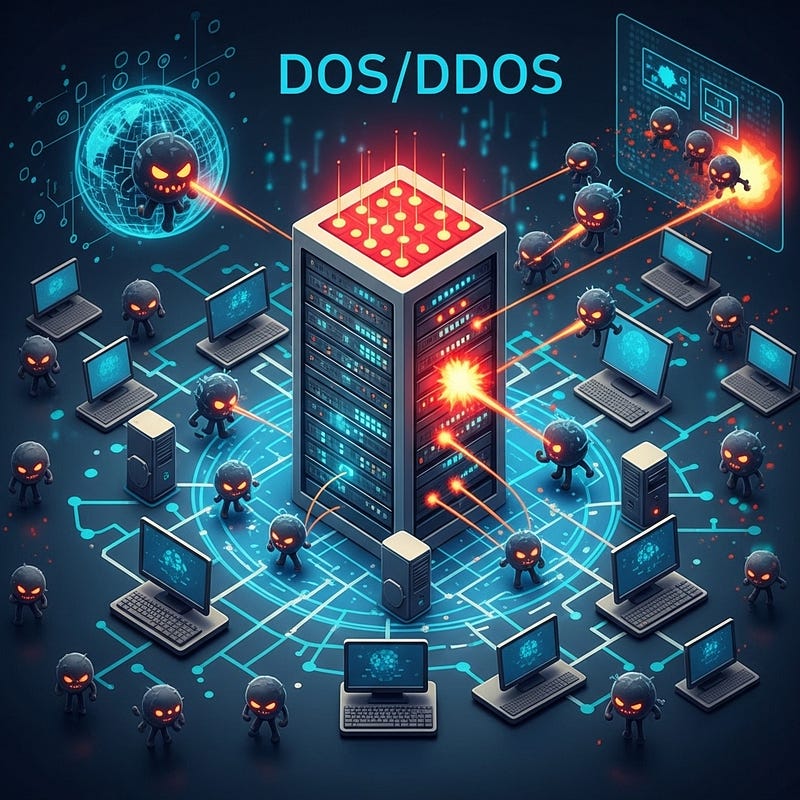
Adversaries may attempt to cause a denial of service (DoS) by directly sending a high-volume of network traffic to a target. This DoS attack may also reduce the availability and functionality of the targeted system(s) and network. Direct Network Floods are when one or more systems are used to send a high-volume of network packets towards the targeted service's network. Almost any network protocol may be used for flooding. Stateless protocols such as UDP or ICMP are commonly used but stateful protocols such as TCP can be used as well. Botnets are commonly used to conduct network flooding attacks against networks and services. Large botnets can generate a significant amount of traffic from systems spread across the global Internet. Adversaries may have the resources to build out and control their own botnet infrastructure or may rent time on an existing botnet to conduct an attack. In some of the worst cases for distributed DoS (DDoS), so many systems are used to generate the flood that each one only needs to send out a small amount of traffic to produce enough volume to saturate the target network. In such circumstances, distinguishing DDoS traffic from legitimate clients becomes exceedingly difficult. Botnets have been used in some of the most high-profile DDoS flooding attacks, such as the 2012 series of incidents that targeted major US banks.
Open detection, hunting, mitigation, and evidence workspace
Detection logic
Detection of a network flood can sometimes be achieved before the traffic volume is sufficient to cause impact to the availability of the service, but such response time typically requires very aggressive monitoring and responsiveness or services provided by an upstream network service provider. Typical network throughput monitoring tools such as netflow, SNMP, and custom scripts can be used to detect sudden increases in network or service utilization. Real-time, automated, and qualitative study of the network traffic can identify a sudden surge in one type of protocol can be used to detect a network flood event as it starts. Often, the lead time may be small and the indicator of an event availability of the network or service drops. The analysis tools mentioned can then be used to determine the type of DoS causing the outage and help with remediation.
Observed actors
Correlated CTI and IR reports
Israel Threat Actors CTI · explicit report mentionComprehensive Guide to DoS and DDoS Attacks with MITRE ATT CK
1200km Medium · authored report mentionCyberattacks on 4G LTE Telecom Networks Threat Mapping and Defense

1200km Medium · authored report mention
Cyber Knowledge context
Use these routes to move from the ATT&CK behavior into explanation, implementation, evidence handling, validation, and defensive operations. Relevance is generated from explicit identifiers/names and governed topic mappings; it is not attribution evidence.
Digital Forensics & Incident Response (DFIR) · Tactic learning route · 24/100Policy architecture, standards, procedures, and exceptions
Governance, Risk & Compliance (GRC) · Tactic learning route · 24/100Module 6 — Alert triage, investigation, and escalation
Blue Team & Defensive Security · Tactic learning route · 24/100
MITRE mitigations
MITRE detection strategies and analytics
- AN0969 · Analytic 0969 — High-volume packet generation by local processes (e.g., PowerShell, cmd, curl.exe) or network service processes resulting in excessive outbound traffic over short time window, correlated with abnormal resource usage or degraded host responsiveness.
- AN0970 · Analytic 0970 — Kernel or userland processes generating high-rate network traffic (ICMP, UDP, TCP SYN) beyond expected interface throughput or user behavior norms.
- AN0971 · Analytic 0971 — Excessive outbound traffic via `ping`, `curl`, or custom scripts indicating flooding behavior, especially with no UI context or user interaction.
- AN0972 · Analytic 0972 — VM or cloud instance generating anomalously high network egress targeting same destination IP or service, especially using stateless protocols.