- AN0396 · Analytic 0396 — Process creation involving suspicious delays (e.g., Sleep, ping -n loops, WaitForSingleObject), followed by sensitive system access or lateral movement behaviors.
- AN0397 · Analytic 0397 — Script-based execution of sleep loops or time delay commands (e.g., sleep, ping delay, while-loops) followed by file creation or network connections.
- AN0398 · Analytic 0398 — Use of `usleep`, `nanosleep`, or `NSTimer` calls in executables or binaries with no GUI interaction, especially followed by disk/network activity.
AdversaryGraph public intelligence page
This page is part of Threat Matrix, the public browser workspace for the main AdversaryGraph platform. Use it for ATT&CK pivots, actor and technique context, similarity leads, detection coverage review, and analyst-ready investigation paths.
Validation disclaimer: TTP overlap, actor similarity, generated summaries, and coverage findings are investigation leads, not attribution proof or operational validation without analyst review.
Main AdversaryGraph project Documentation Malware Analysis GitHub
Time Based Checks
Adversaries may employ various time-based methods to detect virtualization and analysis environments, particularly those that attempt to manipulate time mechanisms to simulate longer elapses of time. This may include enumerating time-based properties, such as uptime or the system clock. Adversaries may use calls like `GetTickCount` and `GetSystemTimeAsFileTime` to discover if they are operating within a virtual machine or sandbox, or may be able to identify a sandbox accelerating time by sampling and calculating the expected value for an environment's timestamp before and after execution of a sleep function.(Citation: ISACA Malware Tricks)
Open detection, hunting, mitigation, and evidence workspace
Detection logic
Time-based evasion will likely occur in the first steps of an operation but may also occur throughout as an adversary learns the environment. Data and events should not be viewed in isolation, but as part of a chain of behavior that could lead to other activities, such as lateral movement, based on the information obtained. Detecting actions related to virtualization and sandbox identification may be difficult depending on the adversary's implementation and monitoring required. Monitoring for suspicious processes being spawned that gather a variety of system information or perform other forms of Discovery, especially in a short period of time, may aid in detection.
Observed actors
No current Enterprise group relationship is published in this bundle.
Correlated CTI and IR reports
1. Executive Summary
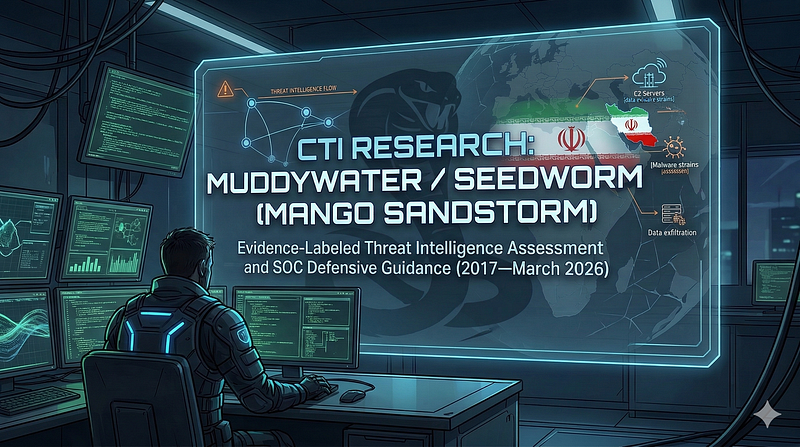
Israel Threat Actors CTI · explicit report mentionCTI Research: MuddyWater / Seedworm (Mango Sandstorm)
1200km CTI repository · explicit report mentionCTI Research: MuddyWater / Seedworm (Mango Sandstorm)
1200km CTI repository · explicit report mentionCTI Research MuddyWater Seedworm Mango Sandstorm
1200km Medium · authored report mention
Cyber Knowledge context
Use these routes to move from the ATT&CK behavior into explanation, implementation, evidence handling, validation, and defensive operations. Relevance is generated from explicit identifiers/names and governed topic mappings; it is not attribution evidence.
Incident declaration, triage, scope, and hypotheses
Digital Forensics & Incident Response (DFIR) · Governed topic match · 42/100Controlled dynamic behavior and differential observation
Malware Analysis & Reverse Engineering · Tactic learning route · 24/100Module 4 — Detection engineering and detection as code
Blue Team & Defensive Security · Tactic learning route · 24/100Disk, file-system, and persistence forensics
Digital Forensics & Incident Response (DFIR) · Tactic learning route · 24/100Internet exposure, service indexes, and infrastructure search
OSINT & Reconnaissance · Tactic learning route · 24/100Module 5 — Cloud, containers, and Kubernetes
Red Team & Offensive Security · Tactic learning route · 24/100Data classification, storage, cryptography, keys, backup, and deletion
Cloud Security · Tactic learning route · 24/100
MITRE mitigations
No ATT&CK mitigation relationship is published for this technique. Apply risk-based controls and verify scope.
MITRE detection strategies and analytics
Continue the investigation
Attack tools, simulations and detection rules
Follow explicit source relationships into the reference modules. Linked procedures and detectors are not claims of live validation or actor attribution.
- T1497.003 Time Based Checks simulation — Exact active technique ID
- T1497.003 detection rules — Exact active technique ID; not actor-specific detector coverage