Standard Encoding
Adversaries may encode data with a standard data encoding system to make the content of command and control traffic more difficult to detect. Command and control (C2) information can be encoded using a standard data encoding system that adheres to existing protocol specifications. Common data encoding schemes include ASCII, Unicode, hexadecimal, Base64, and MIME. Some data encoding systems may also result in data compression, such as gzip.
Open detection, hunting, mitigation, and evidence workspace
Detection logic
Analyze network data for uncommon data flows (e.g., a client sending significantly more data than it receives from a server). Processes utilizing the network that do not normally have network communication or have never been seen before are suspicious. Analyze packet contents to detect communications that do not follow the expected protocol behavior for the port that is being used.
Observed actors
Correlated CTI and IR reports
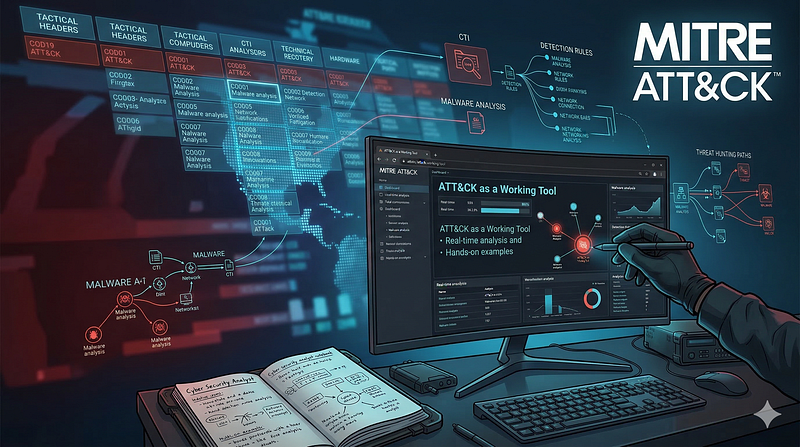
1200km CTI repository · explicit report mentionATT&CK as a Working Tool: Theory and Hands-On Practical Usage
1200km CTI repository · explicit report mentionOilRig (APT34 / Helix Kitten / Earth Simnavaz etc)
Israel Threat Actors CTI · explicit report mentionOperation DragonRx — APT41 Full Attack Simulation
1200km CTI repository · explicit report mentionOperation DragonRx: Simulating an APT41 Attack End-to-End — From Log4Shell to DFIR and Malware Analysis
1200km CTI repository · explicit report mentionATT CK as a Working Tool Theory and Hands On Practical Usage
1200km Medium · authored report mention