Set and enforce secure password policies for accounts to reduce the likelihood of unauthorized access. Strong password policies include enforcing password complexity, requiring regular password changes, and preventing password reuse. This mitigation can be implemented through the following measures: Windows Systems: - Use Group Policy Management Console (GPMC) to configure: - Minimum password length (e.g., 12+ characters). - Password complexity requirements. - Password history (e.g., disallow last 24 passwords). - Account lockout duration and thresholds. Linux Systems: - Configure Pluggable Authentication Modules (PAM): - Use `pam_pwquality` to enforce complexity and length requirements. - Implement `pam_tally2` or `pam_faillock` for account lockouts. - Use `pwunconv` to disable password reuse. Password Managers: - Enforce usage of enterprise password managers (e.g., Bitwarden, 1Passwor…
MITRE mitigation sourceAdversaryGraph public intelligence page
This page is part of Threat Matrix, the public browser workspace for the main AdversaryGraph platform. Use it for ATT&CK pivots, actor and technique context, similarity leads, detection coverage review, and analyst-ready investigation paths.
Validation disclaimer: TTP overlap, actor similarity, generated summaries, and coverage findings are investigation leads, not attribution proof or operational validation without analyst review.
Main AdversaryGraph project Documentation Malware Analysis GitHub
Password Cracking
Adversaries may use password cracking to attempt to recover usable credentials, such as plaintext passwords, when credential material such as password hashes are obtained. [OS Credential Dumping](https://attack.mitre.org/techniques/T1003) can be used to obtain password hashes, this may only get an adversary so far when [Pass the Hash](https://attack.mitre.org/techniques/T1550/002) is not an option. Further, adversaries may leverage [Data from Configuration Repository](https://attack.mitre.org/techniques/T1602) in order to obtain hashed credentials for network devices.(Citation: US-CERT-TA18-106A) Techniques to systematically guess the passwords used to compute hashes are available, or the adversary may use a pre-computed rainbow table to crack hashes. Cracking hashes is usually done on adversary-controlled systems outside of the target network.(Citation: Wikipedia Password cracking) The resulting plaintext password resulting from a successfully cracked hash may be used to log into systems, resources, and services in which the account has access.
Open detection, hunting, mitigation, and evidence workspace
Detection logic
It is difficult to detect when hashes are cracked, since this is generally done outside the scope of the target network. Consider focusing efforts on detecting other adversary behavior used to acquire credential materials, such as OS Credential Dumping or Kerberoasting.
Observed actors
Correlated CTI and IR reports
Cyber Knowledge context
Use these routes to move from the ATT&CK behavior into explanation, implementation, evidence handling, validation, and defensive operations. Relevance is generated from explicit identifiers/names and governed topic mappings; it is not attribution evidence.
Blue Team & Defensive Security · Tactic learning route · 24/100Human, workload, pipeline, and emergency identity
Cloud Security · Tactic learning route · 24/100Disk, file-system, and persistence forensics
Digital Forensics & Incident Response (DFIR) · Tactic learning route · 24/100
MITRE mitigations
Multi-Factor Authentication (MFA) enhances security by requiring users to provide at least two forms of verification to prove their identity before granting access. These factors typically include: - *Something you know*: Passwords, PINs. - *Something you have*: Physical tokens, smartphone authenticator apps. - *Something you are*: Biometric data such as fingerprints, facial recognition, or retinal scans. Implementing MFA across all critical systems and services ensures robust protection against account takeover and unauthorized access. This mitigation can be implemented through the following measures: Identity and Access Management (IAM): - Use IAM solutions like Azure Active Directory, Okta, or AWS IAM to enforce MFA policies for all user logins, especially for privileged roles. - Enable conditional access policies to enforce MFA for risky sign-ins (e.g., unfamiliar devices, geolocati…
MITRE mitigation sourceMITRE detection strategies and analytics
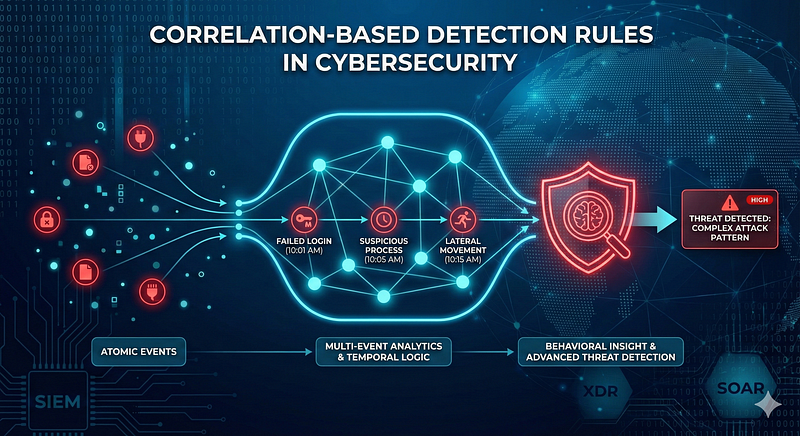
- AN0292 · Analytic 0292 — Use of hash-cracking tools (e.g., John the Ripper, Hashcat) after credential dumping, combined with high CPU usage or GPU invocation via unsigned binaries accessing password hash files
- AN0293 · Analytic 0293 — Execution of hash cracking binaries or scripts (e.g., john, hashcat) following access to shadow file or dumped hashes
- AN0294 · Analytic 0294 — Unsigned or scripting-based processes invoking password cracking binaries or accessing hashed credential artifacts post-login
- AN0295 · Analytic 0295 — Sudden valid logins from accounts that previously had credentials dumped but had not authenticated successfully in the past; correlated with timeline of suspected hash cracking
- AN0296 · Analytic 0296 — Offline cracking inferred by subsequent successful CLI or web-based authentications into routers or switches from previously dumped accounts
Continue the investigation
Attack tools, simulations and detection rules
Follow explicit source relationships into the reference modules. Linked procedures and detectors are not claims of live validation or actor attribution.
- T1110.002 Password Cracking simulation — Exact active technique ID
- T1110.002 detection rules — Exact active technique ID; not actor-specific detector coverage