Set and enforce secure password policies for accounts to reduce the likelihood of unauthorized access. Strong password policies include enforcing password complexity, requiring regular password changes, and preventing password reuse. This mitigation can be implemented through the following measures: Windows Systems: - Use Group Policy Management Console (GPMC) to configure: - Minimum password length (e.g., 12+ characters). - Password complexity requirements. - Password history (e.g., disallow last 24 passwords). - Account lockout duration and thresholds. Linux Systems: - Configure Pluggable Authentication Modules (PAM): - Use `pam_pwquality` to enforce complexity and length requirements. - Implement `pam_tally2` or `pam_faillock` for account lockouts. - Use `pwunconv` to disable password reuse. Password Managers: - Enforce usage of enterprise password managers (e.g., Bitwarden, 1Passwor…
MITRE mitigation sourceAdversaryGraph public intelligence page
This page is part of Threat Matrix, the public browser workspace for the main AdversaryGraph platform. Use it for ATT&CK pivots, actor and technique context, similarity leads, detection coverage review, and analyst-ready investigation paths.
Validation disclaimer: TTP overlap, actor similarity, generated summaries, and coverage findings are investigation leads, not attribution proof or operational validation without analyst review.
Main AdversaryGraph project Documentation Malware Analysis GitHub
Cloud Accounts
Valid accounts in cloud environments may allow adversaries to perform actions to achieve Initial Access, Persistence, Privilege Escalation, or Defense Evasion. Cloud accounts are those created and configured by an organization for use by users, remote support, services, or for administration of resources within a cloud service provider or SaaS application. Cloud Accounts can exist solely in the cloud; alternatively, they may be hybrid-joined between on-premises systems and the cloud through syncing or federation with other identity sources such as Windows Active Directory. Service or user accounts may be targeted by adversaries through Brute Force, Phishing, or various other means to gain access to the environment. Federated or synced accounts may be a pathway for the adversary to affect both on-premises systems and cloud environments - for example, by leveraging shared credentials to log onto Remote Services. High privileged cloud accounts, whether federated, synced, or cloud-only, may also allow pivoting to on-premises environments by leveraging SaaS-based Software Deployment Tools to run commands on hybrid-joined devices. An adversary may create long lasting Additional Cloud Credentials on a compromised cloud account to maintain persistence in the environment. Such credentials may also be used to bypass security controls such as multi-factor authentication. Cloud accounts may also be able to assume Temporary Elevated Cloud Access or other privileges through various means within the environment. Misconfigurations in role assignments or role assumption policies may allow an adversary to use these mechanisms to leverage permissions outside the intended scope of the account. Such over privileged accounts may be used to harvest sensitive data from online storage accounts and databases through Cloud API or other methods.
Open detection, hunting, mitigation, and evidence workspace
Detection logic
Monitor the activity of cloud accounts to detect abnormal or malicious behavior, such as accessing information outside of the normal function of the account or account usage at atypical hours.
Observed actors
Correlated CTI and IR reports
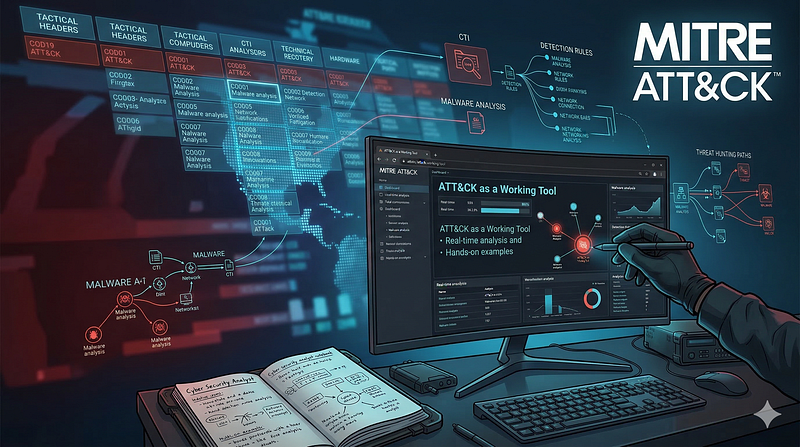
Push Security · direct source mappingATT&CK as a Working Tool: Theory and Hands-On Practical Usage
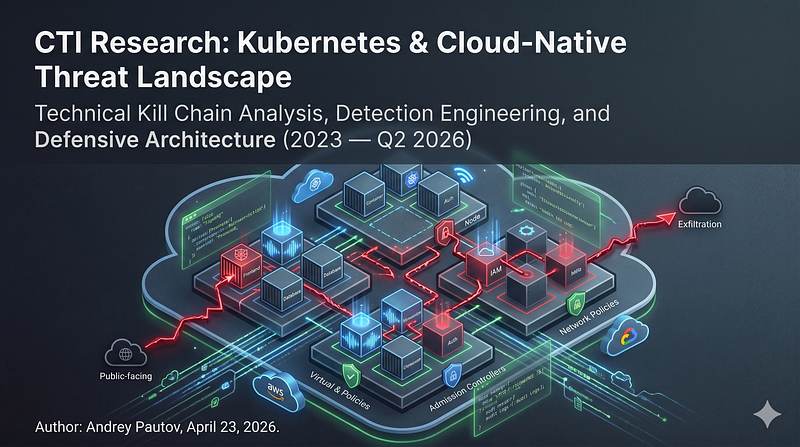
1200km CTI repository · explicit report mentionCTI Research: Kubernetes & Cloud-Native Threat Landscape
1200km CTI repository · explicit report mentionCyber Threat Intelligence Dossier: Iranian and Hamas-Aligned Operations Targeting Israeli and Allied Ecosystems (2023-2026)
Israel Threat Actors CTI · explicit report mentionDefensive Cyber Threat Intelligence Report: Israeli Critical Infrastructure and Geopolitical Escalation (2024-2026)
Israel Threat Actors CTI · explicit report mentionFrom Threat Intelligence to Detection: A Practitioner's Guide
1200km CTI repository · explicit report mentionATT CK as a Working Tool Theory and Hands On Practical Usage
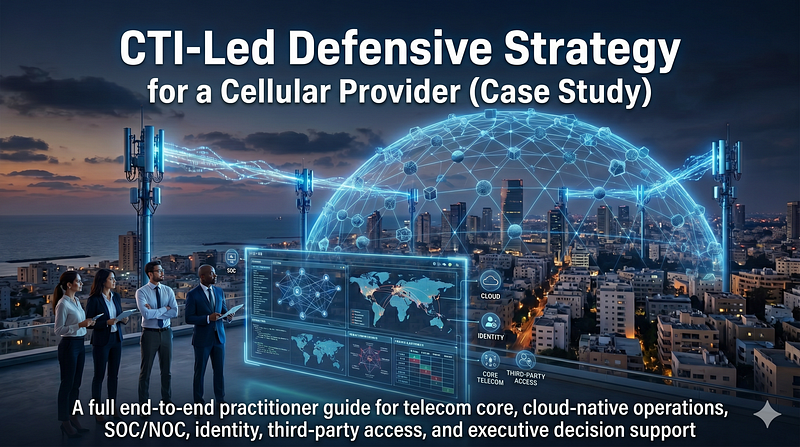
1200km Medium · authored report mentionCTI Led Defensive Strategy for a Cellular Provider Case Study
1200km Medium · authored report mentionCTI Research Kubernetes Cloud Native Threat Landscape
1200km Medium · authored report mentionCustomer Driven AI CTI Project Template Part 2B Reference Toolkit
1200km Medium · authored report mentionFrom Threat Intelligence to Detection A Practitioner s Guide
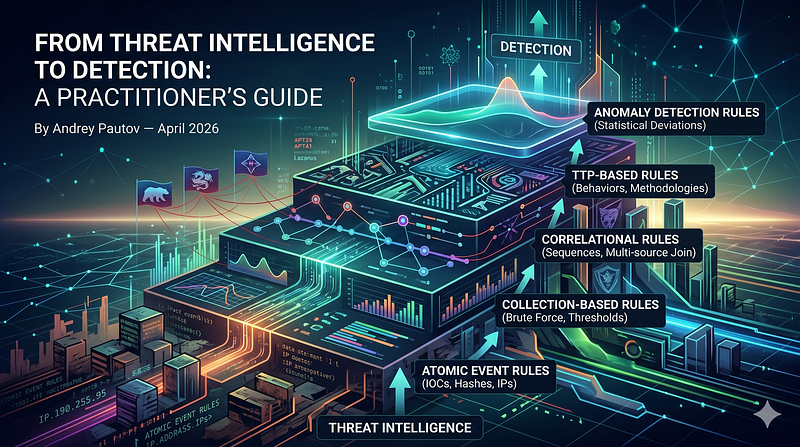
1200km Medium · authored report mention
Cyber Knowledge context
Use these routes to move from the ATT&CK behavior into explanation, implementation, evidence handling, validation, and defensive operations. Relevance is generated from explicit identifiers/names and governed topic mappings; it is not attribution evidence.
Red Team & Offensive Security · Exact technique name · 92/100Module 10 — Laboratories, tool discipline, and reporting
Red Team & Offensive Security · Exact technique name · 92/100Defensive external attack-surface discovery and continuous monitoring
OSINT & Reconnaissance · Exact technique name · 92/100Shared responsibility, governance, and service ownership
Cloud Security · Governed topic match · 78/100Organizations, landing zones, policy, inventory, and cost guardrails
Cloud Security · Governed topic match · 78/100Kubernetes control plane, RBAC, workload, network, and admission security
Cloud Security · Governed topic match · 78/100Posture management, exposure, vulnerabilities, attack paths, and validation
Cloud Security · Governed topic match · 78/100Cloud AI/ML, agents, RAG, MCP, and autonomous operations
Cloud Security · Governed topic match · 78/100Module 1 — Mission, authorization, and methodology
Red Team & Offensive Security · Governed topic match · 60/100Mobile and Android vulnerability research
Vulnerability Research & Exploit Development · Governed topic match · 57/100Logging, monitoring, detection, and security analytics
AI Security · Governed topic match · 57/100AI incident response and forensic readiness
AI Security · Governed topic match · 57/100
MITRE mitigations
Implement robust Active Directory (AD) configurations using group policies to secure user accounts, control access, and minimize the attack surface. AD configurations enable centralized control over account settings, logon policies, and permissions, reducing the risk of unauthorized access and lateral movement within the network. This mitigation can be implemented through the following measures: Account Configuration: - Implementation: Use domain accounts instead of local accounts to leverage AD’s centralized management, including group policies, auditing, and access control. - Use Case: For IT staff managing shared resources, provision domain accounts that allow IT teams to log in centrally, reducing the risk of unmanaged, rogue local accounts on individual machines. Interactive Logon Restrictions: - Implementation: Configure group policies to restrict interactive logons (e.g., direct…
MITRE mitigation sourcePrivileged Account Management focuses on implementing policies, controls, and tools to securely manage privileged accounts (e.g., SYSTEM, root, or administrative accounts). This includes restricting access, limiting the scope of permissions, monitoring privileged account usage, and ensuring accountability through logging and auditing.This mitigation can be implemented through the following measures: Account Permissions and Roles: - Implement RBAC and least privilege principles to allocate permissions securely. - Use tools like Active Directory Group Policies to enforce access restrictions. Credential Security: - Deploy password vaulting tools like CyberArk, HashiCorp Vault, or KeePass for secure storage and rotation of credentials. - Enforce password policies for complexity, uniqueness, and expiration using tools like Microsoft Group Policy Objects (GPO). Multi-Factor Authentication (MF…
MITRE mitigation sourceMulti-Factor Authentication (MFA) enhances security by requiring users to provide at least two forms of verification to prove their identity before granting access. These factors typically include: - *Something you know*: Passwords, PINs. - *Something you have*: Physical tokens, smartphone authenticator apps. - *Something you are*: Biometric data such as fingerprints, facial recognition, or retinal scans. Implementing MFA across all critical systems and services ensures robust protection against account takeover and unauthorized access. This mitigation can be implemented through the following measures: Identity and Access Management (IAM): - Use IAM solutions like Azure Active Directory, Okta, or AWS IAM to enforce MFA policies for all user logins, especially for privileged roles. - Enable conditional access policies to enforce MFA for risky sign-ins (e.g., unfamiliar devices, geolocati…
MITRE mitigation sourceAccount Use Policies help mitigate unauthorized access by configuring and enforcing rules that govern how and when accounts can be used. These policies include enforcing account lockout mechanisms, restricting login times, and setting inactivity timeouts. Proper configuration of these policies reduces the risk of brute-force attacks, credential theft, and unauthorized access by limiting the opportunities for malicious actors to exploit accounts. This mitigation can be implemented through the following measures: Account Lockout Policies: - Implementation: Configure account lockout settings so that after a defined number of failed login attempts (e.g., 3-5 attempts), the account is locked for a specific time period (e.g., 15 minutes) or requires an administrator to unlock it. - Use Case: This prevents brute-force attacks by limiting how many incorrect password attempts can be made before…
MITRE mitigation sourceUser Training involves educating employees and contractors on recognizing, reporting, and preventing cyber threats that rely on human interaction, such as phishing, social engineering, and other manipulative techniques. Comprehensive training programs create a human firewall by empowering users to be an active component of the organization's cybersecurity defenses. This mitigation can be implemented through the following measures: Create Comprehensive Training Programs: - Design training modules tailored to the organization's risk profile, covering topics such as phishing, password management, and incident reporting. - Provide role-specific training for high-risk employees, such as helpdesk staff or executives. Use Simulated Exercises: - Conduct phishing simulations to measure user susceptibility and provide targeted follow-up training. - Run social engineering drills to evaluate employ…
MITRE mitigation sourceUser Account Management involves implementing and enforcing policies for the lifecycle of user accounts, including creation, modification, and deactivation. Proper account management reduces the attack surface by limiting unauthorized access, managing account privileges, and ensuring accounts are used according to organizational policies. This mitigation can be implemented through the following measures: Enforcing the Principle of Least Privilege - Implementation: Assign users only the minimum permissions required to perform their job functions. Regularly audit accounts to ensure no excess permissions are granted. - Use Case: Reduces the risk of privilege escalation by ensuring accounts cannot perform unauthorized actions. Implementing Strong Password Policies - Implementation: Enforce password complexity requirements (e.g., length, character types). Require password expiration every 90…
MITRE mitigation sourceMITRE detection strategies and analytics
- AN1503 · Analytic 1503 — Detects anomalous authentication activity such as sign-ins from impossible geolocations or legacy protocols from high-privileged accounts.
- AN1504 · Analytic 1504 — Detects cloud account use for API calls that exceed normal scope, such as IAM changes or access to services never used before.
- AN1505 · Analytic 1505 — Detects unexpected access or usage of cloud productivity tools (e.g., downloading large numbers of files, creating external shares) by internal users.
- AN1506 · Analytic 1506 — Detects login and usage patterns deviating from typical Microsoft 365 or Google Workspace user profiles.