Disable or remove unnecessary and potentially vulnerable software, features, or services to reduce the attack surface and prevent abuse by adversaries. This involves identifying software or features that are no longer needed or that could be exploited and ensuring they are either removed or properly disabled. This mitigation can be implemented through the following measures: Remove Legacy Software: - Use Case: Disable or remove older versions of software that no longer receive updates or security patches (e.g., legacy Java, Adobe Flash). - Implementation: A company removes Flash Player from all employee systems after it has reached its end-of-life date. Disable Unused Features: - Use Case: Turn off unnecessary operating system features like SMBv1, Telnet, or RDP if they are not required. - Implementation: Disable SMBv1 in a Windows environment to mitigate vulnerabilities like EternalBlu…
MITRE mitigation sourceAdversaryGraph public intelligence page
This page is part of Threat Matrix, the public browser workspace for the main AdversaryGraph platform. Use it for ATT&CK pivots, actor and technique context, similarity leads, detection coverage review, and analyst-ready investigation paths.
Validation disclaimer: TTP overlap, actor similarity, generated summaries, and coverage findings are investigation leads, not attribution proof or operational validation without analyst review.
Main AdversaryGraph project Documentation Malware Analysis GitHub
Windows Remote Management
Adversaries may use [Valid Accounts](https://attack.mitre.org/techniques/T1078) to interact with remote systems using Windows Remote Management (WinRM). The adversary may then perform actions as the logged-on user. WinRM is the name of both a Windows service and a protocol that allows a user to interact with a remote system (e.g., run an executable, modify the Registry, modify services).(Citation: Microsoft WinRM) It may be called with the `winrm` command or by any number of programs such as PowerShell.(Citation: Jacobsen 2014) WinRM can be used as a method of remotely interacting with [Windows Management Instrumentation](https://attack.mitre.org/techniques/T1047).(Citation: MSDN WMI)
Open detection, hunting, mitigation, and evidence workspace
Detection logic
Monitor use of WinRM within an environment by tracking service execution. If it is not normally used or is disabled, then this may be an indicator of suspicious behavior. Monitor processes created and actions taken by the WinRM process or a WinRM invoked script to correlate it with other related events. Also monitor for remote WMI connection attempts (typically over port 5985 when using HTTP and 5986 for HTTPS).
Observed actors
Correlated CTI and IR reports
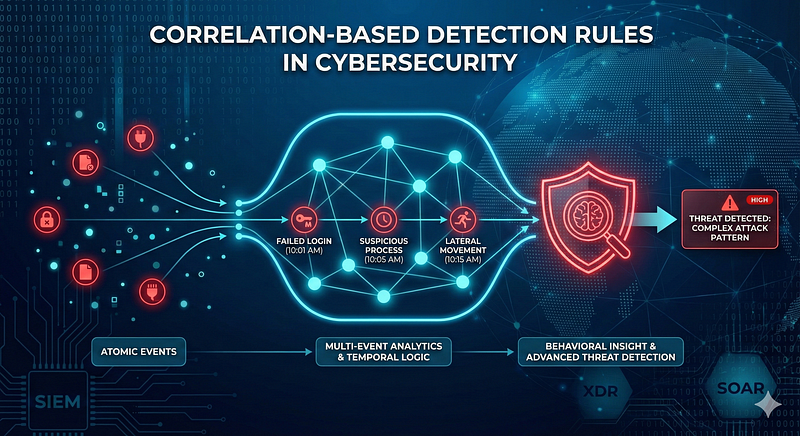
1200km CTI repository · explicit report mentionCorrelation Based Detection Rules in Cybersecurity From Atomic Events to Behavioral Insight
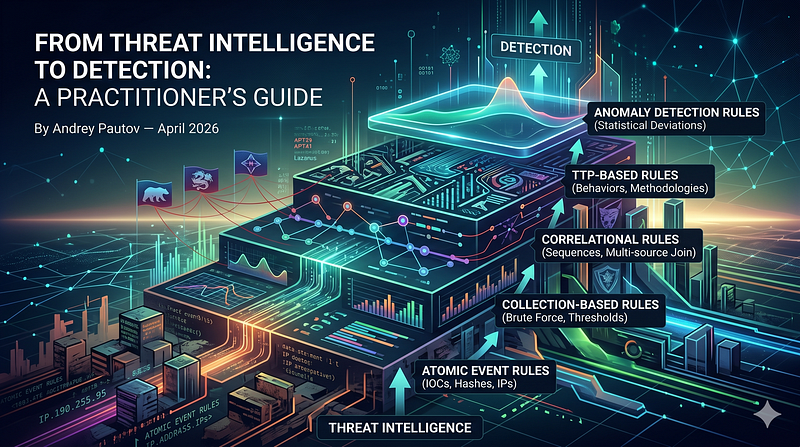
1200km Medium · authored report mentionFrom Threat Intelligence to Detection A Practitioner s Guide
1200km Medium · authored report mention
Cyber Knowledge context
Use these routes to move from the ATT&CK behavior into explanation, implementation, evidence handling, validation, and defensive operations. Relevance is generated from explicit identifiers/names and governed topic mappings; it is not attribution evidence.
Red Team & Offensive Security · Tactic learning route · 24/100Module 5 — Threat hunting
Blue Team & Defensive Security · Tactic learning route · 24/100Data classification, storage, cryptography, keys, backup, and deletion
Cloud Security · Tactic learning route · 24/100
MITRE mitigations
Privileged Account Management focuses on implementing policies, controls, and tools to securely manage privileged accounts (e.g., SYSTEM, root, or administrative accounts). This includes restricting access, limiting the scope of permissions, monitoring privileged account usage, and ensuring accountability through logging and auditing.This mitigation can be implemented through the following measures: Account Permissions and Roles: - Implement RBAC and least privilege principles to allocate permissions securely. - Use tools like Active Directory Group Policies to enforce access restrictions. Credential Security: - Deploy password vaulting tools like CyberArk, HashiCorp Vault, or KeePass for secure storage and rotation of credentials. - Enforce password policies for complexity, uniqueness, and expiration using tools like Microsoft Group Policy Objects (GPO). Multi-Factor Authentication (MF…
MITRE mitigation sourceNetwork segmentation involves dividing a network into smaller, isolated segments to control and limit the flow of traffic between devices, systems, and applications. By segmenting networks, organizations can reduce the attack surface, restrict lateral movement by adversaries, and protect critical assets from compromise. Effective network segmentation leverages a combination of physical boundaries, logical separation through VLANs, and access control policies enforced by network appliances like firewalls, routers, and cloud-based configurations. This mitigation can be implemented through the following measures: Segment Critical Systems: - Identify and group systems based on their function, sensitivity, and risk. Examples include payment systems, HR databases, production systems, and internet-facing servers. - Use VLANs, firewalls, or routers to enforce logical separation. Implement DMZ f…
MITRE mitigation sourceMITRE detection strategies and analytics
- AN1313 · Analytic 1313 — Adversaries using WinRM to remotely execute commands, launch child processes, or access WMI. The detection chain includes service use, network activity, remote session logon, and process creation within a short temporal window.
Continue the investigation
Attack tools, simulations and detection rules
Follow explicit source relationships into the reference modules. Linked procedures and detectors are not claims of live validation or actor attribution.
- T1021.006 Windows Remote Management simulation — Exact active technique ID
- T1021.006 detection rules — Exact active technique ID; not actor-specific detector coverage