Set and enforce secure password policies for accounts to reduce the likelihood of unauthorized access. Strong password policies include enforcing password complexity, requiring regular password changes, and preventing password reuse. This mitigation can be implemented through the following measures: Windows Systems: - Use Group Policy Management Console (GPMC) to configure: - Minimum password length (e.g., 12+ characters). - Password complexity requirements. - Password history (e.g., disallow last 24 passwords). - Account lockout duration and thresholds. Linux Systems: - Configure Pluggable Authentication Modules (PAM): - Use `pam_pwquality` to enforce complexity and length requirements. - Implement `pam_tally2` or `pam_faillock` for account lockouts. - Use `pwunconv` to disable password reuse. Password Managers: - Enforce usage of enterprise password managers (e.g., Bitwarden, 1Passwor…
MITRE mitigation sourceAdversaryGraph public intelligence page
This page is part of Threat Matrix, the public browser workspace for the main AdversaryGraph platform. Use it for ATT&CK pivots, actor and technique context, similarity leads, detection coverage review, and analyst-ready investigation paths.
Validation disclaimer: TTP overlap, actor similarity, generated summaries, and coverage findings are investigation leads, not attribution proof or operational validation without analyst review.
Main AdversaryGraph project Documentation Malware Analysis GitHub
Proc Filesystem
Adversaries may gather credentials from the proc filesystem or `/proc`. The proc filesystem is a pseudo-filesystem used as an interface to kernel data structures for Linux based systems managing virtual memory. For each process, the `/proc/<PID>/maps` file shows how memory is mapped within the process’s virtual address space. And `/proc/<PID>/mem`, exposed for debugging purposes, provides access to the process’s virtual address space.(Citation: Picus Labs Proc cump 2022)(Citation: baeldung Linux proc map 2022) When executing with root privileges, adversaries can search these memory locations for all processes on a system that contain patterns indicative of credentials. Adversaries may use regex patterns, such as <code>grep -E "^[0-9a-f-]* r" /proc/"$pid"/maps | cut -d' ' -f 1</code>, to look for fixed strings in memory structures or cached hashes.(Citation: atomic-red proc file system) When running without privileged access, processes can still view their own virtual memory locations. Some services or programs may save credentials in clear text inside the process’s memory.(Citation: MimiPenguin GitHub May 2017)(Citation: Polop Linux PrivEsc Gitbook) If running as or with the permissions of a web browser, a process can search the `/maps` & `/mem` locations for common website credential patterns (that can also be used to find adjacent memory within the same structure) in which hashes or cleartext credentials may be located.
Open detection, hunting, mitigation, and evidence workspace
Detection logic
To obtain the passwords and hashes stored in memory, processes must open a maps file in the `/proc` filesystem for the process being analyzed. This file is stored under the path `/proc/PID/maps`, where the `PID` directory is the unique pid of the program being interrogated for such authentication data. The AuditD monitoring tool, which ships stock in many Linux distributions, can be used to watch for hostile processes opening this file in the proc file system, alerting on the pid, process name, and arguments of such programs.
Observed actors
No current Enterprise group relationship is published in this bundle.
Correlated CTI and IR reports
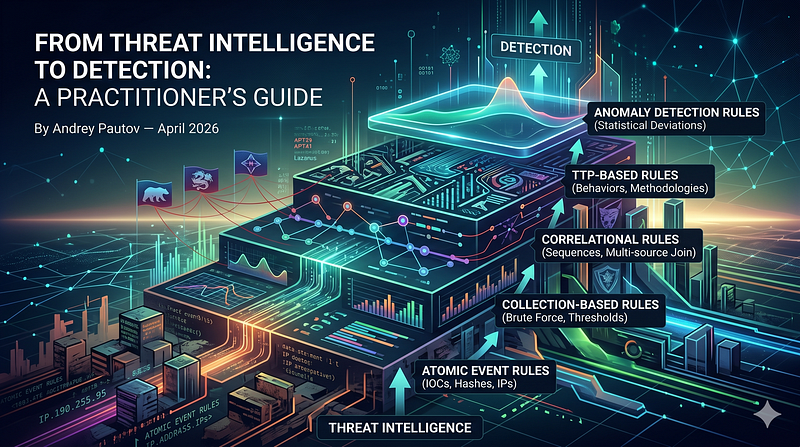
1200km CTI repository · explicit report mentionFrom Threat Intelligence to Detection: A Practitioner's Guide
1200km CTI repository · explicit report mentionFrom Threat Intelligence to Detection A Practitioner s Guide
1200km Medium · authored report mention
Cyber Knowledge context
Use these routes to move from the ATT&CK behavior into explanation, implementation, evidence handling, validation, and defensive operations. Relevance is generated from explicit identifiers/names and governed topic mappings; it is not attribution evidence.
Blue Team & Defensive Security · Tactic learning route · 24/100Human, workload, pipeline, and emergency identity
Cloud Security · Tactic learning route · 24/100Disk, file-system, and persistence forensics
Digital Forensics & Incident Response (DFIR) · Tactic learning route · 24/100
MITRE mitigations
Privileged Account Management focuses on implementing policies, controls, and tools to securely manage privileged accounts (e.g., SYSTEM, root, or administrative accounts). This includes restricting access, limiting the scope of permissions, monitoring privileged account usage, and ensuring accountability through logging and auditing.This mitigation can be implemented through the following measures: Account Permissions and Roles: - Implement RBAC and least privilege principles to allocate permissions securely. - Use tools like Active Directory Group Policies to enforce access restrictions. Credential Security: - Deploy password vaulting tools like CyberArk, HashiCorp Vault, or KeePass for secure storage and rotation of credentials. - Enforce password policies for complexity, uniqueness, and expiration using tools like Microsoft Group Policy Objects (GPO). Multi-Factor Authentication (MF…
MITRE mitigation sourceMITRE detection strategies and analytics
- AN1631 · Analytic 1631 — Monitoring adversary access to sensitive process memory via the /proc filesystem to extract credential material, often involving multi-step access to /proc/[pid]/mem or /proc/[pid]/maps combined with privilege escalation or credential scraping binaries.
Continue the investigation
Attack tools, simulations and detection rules
Follow explicit source relationships into the reference modules. Linked procedures and detectors are not claims of live validation or actor attribution.
- T1003.007 Proc Filesystem simulation — Exact active technique ID
- T1003.007 detection rules — Exact active technique ID; not actor-specific detector coverage